Und dann auf "Zum Home-Bildschirm [+]".

Stöbern
genialokal zum Startbildschirm hinzufügen
Installieren Sie die genialokal App auf Ihrem Startbildschirm für einen schnellen Zugriff und eine komfortable Nutzung.
Installieren Sie die genialokal App auf Ihrem Startbildschirm für einen schnellen Zugriff und eine komfortable Nutzung.

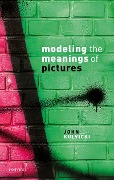
This book offers a concise but comprehensive entry-level guide to the study of meaning in context. There can be a big difference between what a speaker says and what they mean - i.e. between literal meaning and intended meaning. A speaker who says I need coffee can mean anything from 'Please buy more coffee' to 'I'm really sleepy'. How is a hearer to know? In this book, Betty Birner explores how we get from what is said to what is meant, from the perspective of both the speaker and the hearer, dealing with a range of context-dependent issues in language along the way: literal and non-literal meaning, implicature, speech acts, reference, definiteness, presupposition, and information structure. She reveals how language users can infer each other's meanings using not just what is being said but also the context and an assumption of rationality and cooperation. This slim guide summarizes the most important and foundational theories in the field of linguistic pragmatics, illustrated with plenty of real-life examples, and including a helpful glossary of key terms. Written in a lively and accessible style, the book will appeal to a wide range of readers, from undergraduate and graduate students of pragmatics to general readers interested in how we successfully communicate with one another.
Betty J. Birner is a Professor of Linguistics and Cognitive Science in the Department of English at Northern Illinois University. Her previous books include Information Status and Noncanonical Word Order in English (with Gregory Ward; Benjamins 1998), Introduction to Pragmatics (Wiley-Blackwell 2013), and Language and Meaning (Routledge 2018). Her research focuses on pragmatics and information structure.
- 1: Introduction - 2: Literal vs. non-literal meaning - 3: Implicature - 4: Speech acts - 5: Reference - 6: Definiteness and anaphora - 7: Presupposition - 8: Information structure - 9: New directions - 10: Conclusion - Glossary
Dieses eBook wird im PDF-Format geliefert und ist mit einem Adobe Kopierschutz (DRM) versehen. Sie können dieses eBook mit allen Geräten lesen, die das PDF-Format und den Adobe Kopierschutz (DRM) unterstützen.
Zum Beispiel mit den folgenden Geräten:
• tolino Reader
Laden Sie das eBook direkt über den Reader-Shop auf dem tolino herunter oder übertragen Sie das eBook auf Ihren tolino mit einer kostenlosen Software wie beispielsweise Adobe Digital Editions.
• Sony Reader & andere eBook Reader
Laden Sie das eBook direkt über den Reader-Shop herunter oder übertragen Sie das eBook mit der kostenlosen Software Sony READER FOR PC/Mac oder Adobe Digital Editions auf ein Standard-Lesegeräte mit epub- und Adobe DRM-Unterstützung.
• Tablets & Smartphones
Möchten Sie dieses eBook auf Ihrem Smartphone oder Tablet lesen, finden Sie hier unsere kostenlose Lese-App für iPhone/iPad und Android Smartphone/Tablets.
• PC & Mac
Lesen Sie das eBook direkt nach dem Herunterladen mit einer kostenlosen Lesesoftware, beispielsweise Adobe Digital Editions, Sony READER FOR PC/Mac oder direkt über Ihre eBook-Bibliothek in Ihrem Konto unter „Meine eBooks“ - „online lesen“.
Schalten Sie das eBook mit Ihrer persönlichen Adobe ID auf bis zu sechs Geräten gleichzeitig frei.
Bitte beachten Sie, dass die Kindle-Geräte das Format nicht unterstützen und dieses eBook somit nicht auf Kindle-Geräten lesbar ist.