Und dann auf "Zum Home-Bildschirm [+]".

Stöbern
genialokal zum Startbildschirm hinzufügen
Installieren Sie die genialokal App auf Ihrem Startbildschirm für einen schnellen Zugriff und eine komfortable Nutzung.
Installieren Sie die genialokal App auf Ihrem Startbildschirm für einen schnellen Zugriff und eine komfortable Nutzung.
Ihr gewünschter Artikel ist in 0 Buchhandlungen vorrätig - wählen Sie hier eine Buchhandlung in Ihrer Nähe aus:

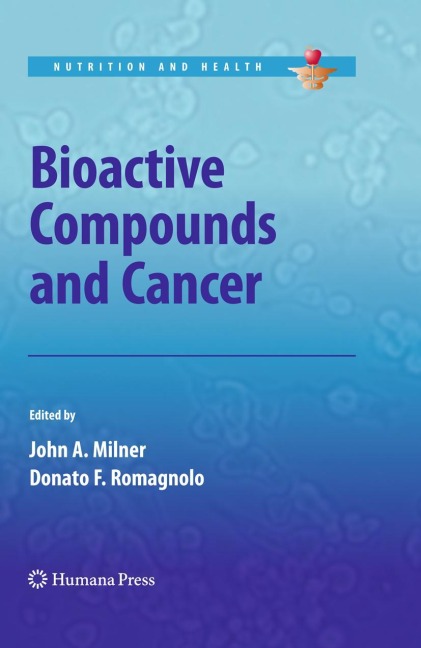
Because of the wealth of new information generated by the scientific community during the last decade on the role of nutrition on cancer risk, this book provides a forum for presentation and discussion of recent scientific data and highlights a set of dietary recommendations. Bioactive Compounds and Cancer presents chapters that highlight laboratory and clinical findings on how selected nutrients function as signaling molecules and, as such, influence cellular behavior and cancer predisposition. This important compendium focuses on understanding the role of nutrition in cancer biology, the molecular action of bioactive food components and xenobiotics on cancer risk, the role of dietary components in cancer prevention and/or treatment, and nutrition education with the most up to date dietary recommendations that may reduce cancer risk. This volume will be of interest to specialized health professionals, clinicians, nurses, basic and clinical researchers, graduate students, and health officials of public and private organizations.
Chapter 1: Cases Burden Brenda Edwards- NCI
Chapter 2: nutrigenomics and cancer biology (are nutrients just nutrients or signaling molecules?) Milner and Romagnolo
Chapter 3: cellular cancer Processes Influence By Diet : differentiation, authophagy, Apoptosis, cell division, inflammation, immunity, oxidative stress, angiogenesis (how these processes influence tumor development)
Cindy Davis, National Cancer InstituteAlternates: David M. Mutch The Scripps Research Institute, Walter Wahli and Gary Williamson University of Lausanne.
chapter 4: Nutrigenetics: The Relevance of polymorphisms Christine Ambrosone, Roswell Park Cancer Institute
Alternates Nancy Emenaker- NCI
chapter 5. diet and epigenetics Richard Waterland, Baylor College of Medicine
Alternates Sharon Ross, NCI
Chapter 6: Transcriptomics Z.Dong- Hormel InstituteAlternates Clement Ip- Roswell ParkM. van Erk- Wageningen University
part 2: Role of Dietary bioactive components in cancer prevention and/or treatment
Section A. macroconstituents
chapter 7: dietary Energy and Caloric Restriction Steven D. Hursting, University of Texas
chapter 8: fiber and microbially generated active components (fermentable fiber , short chain fatty acids, etc.) Robert Chapkin- Texas A&M
Alternates len Augenlicht- Albert Einstein
chapter 9: prebiotics and probiotics Glen Gibson- The University of Reading
Alternates Marcel Roberfroid University Leon
chapter 10: Meats, protein and cancer Sheila Anne Bingham, Medical Research Council, Cambridge, UK.
chapter 11: omega-3 fatty acids (are they the good guys) Jose Halperin- Harvard University
Alternates Leena Hilakivi-Clarke, Department of Oncology, GeorgetownWilliam Lands- NIH
chapter 12: omega-6 fatty acids (the bad guys?) W. Elaine Hardman, Louisiana State University
chapter 13: saturated fatty acids Michele R. Forman* MD Anderson
Chapter 14 Conjugated Linoleic Acid M. Berlury Ohio State
Section B. Carotenoinds, Vitamins and Mineral
chapter 15: carotenoids (lycopene and beta-carotene) John W. Erdman, Jr., University Illinois
chapter 16: vitamin a Catherine Ross Penn State University
chapter 17: vitamin d Jim Fleet- Purdue University Alternate Joellen Welsh- Notre DameDonald l Trump, Roswell Park Cancer Institute
chapter 18: Folate : Cornelia Ulrich, Fred HutchinsonAlternate John Baron- Duke University
chapter 19: selenium Margaret Rayman- University leedsAlternate Jerry Combs- USDA Grandforks
chapter 20: calcium Thomas Rohan- Albert EinsteinAlternate Martin Lipkin -Albert Einstein
chapter 21: iron James Conner Penn State University
chapter 22: zinc L. Fong- Ohio State University
Section C. Other Bioactive Food Components
chapter 23: isothiocyanates and glucosinolates (ex. sulphoraphane, etc) R.H. Dashwood, Oregon State
chapter 24: organosulfur compounds (allium etc.) John Milner- NCI
chapter 25: phenols (resveratrol and gingerol) Andreas J. Gescher, University of Leicester
alternate A. Dannenberg- Weill Medical College of Cornell University.
chapter 26: flavonols, catechins (ex. quercetin and ecgc, etc), and anthocyanins C.S. Yang, Rutgers University
Alternate K. Singletary- University of Illinois, 905
chapter 27: isoflavones (genistein etc) Steve Barnes- U. Alabama
E-Mail: ProductSafety@springernature.com