Und dann auf "Zum Home-Bildschirm [+]".

Stöbern
genialokal zum Startbildschirm hinzufügen
Installieren Sie die genialokal App auf Ihrem Startbildschirm für einen schnellen Zugriff und eine komfortable Nutzung.
Installieren Sie die genialokal App auf Ihrem Startbildschirm für einen schnellen Zugriff und eine komfortable Nutzung.
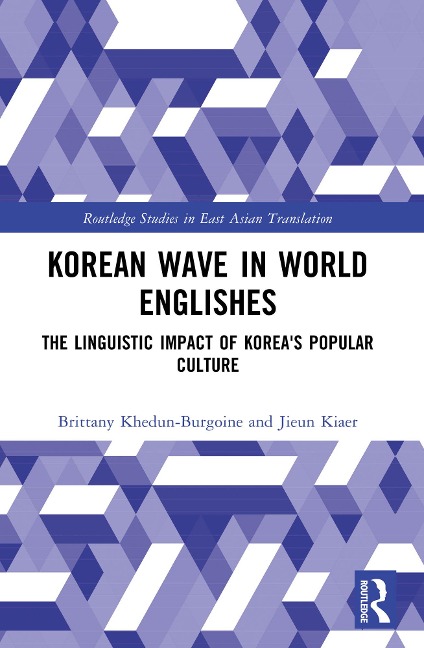
This book examines the linguistic impact of the Korean Wave on World Englishes, demonstrating that the K-Wave is not only a phenomenon of popular culture, but also language. The "Korean Wave" is a neologism that was coined during the 1990s that includes K-pop, K-dramas, K-film, K-food, and K-beauty, and in recent years it has peaked in global popularity. This book intends to show how social media phenomena have facilitated the growth of Korea's cultural influence globally and enabled a number of Korean origin words to settle in varieties of Englishes. This in turn has globalised Korean origin words and revolutionised the English language through an active and collaborative process of lexical migration. Korean origin words such as oppa (older brother) are no longer bound solely to Korean-speaking contexts. The study focuses primarily on media content, particularly social media, corroborated by case studies to examine how linguistic innovation has been engendered by the Korean Wave. Suitable for students and researchers of Korean linguistics, Korean culture, Korean popular culture, and translation studies, this book is the first detailed study of the global linguistic impact of the Korean Wave.
Brittany Khedun-Burgoine is a DPhil student in Oriental Studies at the University of Oxford, UK. She has presented her research at several international conferences including the International Association for World Englishes, the Asian Association for Lexicography, and the Sociolinguistics Symposium. Her current research explores the global anglophone K-Pop fandom's creative use of Korean words to create new and individualised meanings. Jieun Kiaer is a Professor of Korean Linguistics at the University of Oxford, UK. She is the Series Editor for Routledge Studies in East Asian Translation and publishes widely on lexical interaction between East Asian languages and Englishes. Her recent publications include The History of English Loanwords in Korean (2014), Translingual Words: An East Asian Lexical Encounter with English (Routledge 2018), and Delicious Words: East Asian Food Words in English (Routledge 2020). She is also acting as a Korean consultant for the Oxford English Dictionary (2021-).
Acknowledgements A Note on Korean Romanisation 1. Introduction Twenty-Six Korean words in the Oxford English Dictionary (OED) Birth of Hallyu Words - Translingual Words 2. Translation: The Real K-Drama? Korean-English Translation Troubles Translating the 'Untranslatable' 'Manufactured Cuteness': Translating Aegyo Actual Brother or Boyfriend? The Kinship Question Squid Game's Subtitles Shambles? Fan Translators at the Core of K-Pop Conclusion 3. "Gomawo Pretty Unnie Saranghae!" Note on Korean Romanisation International Fandom and Korean Language Collide Categorising Fandom Lexicon Words of Korean Origin in General Usage The Global Oppa Other Korean Words Korean Terms from the Korean K-Pop Fandom Internet Vernacular and Fandom Culture K-Pop Fandom Vernacular Conclusion 4. Korean Food Words: Chimaek, Mukbang, and Beyond Korean Food Words in the OED New Korean Food Words Sound Footage and the Influence of K-dramas and K-film Romanisation of Korean Food Words Conclusion 5. "Where Clean Nature and Healthy Beauty Coexist Happily" The Mythology of K-Beauty: The Junction of Nature and Science Pure Ingredients from Jeju Island: Innisfree Beauty Influencers Influencing Language K-Beauty Glossaries: Deciphering the Lexicon Essences, Ampoules, and Serums: Unfamiliar Englishes Koreanised Englishes Translating Beauty Conclusion 6. Discussion Bibliography Index
Dieses eBook wird im PDF-Format geliefert und ist mit einem Adobe Kopierschutz (DRM) versehen. Sie können dieses eBook mit allen Geräten lesen, die das PDF-Format und den Adobe Kopierschutz (DRM) unterstützen.
Zum Beispiel mit den folgenden Geräten:
• tolino Reader
Laden Sie das eBook direkt über den Reader-Shop auf dem tolino herunter oder übertragen Sie das eBook auf Ihren tolino mit einer kostenlosen Software wie beispielsweise Adobe Digital Editions.
• Sony Reader & andere eBook Reader
Laden Sie das eBook direkt über den Reader-Shop herunter oder übertragen Sie das eBook mit der kostenlosen Software Sony READER FOR PC/Mac oder Adobe Digital Editions auf ein Standard-Lesegeräte mit epub- und Adobe DRM-Unterstützung.
• Tablets & Smartphones
Möchten Sie dieses eBook auf Ihrem Smartphone oder Tablet lesen, finden Sie hier unsere kostenlose Lese-App für iPhone/iPad und Android Smartphone/Tablets.
• PC & Mac
Lesen Sie das eBook direkt nach dem Herunterladen mit einer kostenlosen Lesesoftware, beispielsweise Adobe Digital Editions, Sony READER FOR PC/Mac oder direkt über Ihre eBook-Bibliothek in Ihrem Konto unter „Meine eBooks“ - „online lesen“.
Schalten Sie das eBook mit Ihrer persönlichen Adobe ID auf bis zu sechs Geräten gleichzeitig frei.
Bitte beachten Sie, dass die Kindle-Geräte das Format nicht unterstützen und dieses eBook somit nicht auf Kindle-Geräten lesbar ist.