Und dann auf "Zum Home-Bildschirm [+]".

Stöbern
genialokal zum Startbildschirm hinzufügen
Installieren Sie die genialokal App auf Ihrem Startbildschirm für einen schnellen Zugriff und eine komfortable Nutzung.
Installieren Sie die genialokal App auf Ihrem Startbildschirm für einen schnellen Zugriff und eine komfortable Nutzung.
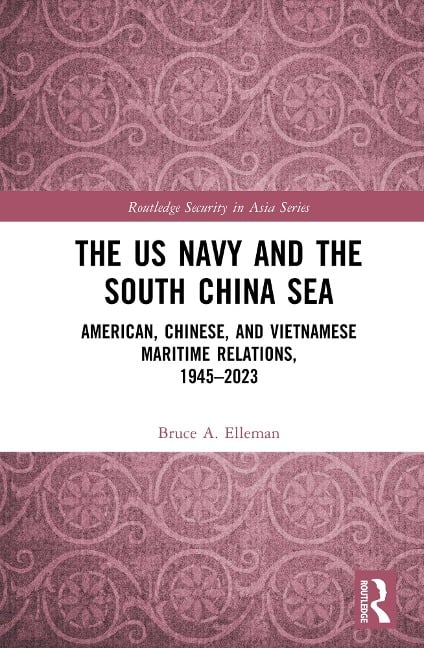
This book explores the question "Why is the US Navy in the South China Sea at all?" It traces the history of diplomatic, economic, and military tensions among the People's Republic of China, the Soviet Union, the United States, and the Socialist Republic of Vietnam, outlining the origins of the United States-Vietnam relationship during the immediate post-World War II period, the turmoil of the Vietnam War during which China supported North Vietnam against a US-backed South Vietnam, and the decision of the US government to open relations with China beginning in 1972. It shows how from 1945-1975, the US government used its relations with Vietnam to exert diplomatic, economic, and military pressure on China to open negotiations leading to full recognition and further discusses the surprising action of the US Navy in 1974 to allow the Chinese Navy to take the Paracel Islands by force, thereby denying control over these islands to a united Vietnam, closely allied with the Soviet Union, which was the common enemy of both China and the USA. Overall, the book demonstrates how the presence of the US Navy in the South China Sea is a crucial element in much wider, global US strategy.
Bruce A. Elleman is William V. Pratt Professor of International History at the US Naval War College in Newport, Rhode Island, USA
Acronym List List of Figures Introduction: Evaluating the South China Sea's Maritime Challenges 1) The Early Chinese and European Influence on a Divided Vietnam 2) The Sino-Soviet Alliance and its 1960 Split 3) The U.S. Enters the Vietnam War, 1960-1969 4) Using the Vietnam War to Start a Sino-Soviet War, 1969 5) President Richard Nixon Opens Diplomatic Relations with the PRC, 1969-1972 6) The PLAN Invasion of the Paracels, 1974 7) The Sino-Vietnamese War of 1979 and the End of the Sino-Soviet Monolith 8) Sino-U.S. Cooperation against Vietnam and the USSR and the End of the Cold War Conclusions: The Possible Formation of a U.S.-Vietnamese anti-Chinese Alliance Timeline Document 1: Sino-French Tonkin Treaty, 26 June 1887 Document 2: Cairo Declaration, 1 December 1943 Document 3: Potsdam Proclamation, 26 July 1945 Document 4: Treaty of Peace with Japan, 8 September 1951 Document 5: Treaty of Peace between the Republic of China and Japan, 28 April 1952 Document 6: U.S.-ROC Mutual Defense Treaty, 2 December 1954 (ratified 1955) plus Secret Protocol Document 7: Formosa Resolution, 1955 Document 8: Declaration on China's Territorial Sea, 4 September 1958 Document 9: Prime Minister Pham Van Dong's Letter, 14 September 1958 Document 10: Shanghai Communiqué, 28 February 1972 Document 11: Joint Communiqué on the Establishment of Diplomatic Relations between the People's Republic of China and the United States of America, 16 December 1978 Document 12: Taiwan Relations Act, 10 April 1979 Document 13: Joint Communiqué on the Question of Arms Sales to Taiwan, 17 August 1982 Document 14: Law on the Territorial Sea and the Contiguous Zone, 25 February 1992 Document 15: 1992 ASEAN Declaration on the South China Sea, 22 July 1992 Document 16: United Nations Convention on the Law of the Sea, PART V, Exclusive Economic Zone, In force since 14 November 1994 Document 17: A concurrent resolution expressing the sense of Congress regarding missile tests and military exercises by the People's Republic of China, 21 March 1996. Document 18: Law on the Exclusive Economic Zone and the Continental Shelf of the PRC, 26 June 1998 Document 19: 2002 Declaration on the Conduct of Parties in the South China Sea, 4 November 2002 Document 20: Anti-Secession Law adopted by NPC, 14 March 2005 Document 21: Cross-Straits Economic Cooperation Framework Agreement, 29 June 2010 Document 22: In the Matter of the South China Sea Arbitration, 12 July 2016 Selected Bibliography Biography
Dieses eBook wird im PDF-Format geliefert und ist mit einem Adobe Kopierschutz (DRM) versehen. Sie können dieses eBook mit allen Geräten lesen, die das PDF-Format und den Adobe Kopierschutz (DRM) unterstützen.
Zum Beispiel mit den folgenden Geräten:
• tolino Reader
Laden Sie das eBook direkt über den Reader-Shop auf dem tolino herunter oder übertragen Sie das eBook auf Ihren tolino mit einer kostenlosen Software wie beispielsweise Adobe Digital Editions.
• Sony Reader & andere eBook Reader
Laden Sie das eBook direkt über den Reader-Shop herunter oder übertragen Sie das eBook mit der kostenlosen Software Sony READER FOR PC/Mac oder Adobe Digital Editions auf ein Standard-Lesegeräte mit epub- und Adobe DRM-Unterstützung.
• Tablets & Smartphones
Möchten Sie dieses eBook auf Ihrem Smartphone oder Tablet lesen, finden Sie hier unsere kostenlose Lese-App für iPhone/iPad und Android Smartphone/Tablets.
• PC & Mac
Lesen Sie das eBook direkt nach dem Herunterladen mit einer kostenlosen Lesesoftware, beispielsweise Adobe Digital Editions, Sony READER FOR PC/Mac oder direkt über Ihre eBook-Bibliothek in Ihrem Konto unter „Meine eBooks“ - „online lesen“.
Schalten Sie das eBook mit Ihrer persönlichen Adobe ID auf bis zu sechs Geräten gleichzeitig frei.
Bitte beachten Sie, dass die Kindle-Geräte das Format nicht unterstützen und dieses eBook somit nicht auf Kindle-Geräten lesbar ist.