Und dann auf "Zum Home-Bildschirm [+]".

Stöbern
genialokal zum Startbildschirm hinzufügen
Installieren Sie die genialokal App auf Ihrem Startbildschirm für einen schnellen Zugriff und eine komfortable Nutzung.
Installieren Sie die genialokal App auf Ihrem Startbildschirm für einen schnellen Zugriff und eine komfortable Nutzung.
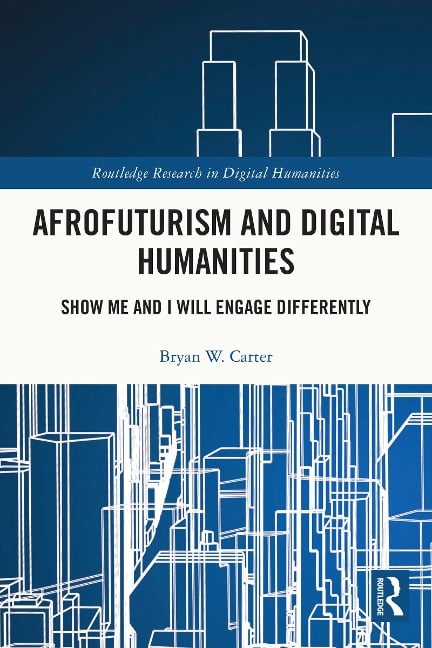
This book brings Afrofuturism into conversation with digital humanities to pioneer the field of Digital Africana Studies, and shows how students and academics can engage with the vision of Afrofuturism, both theoretically and practically, in the classroom and through research. As Black people across the globe consider their place in the future following the past two decades of technological advancement, Afrofuturism and its relevance for the humanities has become ever pertinent. While Afrofuturism has thus far been discussed through a literary, artistic, or popular culture lens, growing use of new technologies, and its resultant intersections with the reality of our racial experiences, has created a need for approaching Afrofuturism from a digital studies perspective. Via detailed case studies, Bryan W. Carter introduces the field of Digital Africana Studies to demonstrate how this new area can be experienced pedagogically. Alongside the book, readers can also visit select Digital Africana Studies projects that exemplify the various technologies and projects described at the author's website: ibryancarter.com/projects. Given its unique approach to the path-breaking tradition of Afrofuturism, the book will be indispensable for scholars and students across fields such as digital humanities, media studies, black studies, African American studies, and Africana studies.
Bryan W. Carter is the Director of the Center for Digital Humanities in the College of Humanities and an Associate Professor in the Department of Africana Studies at the University of Arizona, USA.
Introduction; 1. Has the Future Caught Up Yet? Afrofuturism Through the Lens of Academia, Development, and Experience; 2. Bridging the Gap between Afrofuturism in Theory and in Practice; 3. I Produce, Therefore, I Extend; 4. Pedagogy of the People through Collective Knowledge Creation; 5. Seeking Definition in the Absurdity of a Post-Racial World; 6. Storytelling as Social Justice; 7. Defining Access where None was Ever Given
Dieses eBook wird im PDF-Format geliefert und ist mit einem Adobe Kopierschutz (DRM) versehen. Sie können dieses eBook mit allen Geräten lesen, die das PDF-Format und den Adobe Kopierschutz (DRM) unterstützen.
Zum Beispiel mit den folgenden Geräten:
• tolino Reader
Laden Sie das eBook direkt über den Reader-Shop auf dem tolino herunter oder übertragen Sie das eBook auf Ihren tolino mit einer kostenlosen Software wie beispielsweise Adobe Digital Editions.
• Sony Reader & andere eBook Reader
Laden Sie das eBook direkt über den Reader-Shop herunter oder übertragen Sie das eBook mit der kostenlosen Software Sony READER FOR PC/Mac oder Adobe Digital Editions auf ein Standard-Lesegeräte mit epub- und Adobe DRM-Unterstützung.
• Tablets & Smartphones
Möchten Sie dieses eBook auf Ihrem Smartphone oder Tablet lesen, finden Sie hier unsere kostenlose Lese-App für iPhone/iPad und Android Smartphone/Tablets.
• PC & Mac
Lesen Sie das eBook direkt nach dem Herunterladen mit einer kostenlosen Lesesoftware, beispielsweise Adobe Digital Editions, Sony READER FOR PC/Mac oder direkt über Ihre eBook-Bibliothek in Ihrem Konto unter „Meine eBooks“ - „online lesen“.
Schalten Sie das eBook mit Ihrer persönlichen Adobe ID auf bis zu sechs Geräten gleichzeitig frei.
Bitte beachten Sie, dass die Kindle-Geräte das Format nicht unterstützen und dieses eBook somit nicht auf Kindle-Geräten lesbar ist.