Und dann auf "Zum Home-Bildschirm [+]".

Stöbern
genialokal zum Startbildschirm hinzufügen
Installieren Sie die genialokal App auf Ihrem Startbildschirm für einen schnellen Zugriff und eine komfortable Nutzung.
Installieren Sie die genialokal App auf Ihrem Startbildschirm für einen schnellen Zugriff und eine komfortable Nutzung.

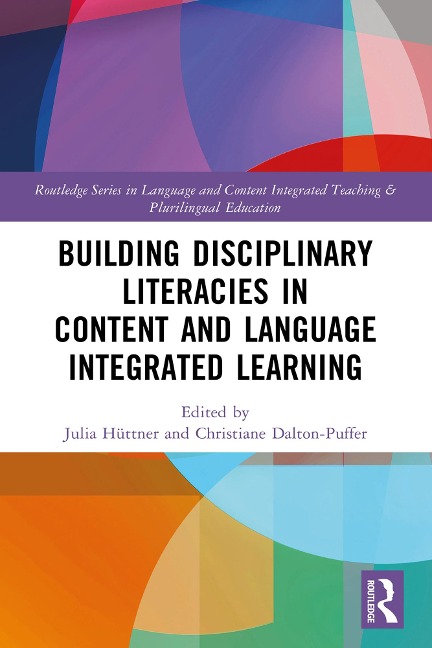
Hüttner and Dalton-Puffer present research demonstrating the tangible benefits of the long-term sustainability of Content and Language Integrated Learning (CLIL) on participants' educational outcomes. The chapters outline the argument that the main benefit of CLIL lies in the fact that learners acquire specific literacy practices linked to the curricular subjects they study via the CLIL language and that these go beyond what is commonly learned and studied within a foreign language curriculum. The book provides an orientation as to how such disciplinary literacy or literacies can be conceptualised and understood, and introduces several models that have served to make disciplinary literacies graspable and visible. The various chapters showcase research and development projects from different geographical and educational contexts and therefore elaborate ideas around disciplinary literacies from different vantage points. This book aims at a wide and varied readership, including graduate students studying applied linguistics, foreign language education, and/or teaching methodology; language teachers; content subject teachers with an interest in the linguistic side of their subject; and teacher trainers.
Julia Hüttner is Professor of English Language Education at the University of Vienna, Austria. Christiane Dalton-Puffer is Professor of English Language Linguistics at the University of Vienna, Austria. She is the co-series editor for the CLIL and Plurilingual Education book series with Routledge.
1. Introduction: the conceptualisation of disciplinary literacies in CLIL CHRISTIANE DALTON-PUFFER, JULIA HÜTTNER AND TARJA NIKULA PART 1: Observing disciplinary literacies in action 2. Students' depictive gestures in CLIL classroom interaction: a manifestation of subject-specific knowledge LEILA KÄÄNTÄ AND GABRIELE KASPER 3. CLIL learners' categorizations: Writing about history in English across three grade levels in Spanish bilingual schools NATALIA EVNITSKAYA AND CHRISTIANE DALTON-PUFFER PART 2: Making disciplinary literacies assessable 4. A functional description of disciplinary literacy in history: Applications of the Common European Framework of Reference for Languages to content and language integrated learning courses ADRIÁN GRANADOS AND FRANCISCO LORENZO 5. Assessing CLIL students' expression of Explore across languages and school disciplines: an interdisciplinary approach ANA LLINARES AND TOM MORTON PART 3: Disciplinary literacy awareness and pedagogy 6. Disciplinary Literacy in a University German Programme DIANA FEICK AND STEFAN RAHN 7. "The science of it ..." - the potential of cognitive discourse functions for an integrative CLIL pedagogy THOMAS HASENBERGER 8. Designing Materials for Building Subject-Specific Literacies: Secondary-Level Chemistry YEN-LING TERESA TING 9 Cognitive Discourse Functions in History CLIL Education: Insights from a Design-Based Research Study on Conceptual Links SILVIA RIEDER-MARSCHALLINGER Postscript 10 Unpacking disciplinary literacies TESSA MEARNS Index