Und dann auf "Zum Home-Bildschirm [+]".

Stöbern
genialokal zum Startbildschirm hinzufügen
Installieren Sie die genialokal App auf Ihrem Startbildschirm für einen schnellen Zugriff und eine komfortable Nutzung.
Installieren Sie die genialokal App auf Ihrem Startbildschirm für einen schnellen Zugriff und eine komfortable Nutzung.
Ihr gewünschter Artikel ist in 0 Buchhandlungen vorrätig - wählen Sie hier eine Buchhandlung in Ihrer Nähe aus:

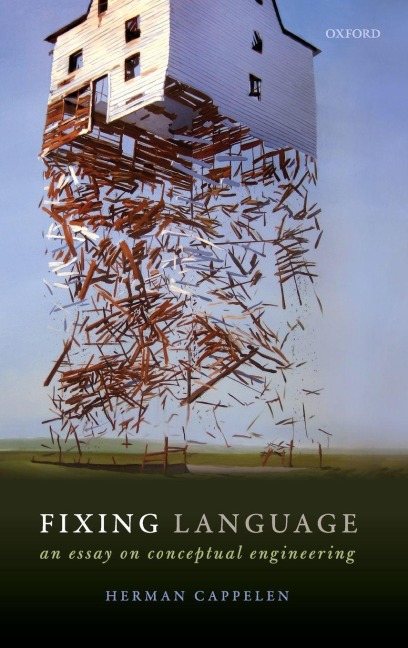
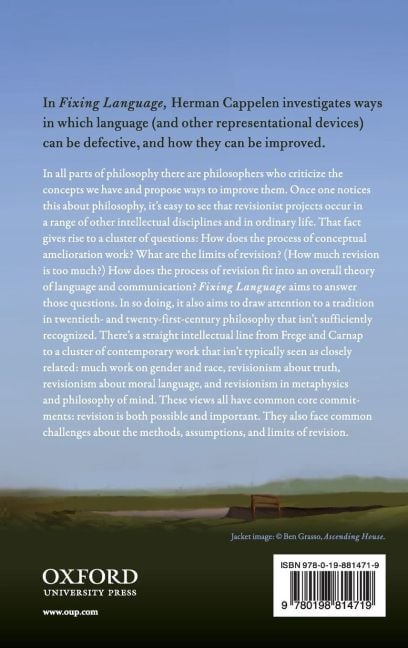
Herman Cappelen investigates how language and other representational devices can go wrong, and how to fix them. We use language to understand and talk about the world, but what if our language has deficiencies that prevent it from playing that role? How can we revise our concepts, and what are the limits on revision?
Herman Cappelen is a professor of philosophy at the University of Oslo and at the University of St Andrews. He is one of the co-directors of ConceptLab. He has written and co-authored several books and works in all areas of philosophy.
I. Introduction to Conceptual Engineering
1: Introduction
2: Illustrations: Conceptual Engineering in Philosophy and Beyond
3: Arguments for the Importance of Conceptual Engineering and Implications for Philosophical Methodology
4: On the Importance of a General Theory and an Overview of the Austerity Framework
II. Towards a General Theory, 1: Metasemantic Foundations
5: Metasemantics, Metasemantic Superstructure and Metasemantic base
6: Externalist Conceptual Engineering
7: Corollaries of Externalism: Inscrutability, Lack of Control, and Anti-Luminosity
8: The Illusion of Incoherent / Inconsistent Concepts
III. Towards a General Theory, 2: Topic Continuity as the Limits for Revision
9: The Limits of Revision and Topics (Dis)Continuity and Miscommunication
10: Reply to Strawson 1: Continuity of Topic, Samesaying and the Contestation Theory
11: Reply to Strawson 2: Lexical Effects
IV. Towards a General Theory, 3: Worldliness and the Varieties of Conceptual Engineering
12: The Worldliness of Conceptual Engineering
13: Varieties of Conceptual Engineering
14: Objections and Replies
V. Compare and Contrast: Alternative Accounts of Conceptual Engineering
15: Metalinguistic Negotiation
16: On Appeals to Function
17: Chalmers on the Subscript Gambit
18: Conceptual Engineering Without Bedrock and Without Fixed Points
19: Concluding Remarks: Looking Ahead