Und dann auf "Zum Home-Bildschirm [+]".

Stöbern
genialokal zum Startbildschirm hinzufügen
Installieren Sie die genialokal App auf Ihrem Startbildschirm für einen schnellen Zugriff und eine komfortable Nutzung.
Installieren Sie die genialokal App auf Ihrem Startbildschirm für einen schnellen Zugriff und eine komfortable Nutzung.
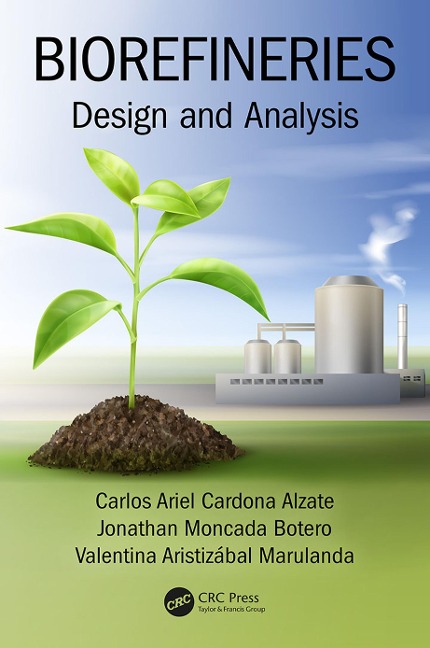
Aimed at presenting a systematic design of biorefineries, the book initiates with an overview about relevance and applications explained through origin of raw materials, transformation routes and products. Then, concepts as hierarchy, sequencing and integration are considered which helps in generating a sustainable and strategic design of biorefineries. Further, framework for biorefineries based on techno-economic, environmental and social aspects is analyzed with examples to show the applications. Finally, some mass, energy and economic indices are considered to assess the biorefinery sustainability and key challenges for future development of biorefineries. Key Features - Presents current state-of the-art of the biorefineries design and analyses for in depth understanding of biofuels and biomaterials - Explores conceptual design of processes - Concepts discussed with strong engineering approach, including design strategies and techno-economic analyses - Includes bio-based materials, natural products and food products in the biorefinery concept - Presentation of structured method to calculate indices of performance of biorefineries
Carlos A. Cardona Alzate is full professor in Chemical Engineering Department at the Universidad Nacional de Colombia sede Manizales since 1995. He received M.Sc. and Ph.D. degrees in Chemical Engineering from the Moscow State Academy of Fine Chemical Technology M.V. Lomonosov in 1995. From 1996 to 1997, he worked at Universidad de Caldas supporting a new program in Food Engineering. Dr. Cardona's research focuses on developing non-conventional separation processes, thermodynamics, integration processes, process engineering, biorefineries, climate change and agroindustry. In particular, he has worked on different research projects concerning the chemical and biochemical process design, biofuels research and development, economic and sustainable utilization of Colombia agroindustrial wastes, among others. He has authored and co-authored over 150 research papers as well as 12 research books and 44 book chapters. Additionally, he has presented over 250 works at scientific events. Currently, he leads the research group in Chemical, Catalytic and Biotechnological Processes (PQCB) at Universidad Nacional de Colombia sede Manizales. Jonathan Moncada Botero received a Chemical Engineer and M.Sc. (Laureate distinction) degrees from Universidad Nacional de Colombia sede Manizales in 2010 and 2012, respectively. Since 2014, he has worked as a junior researcher and at the same time, he has developed his Ph.D. in sustainability assessment of biorefinery systems at Utrecht University (The Netherlands), Copernicus Institute for Sustainable Development. M.Sc. Moncada has scientific expertise in topics such as, techno-economic analysis, sustainability assessments, biorefineries, process modelling and simulation, Aspen Plus and life cycle assessment (LCA). In particular, he has worked on different research projects concerning the modeling, techno-economic and environmental assessment of processes and biorefineries. He has authored and co-authored over 25 research papers as well as 4 book chapters. Additionally, he has presented over 30 works at scientific events. Valentina Aristizábal-Marulanda received Chemical Engineer and M.Sc. degrees from Universidad Nacional de Colombia sede Manizales in 2013 and 2015, respectively. Aristizábal's research focuses on processes engineering, process modelling and simulation, design and analysis of biorefinery configurations considering technical, economic, environmental and social aspects. She has worked in the production of jet fuel through furfural platform and in the development of projects related to the valorization of residues. She has authored and co-authored over 6 research papers as well as 5 book chapters. She has given over 33 works in scientific events. M.Sc. Aristizábal has done internships at University of Salamanca (Spain) and University of Minho. Currently, she is Doctoral candidate in Engineering - Chemical Engineering at Universidad Nacional de Colombia sede Manizales and she was qualified as Junior Researcher in 2017 by the Departamento Administrativo de Ciencia, Tecnología e Innovación (Colciencias) in Colombia.
1. The Biorefinery Concept. 2. Biorefinery feedstocks, platforms and products. 3. Biorefinery design strategy: From process synthesis to sustainable design. 4. Techno-economic analysis of biorefineries. 5. Environmental Assessment of Biorefinery Systems. 6. Social Analysis of biorefineries. 7. Development of biorefinery systems: From biofuel upgrading to multiproduct portfolios. 8. Sustainability Assessment of biorefineries based on indices. 9. Key Challenges for Future Development of Biorefineries.
Dieses eBook wird im PDF-Format geliefert und ist mit einem Adobe Kopierschutz (DRM) versehen. Sie können dieses eBook mit allen Geräten lesen, die das PDF-Format und den Adobe Kopierschutz (DRM) unterstützen.
Zum Beispiel mit den folgenden Geräten:
• tolino Reader
Laden Sie das eBook direkt über den Reader-Shop auf dem tolino herunter oder übertragen Sie das eBook auf Ihren tolino mit einer kostenlosen Software wie beispielsweise Adobe Digital Editions.
• Sony Reader & andere eBook Reader
Laden Sie das eBook direkt über den Reader-Shop herunter oder übertragen Sie das eBook mit der kostenlosen Software Sony READER FOR PC/Mac oder Adobe Digital Editions auf ein Standard-Lesegeräte mit epub- und Adobe DRM-Unterstützung.
• Tablets & Smartphones
Möchten Sie dieses eBook auf Ihrem Smartphone oder Tablet lesen, finden Sie hier unsere kostenlose Lese-App für iPhone/iPad und Android Smartphone/Tablets.
• PC & Mac
Lesen Sie das eBook direkt nach dem Herunterladen mit einer kostenlosen Lesesoftware, beispielsweise Adobe Digital Editions, Sony READER FOR PC/Mac oder direkt über Ihre eBook-Bibliothek in Ihrem Konto unter „Meine eBooks“ - „online lesen“.
Schalten Sie das eBook mit Ihrer persönlichen Adobe ID auf bis zu sechs Geräten gleichzeitig frei.
Bitte beachten Sie, dass die Kindle-Geräte das Format nicht unterstützen und dieses eBook somit nicht auf Kindle-Geräten lesbar ist.