Und dann auf "Zum Home-Bildschirm [+]".

Stöbern
genialokal zum Startbildschirm hinzufügen
Installieren Sie die genialokal App auf Ihrem Startbildschirm für einen schnellen Zugriff und eine komfortable Nutzung.
Installieren Sie die genialokal App auf Ihrem Startbildschirm für einen schnellen Zugriff und eine komfortable Nutzung.
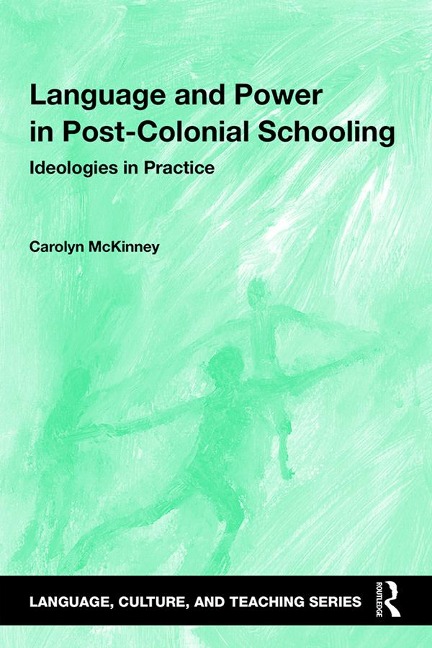
Critiquing the positioning of children from non-dominant groups as linguistically deficient, this book aims to bridge the gap between theorizing of language in critical sociolinguistics and approaches to language in education. Carolyn McKinney uses the lens of linguistic ideologies-teachers' and students' beliefs about language-to shed light on the continuing problem of reproduction of linguistic inequality. Framed within global debates in sociolinguistics and applied linguistics, she examines the case of historically white schools in South Africa, a post-colonial context where political power has shifted but where the power of whiteness continues, to provide new insights into the complex relationships between language and power, and language and subjectivity. Implications for language curricula and policy in contexts of linguistic diversity are foregrounded. Providing an accessible overview of the scholarly literature on language ideologies and language as social practice and resource in multilingual contexts, Language and Power in Post-Colonial Schooling uses the conceptual tools it presents to analyze classroom interaction and ethnographic observations from the day-to-day life in case study schools and explores implications of both the research literature and the analyses of students' and teachers' discourses and practices for language in education policy and curriculum.
Carolyn McKinney is Associate Professor, Language Education, School of Education, University of Cape Town, South Africa.
Foreword Hilary Janks Preface Chapter 1 What counts as [a] language? Chapter 2 What counts as language in education policy and curricula? Chapter 3 Whose language resources count in schooling? Chapter 4 Anglonormativity: language ideologies and the reproduction of race Chapter 5 Positioning students in an Anglonormative English class: asymmetrical relations of knowing. Chapter 6 Hope I: Students' agency in interrupting Anglonormativity Chapter 7 Hope II: Interrupting Anglonormativty through transformative pedagogies Chapter 8 Conclusion: Changing what counts as legitimate language use in schooling
Dieses eBook wird im PDF-Format geliefert und ist mit einem Adobe Kopierschutz (DRM) versehen. Sie können dieses eBook mit allen Geräten lesen, die das PDF-Format und den Adobe Kopierschutz (DRM) unterstützen.
Zum Beispiel mit den folgenden Geräten:
• tolino Reader
Laden Sie das eBook direkt über den Reader-Shop auf dem tolino herunter oder übertragen Sie das eBook auf Ihren tolino mit einer kostenlosen Software wie beispielsweise Adobe Digital Editions.
• Sony Reader & andere eBook Reader
Laden Sie das eBook direkt über den Reader-Shop herunter oder übertragen Sie das eBook mit der kostenlosen Software Sony READER FOR PC/Mac oder Adobe Digital Editions auf ein Standard-Lesegeräte mit epub- und Adobe DRM-Unterstützung.
• Tablets & Smartphones
Möchten Sie dieses eBook auf Ihrem Smartphone oder Tablet lesen, finden Sie hier unsere kostenlose Lese-App für iPhone/iPad und Android Smartphone/Tablets.
• PC & Mac
Lesen Sie das eBook direkt nach dem Herunterladen mit einer kostenlosen Lesesoftware, beispielsweise Adobe Digital Editions, Sony READER FOR PC/Mac oder direkt über Ihre eBook-Bibliothek in Ihrem Konto unter „Meine eBooks“ - „online lesen“.
Schalten Sie das eBook mit Ihrer persönlichen Adobe ID auf bis zu sechs Geräten gleichzeitig frei.
Bitte beachten Sie, dass die Kindle-Geräte das Format nicht unterstützen und dieses eBook somit nicht auf Kindle-Geräten lesbar ist.