Und dann auf "Zum Home-Bildschirm [+]".

Stöbern
genialokal zum Startbildschirm hinzufügen
Installieren Sie die genialokal App auf Ihrem Startbildschirm für einen schnellen Zugriff und eine komfortable Nutzung.
Installieren Sie die genialokal App auf Ihrem Startbildschirm für einen schnellen Zugriff und eine komfortable Nutzung.
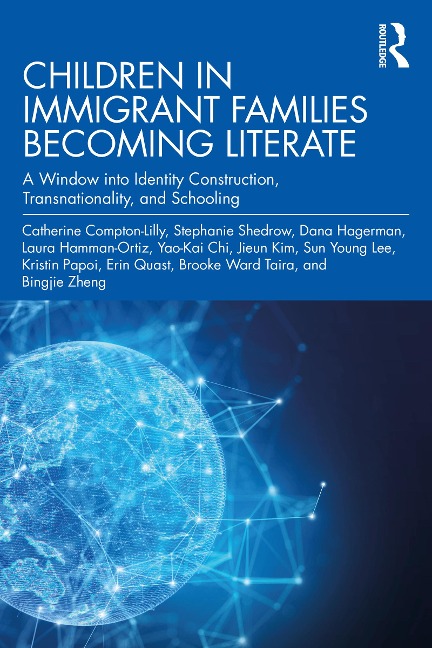
This original book offers a meaningful window into the lived experiences of children from immigrant families, providing a holistic, profound portrait of their literacy practices as situated within social, cultural, and political frames. Drawing on reports from five years of an ongoing longitudinal research project involving students from immigrant families across their elementary school years, each chapter explores a unique set of questions about the students' experiences and offers a rich data set of observations, interviews, and student-created artifacts. Authors apply different sociocultural, sociomaterial, and sociopolitical frameworks to better understand the dimensions of the children's experiences. The multitude of approaches applied demonstrates how viewing the same data through distinct lenses is a powerful way to uncover the differences and comparative uses of these theories. Through such varied lenses, it becomes apparent how the complexities of lived experiences inform and improve our understanding of teaching and learning, and how our understanding of multifaceted literacy practices affects students' social worlds and identities. Children in Immigrant Families Becoming Literate is a much-needed resource for scholars, professors, researchers, and graduate students in language and literacy education, English education, and teacher education.
Catherine Compton-Lilly is the John C. Hungerpiller Chair in the College of Education at the University of South Carolina, USA. Stephanie Shedrow is an Assistant Professor of Teacher Education at St. Norbert College, USA. Dana Hagerman is an Assistant Professor of Language and Literacy at the Reading Recovery Center for Literacy at National Louis University, USA. Laura Hamman-Ortiz is an Assistant Professor of TESOL and Teacher Education and the Coordinator for the Undergraduate Program in Culturally and Linguistically Diverse (CLD) Education at the University of Northern Colorado, USA. Yao-Kai Chi is a scholar of language learning and learning identities and has a Ph.D. in Curriculum and Instruction from the University of Wisconsin-Madison, USA. Jieun Kim is an Adjunct Professor at Trinity International University, USA. Sun Young Lee is an Assistant Professor of Education at Wichita State University, USA. Kristin Papoi is a Clinical Assistant Professor and the Program Director for the Masters of Arts in Teaching at the University of North Carolina at Chapel Hill, USA. Erin Quast is an Assistant Professor of Elementary Literacy at Illinois State University, USA. Brooke Ward Taira is an Assistant Professor of Literacy Education at the University of Hawai-i at Manoa, USA. Bingjie Zheng is a researcher in sociolinguistics and bi/multilingual education and has a Ph.D. in Second Language Acquisition Program from the University of Wisconsin-Madison, USA.
Foreword by Guofang Li Introduction Chapter 1: A Theoretical Tapestry of Sociocultural and Sociomaterial Perspectives Chapter 2: A Longitudinal Methodology Chapter 3: Neoliberal Messages and Being a "Good" Reader: The Cases of Carlos, Felipe, and Elina Chapter 4: Capital, Field, and Emergent Bilingual Writers Chapter 5: Being and Becoming Multilingual across Time Chapter 6: Syncretic Literacy and Language Practices: The Case of James Chapter 7: Sociomateriality and Becoming: Things and Doings across Time Chapter 8: Conclusions Appendix A: Introducing the Children
Dieses eBook wird im PDF-Format geliefert und ist mit einem Adobe Kopierschutz (DRM) versehen. Sie können dieses eBook mit allen Geräten lesen, die das PDF-Format und den Adobe Kopierschutz (DRM) unterstützen.
Zum Beispiel mit den folgenden Geräten:
• tolino Reader
Laden Sie das eBook direkt über den Reader-Shop auf dem tolino herunter oder übertragen Sie das eBook auf Ihren tolino mit einer kostenlosen Software wie beispielsweise Adobe Digital Editions.
• Sony Reader & andere eBook Reader
Laden Sie das eBook direkt über den Reader-Shop herunter oder übertragen Sie das eBook mit der kostenlosen Software Sony READER FOR PC/Mac oder Adobe Digital Editions auf ein Standard-Lesegeräte mit epub- und Adobe DRM-Unterstützung.
• Tablets & Smartphones
Möchten Sie dieses eBook auf Ihrem Smartphone oder Tablet lesen, finden Sie hier unsere kostenlose Lese-App für iPhone/iPad und Android Smartphone/Tablets.
• PC & Mac
Lesen Sie das eBook direkt nach dem Herunterladen mit einer kostenlosen Lesesoftware, beispielsweise Adobe Digital Editions, Sony READER FOR PC/Mac oder direkt über Ihre eBook-Bibliothek in Ihrem Konto unter „Meine eBooks“ - „online lesen“.
Schalten Sie das eBook mit Ihrer persönlichen Adobe ID auf bis zu sechs Geräten gleichzeitig frei.
Bitte beachten Sie, dass die Kindle-Geräte das Format nicht unterstützen und dieses eBook somit nicht auf Kindle-Geräten lesbar ist.