Und dann auf "Zum Home-Bildschirm [+]".

Stöbern
genialokal zum Startbildschirm hinzufügen
Installieren Sie die genialokal App auf Ihrem Startbildschirm für einen schnellen Zugriff und eine komfortable Nutzung.
Installieren Sie die genialokal App auf Ihrem Startbildschirm für einen schnellen Zugriff und eine komfortable Nutzung.
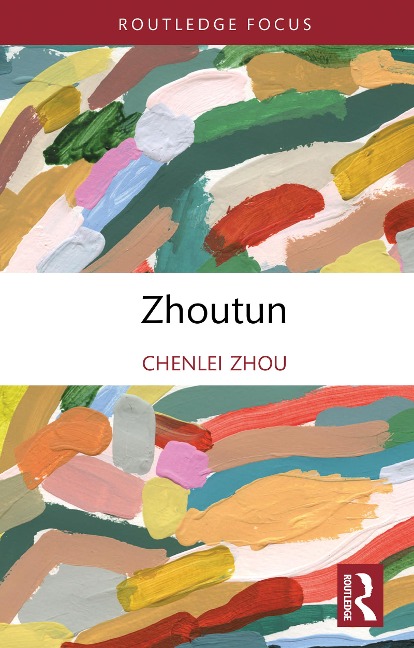
This book presents a description of the grammar of Zhoutun, an endangered Sinitic variety spoken by less than 1000 people in the Qinghai Province of northwest China. With vocabulary predominantly from Chinese and Tibetan syntax, Zhoutun is one of the Sinitic varieties most distant from Standard Chinese, with unexpected typological features like, for example, case markers, rigid SOV word order, simplified tonal system, negative copula as a disjunctive coordinator and "locutor-referential pronoun" which is not found in Chinese and in many languages. Zhoutun is also a representative variety of the Gansu-Qinghai linguistic area in which Mongolic and Turkic languages coexist with Tibetan and Chinese dialects from a long time. This book also describes the sociolinguistic and sociohistorical contexts of Zhoutun. It should be of interest to specialists and students of language contact, linguistic typology, Chinese dialectology, language geography, anthropological linguistics, sociolinguistics, folklore studies, and preservation of endangered languages.
Chenlei Zhou is an associate professor at the Institute of Linguistics, Chinese Academy of Social Sciences. His main research interests are linguistic typology, language contact and Chinese grammar, and he has published more than 20 articles in journals such as Lingua; Language and Linguistics; and the Journal of Chinese Linguistics.
Contents Dedication Contents Chapter 1: Introduction Chapter 2: Phonology Chapter 3: Nouns and noun phrases 3.1 Definition 3.2 Word formation 3.2.1 Affixation 3.2.2 Reduplication 3.2.3 Compounding 3.3 Number 3.3.1 =m- 3.3.2 =li- 3.4 Case relations 3.4.1 Dative-accusative =xa/=a 3.4.2 Comitative-instrumental =laÞ 3.4.3 Ablative =tha 3.4.4 Locative =li and =x-Þ 3.4.5 Genitive =t- 3.4.6 Comparative khaÞ 3.5 Referentiality 3.5.1 Generic 3.5.2 Individual Chapter 4: Verbs and verb phrases 4.1 Definition 4.2 Aspect 4.2.1 Perfective 4.2.2 Future 4.2.3 Ingressive 4.2.4 Progressive 4.2.5 Resultative 4.2.6 Experiential 4.2.7 The expression of tense 4.3 Modality 4.3.1 Dynamic modality 4.3.2 Epistemic modality 4.3.3 Deontic modality 4.3.4 Evidentiality 4.3.5 Negation 4.4 Serial verb construction 4.5 Verb-complement constructions 4.5.1 Verb-direction constructions 4.5.2 Verb-result construction 4.5.3 Verb-degree construction 4.6 Valance changing 4.7 Possession and Existence Chapter 5: Adjectives and adverbs 5.1 Adjectives 5.1.1 Identify adjectives and verbs 5.1.2 Adjectives as modifiers 5.1.3 Adjectives as predicates 5.2 Adverbs 5.2.1 Position 5.2.2 Some common adverbs 5.2.3 Reduplication Chapter 6: Minor word classes 6.1 Pronoun 6.1.1 First person 6.1.2 Second person 6.1.3 Third person 6.1.4 Reflexive 6.1.5 Locutor-referential 6.2 Demonstratives 6.2.1 The system 6.2.2 Animate and inanimate referents 6.2.3 Location referents 6.2.4 Manner and degree 6.3 Interrogative words 6.3.1 tü-words 6.3.2 a- words 6.3.3 -m- words 6.3.4 Others 6.4 Numerals 6.4.1 Cardinal and ordinal numerals 6.4.2 Fractional numerals 6.5 Classifiers 6.5.1 Nominal classifiers 6.5.2 Verbal classifiers 6.5.3 The position of Num+CL and noun 6.6 Final particles 6.6.1 ti 6.6.2 pa 6.6.3 li 6.6.4 xüÞ 6.6.5 k- 6.6.6 ta 6.6.7 ia 6.6.8 m- 6.6.9 p- 6.6.10 sa 6.6.11 Summary 6.7 Adpositions 6.7.1 Prepositions 6.7.2 Postpositions 6.8 Coordinators 6.8.1 Conjunctive coordinator 6.8.2 Disjunctive coordinators Chapter 7: Clause structure 7.1 Word order 7.2 Ditransitive construction 7.3 Copula clause 7.4 Comparative clause 7.4.1 Comparative construction 7.4.2 Comparative construction of equality 7.4.3 Superlative construction 7.5 Imperative clause 7.5.1 The form of imperative clauses 7.5.2 The negation of imperative clause 7.6 Interrogative clause 7.6.1 Yes-no question 7.6.2 Wh-question 7.6.3 Alternative question 7.6.4 Tag question 7.7 Subordinate clause 7.7.1 Relative clause 7.7.2 Complement clause 7.7.3 Adverbial clause 7.8 Topic structure References Appendix I. Narrative: The past life in Zhoutun II. List of abbreviations
Dieses eBook wird im PDF-Format geliefert und ist mit einem Adobe Kopierschutz (DRM) versehen. Sie können dieses eBook mit allen Geräten lesen, die das PDF-Format und den Adobe Kopierschutz (DRM) unterstützen.
Zum Beispiel mit den folgenden Geräten:
• tolino Reader
Laden Sie das eBook direkt über den Reader-Shop auf dem tolino herunter oder übertragen Sie das eBook auf Ihren tolino mit einer kostenlosen Software wie beispielsweise Adobe Digital Editions.
• Sony Reader & andere eBook Reader
Laden Sie das eBook direkt über den Reader-Shop herunter oder übertragen Sie das eBook mit der kostenlosen Software Sony READER FOR PC/Mac oder Adobe Digital Editions auf ein Standard-Lesegeräte mit epub- und Adobe DRM-Unterstützung.
• Tablets & Smartphones
Möchten Sie dieses eBook auf Ihrem Smartphone oder Tablet lesen, finden Sie hier unsere kostenlose Lese-App für iPhone/iPad und Android Smartphone/Tablets.
• PC & Mac
Lesen Sie das eBook direkt nach dem Herunterladen mit einer kostenlosen Lesesoftware, beispielsweise Adobe Digital Editions, Sony READER FOR PC/Mac oder direkt über Ihre eBook-Bibliothek in Ihrem Konto unter „Meine eBooks“ - „online lesen“.
Schalten Sie das eBook mit Ihrer persönlichen Adobe ID auf bis zu sechs Geräten gleichzeitig frei.
Bitte beachten Sie, dass die Kindle-Geräte das Format nicht unterstützen und dieses eBook somit nicht auf Kindle-Geräten lesbar ist.