Und dann auf "Zum Home-Bildschirm [+]".

Stöbern
genialokal zum Startbildschirm hinzufügen
Installieren Sie die genialokal App auf Ihrem Startbildschirm für einen schnellen Zugriff und eine komfortable Nutzung.
Installieren Sie die genialokal App auf Ihrem Startbildschirm für einen schnellen Zugriff und eine komfortable Nutzung.
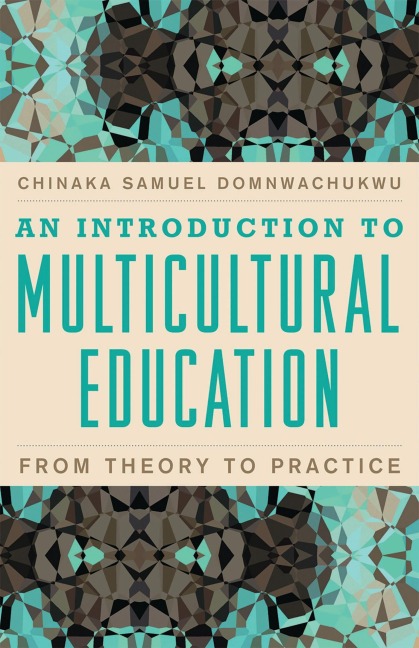
An Introduction to Multicultural Education provides a balance between the principles and practice of multicultural education in the K-12 classroom, presenting multicultural education as a learner-centered pedagogy. DomNwachukwu's book projects foundational principles and practices that make multicultural education relevant and appealing, while eliminating ideas and practices that produce negative reactions and outcomes. An Introduction to Multicultural Education utilizes historical data to make the case for equity pedagogy, going further than other books on this topic to provide practical steps and approaches to implementing multicultural education.
The person and cultural identity of the teacher is addressed in-depth. The person and nature of the learner and the learning process are addressed as foundational ideas behind equity pedagogy. Such multicultural education topics as gender equity, universal access, religious pluralism, and bilingualism (or multilingualism) are all addressed with much detail. This book provides pre-service and in-service teachers with the theoretical and practical support they need to provide equal and meaningful education to all the students in their classrooms.
Chinaka Samuel DomNwachukwu is associate dean for academic affairs, professor of multicultural education, and chair of the Department of Teacher Education at Azusa Pacific University, Azusa California.
Chapter 1 Humans as Cultural Beings: Foundations for Multicultural Education
Chapter 2 Engaging the American Cultural Mosaic
Chapter 3 Engaging the Crises of Cross-Cultural Encounters
Chapter 4 Educational Inequalities in American Schools
Chapter 5 Historical Foundations of Multicultural Education in the United States
Chapter 6 Title One Categorical Fund: A Federal Covernment Attempt at Educational Equity
Chapter 7 American Multilingualism and the Challange of the English Language Learner in the American Educational System
Chapter 8 Religious Diversity and the Public School Systems
Chapter 9 Gender and Women's Rights in American Educational History
Chapter 10 The Learner and the Educational Process
Chapter 11 Exceptionality and Learner-Centered Pedagogies for the Regular Education Classroom
Chapter 12 Standards-based Planning and Teaching in a Multicultural Classroom
Dieses eBook wird im PDF-Format geliefert und ist mit einem Adobe Kopierschutz (DRM) versehen. Sie können dieses eBook mit allen Geräten lesen, die das PDF-Format und den Adobe Kopierschutz (DRM) unterstützen.
Zum Beispiel mit den folgenden Geräten:
• tolino Reader
Laden Sie das eBook direkt über den Reader-Shop auf dem tolino herunter oder übertragen Sie das eBook auf Ihren tolino mit einer kostenlosen Software wie beispielsweise Adobe Digital Editions.
• Sony Reader & andere eBook Reader
Laden Sie das eBook direkt über den Reader-Shop herunter oder übertragen Sie das eBook mit der kostenlosen Software Sony READER FOR PC/Mac oder Adobe Digital Editions auf ein Standard-Lesegeräte mit epub- und Adobe DRM-Unterstützung.
• Tablets & Smartphones
Möchten Sie dieses eBook auf Ihrem Smartphone oder Tablet lesen, finden Sie hier unsere kostenlose Lese-App für iPhone/iPad und Android Smartphone/Tablets.
• PC & Mac
Lesen Sie das eBook direkt nach dem Herunterladen mit einer kostenlosen Lesesoftware, beispielsweise Adobe Digital Editions, Sony READER FOR PC/Mac oder direkt über Ihre eBook-Bibliothek in Ihrem Konto unter „Meine eBooks“ - „online lesen“.
Schalten Sie das eBook mit Ihrer persönlichen Adobe ID auf bis zu sechs Geräten gleichzeitig frei.
Bitte beachten Sie, dass die Kindle-Geräte das Format nicht unterstützen und dieses eBook somit nicht auf Kindle-Geräten lesbar ist.