Und dann auf "Zum Home-Bildschirm [+]".

Stöbern
genialokal zum Startbildschirm hinzufügen
Installieren Sie die genialokal App auf Ihrem Startbildschirm für einen schnellen Zugriff und eine komfortable Nutzung.
Installieren Sie die genialokal App auf Ihrem Startbildschirm für einen schnellen Zugriff und eine komfortable Nutzung.
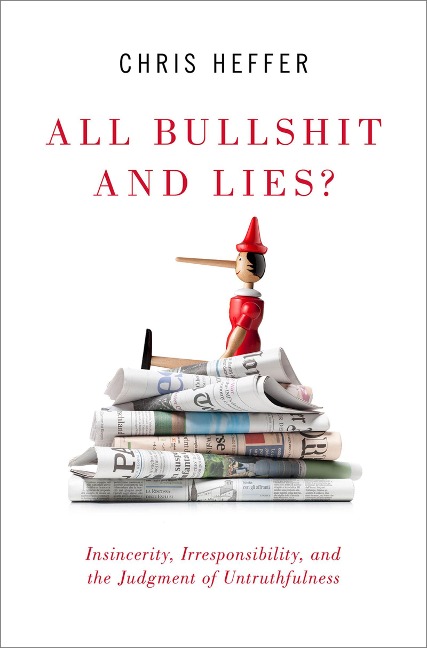
In a postfactual world in which claims are often held to be true only to the extent that they confirm pre-existing or partisan beliefs, this book asks crucial questions: how can we identify the many forms of untruthfulness in discourse? How can we know when their use is ethically wrong? How can we judge untruthfulness in the messiness of situated discourse? Drawing on pragmatics, philosophy, psychology, and law, All Bullshit and Lies? develops a comprehensive framework for analyzing untruthful discourse in situated context. TRUST, or Trust-related Untruthfulness in Situated Text, sees untruthfulness as encompassing not only deliberate manipulations of what is believed to be true (the insincerity of withholding, misleading, and lying) but also the distortions that arise from an irresponsible attitude towards the truth (dogma, distortion, and bullshit). Chris Heffer discusses times when truth is not in play, as in jokes or fiction, as well as instances when concealing the truth can achieve a greater good. The TRUST framework demonstrates that untruthfulness becomes unethical in discourse, though, when it unjustifiably breaches the trust an interlocutor invests in the speaker. In addition to the theoretical framework, this book provides a clear, practical heuristic for analyzing discursive untruthfulness and applies it to such cases of public discourse as the Brexit battle bus, Trump's tweet about voter fraud, Blair and Bush's claims about weapons of mass destruction, and the multiple forms of untruthfulness associated with the Skripal poisoning case. In All Bullshit and Lies? Chris Heffer turns a critical eye to fundamental questions of truthfulness and trust in our society. This timely and interdisciplinary investigation of discourse provides readers a deeper theoretical understanding of untruthfulness in a postfactual world.
Chris Heffer is Reader in Linguistics in the School of English, Communication, and Philosophy at Cardiff University. He is the author of The Language of Jury Trial (2005) and editor of Legal-Lay Communication: Textual Travels in the Law (OUP 2013).
Acknowledgments Preface: On Epistemic Partisanship and Trust INTRODUCTION PART 1: THEORETICAL UNDERPINNINGS 1 Trust, Co-operation and Insincerity 2 Bullshit, Inquiry and Irresponsibility PART 2: THE TRUST FRAMEWORK 3 Claims of and Evidence for Untruthfulness 4 Justified Untruthfulness 5 Insincere Discourse Strategies 6 Epistemically Irresponsible Discourse 7 Culpability and Breach of Trust PART 3: CASE STUDIES 8 Discourse and Democracy: The TRUST Heuristic and Sample Analyses 9 Poisoning and Partisanship: An Analysis of the Salisbury Nerve Agent Attack CONCLUSION References.
Dieses eBook wird im PDF-Format geliefert und ist mit einem Adobe Kopierschutz (DRM) versehen. Sie können dieses eBook mit allen Geräten lesen, die das PDF-Format und den Adobe Kopierschutz (DRM) unterstützen.
Zum Beispiel mit den folgenden Geräten:
• tolino Reader
Laden Sie das eBook direkt über den Reader-Shop auf dem tolino herunter oder übertragen Sie das eBook auf Ihren tolino mit einer kostenlosen Software wie beispielsweise Adobe Digital Editions.
• Sony Reader & andere eBook Reader
Laden Sie das eBook direkt über den Reader-Shop herunter oder übertragen Sie das eBook mit der kostenlosen Software Sony READER FOR PC/Mac oder Adobe Digital Editions auf ein Standard-Lesegeräte mit epub- und Adobe DRM-Unterstützung.
• Tablets & Smartphones
Möchten Sie dieses eBook auf Ihrem Smartphone oder Tablet lesen, finden Sie hier unsere kostenlose Lese-App für iPhone/iPad und Android Smartphone/Tablets.
• PC & Mac
Lesen Sie das eBook direkt nach dem Herunterladen mit einer kostenlosen Lesesoftware, beispielsweise Adobe Digital Editions, Sony READER FOR PC/Mac oder direkt über Ihre eBook-Bibliothek in Ihrem Konto unter „Meine eBooks“ - „online lesen“.
Schalten Sie das eBook mit Ihrer persönlichen Adobe ID auf bis zu sechs Geräten gleichzeitig frei.
Bitte beachten Sie, dass die Kindle-Geräte das Format nicht unterstützen und dieses eBook somit nicht auf Kindle-Geräten lesbar ist.