Und dann auf "Zum Home-Bildschirm [+]".

Stöbern
genialokal zum Startbildschirm hinzufügen
Installieren Sie die genialokal App auf Ihrem Startbildschirm für einen schnellen Zugriff und eine komfortable Nutzung.
Installieren Sie die genialokal App auf Ihrem Startbildschirm für einen schnellen Zugriff und eine komfortable Nutzung.


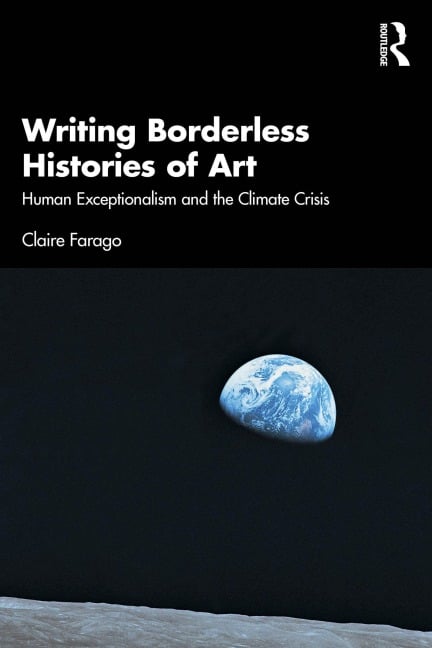
Writing Borderless Histories of Art is an aspirational, historical, and critical project that offers a fundamental rethinking of the relationship of humans to the rest of nature. Social justice, Indigeneity, abuses of power, and the environmental crisis are the burning issues of today. A transcultural approach calls for abandoning structures of domination that are built into the academic disciplines, regardless of the scale or extent of interpretation. Drawing upon writings from a wide range of fields, Claire Farago argues that Art History can play a role in advancing the public's interconnectedness with the planetary life-support system that so urgently needs to be restored. Studying the discourse on art at the intersection of global capitalism, environmental degradation, and human subjection over four centuries, Writing Borderless Histories of Art advocates ontologies that do not distinguish between the sentience of humans and other animals and go beyond the dualistic metaphysics of the nature/culture divide. While this book is addressed to a wide audience, its multilayered approach also reaches out to art historians for whom chronology, canons, and style are structures fundamental to the organization and operation of the discipline. The book is neither a history of ideas nor a search for the origins of art history, but a recognition of the structures that drive its narratives.
Claire Farago is Professor Emerita at the University of Colorado Boulder, currently living in Los Angeles. She has written extensively on processes of transculturation, the epistemological foundations of art history, art theory, and museums. Her anthology, Reframing the Renaissance (1995) was a groundbreaking contribution to transcultural studies in art history.
Introduction: Taking Responsibility in the Age of Capital Intermezzo I: Time as a Healer 1. Defining an Ecological Approach: On the History of Human Exceptionalism 2. How the European Discourse on Art Shaped Accounts of Human Exceptionalism Intermezzo II: What Is "National Style"? 3. Hauntologies of Art: "Race," Climate, and Genius 4. A Transcultural Approach to Histories of Vision Intermezzo III: Deep History: Disentangling "Race" and Genetic Science 5. Borderless Thinking on our Animal Planet: On the Future of the Past
Dieses eBook wird im PDF-Format geliefert und ist mit einem Adobe Kopierschutz (DRM) versehen. Sie können dieses eBook mit allen Geräten lesen, die das PDF-Format und den Adobe Kopierschutz (DRM) unterstützen.
Zum Beispiel mit den folgenden Geräten:
• tolino Reader
Laden Sie das eBook direkt über den Reader-Shop auf dem tolino herunter oder übertragen Sie das eBook auf Ihren tolino mit einer kostenlosen Software wie beispielsweise Adobe Digital Editions.
• Sony Reader & andere eBook Reader
Laden Sie das eBook direkt über den Reader-Shop herunter oder übertragen Sie das eBook mit der kostenlosen Software Sony READER FOR PC/Mac oder Adobe Digital Editions auf ein Standard-Lesegeräte mit epub- und Adobe DRM-Unterstützung.
• Tablets & Smartphones
Möchten Sie dieses eBook auf Ihrem Smartphone oder Tablet lesen, finden Sie hier unsere kostenlose Lese-App für iPhone/iPad und Android Smartphone/Tablets.
• PC & Mac
Lesen Sie das eBook direkt nach dem Herunterladen mit einer kostenlosen Lesesoftware, beispielsweise Adobe Digital Editions, Sony READER FOR PC/Mac oder direkt über Ihre eBook-Bibliothek in Ihrem Konto unter „Meine eBooks“ - „online lesen“.
Schalten Sie das eBook mit Ihrer persönlichen Adobe ID auf bis zu sechs Geräten gleichzeitig frei.
Bitte beachten Sie, dass die Kindle-Geräte das Format nicht unterstützen und dieses eBook somit nicht auf Kindle-Geräten lesbar ist.