Und dann auf "Zum Home-Bildschirm [+]".

Stöbern
genialokal zum Startbildschirm hinzufügen
Installieren Sie die genialokal App auf Ihrem Startbildschirm für einen schnellen Zugriff und eine komfortable Nutzung.
Installieren Sie die genialokal App auf Ihrem Startbildschirm für einen schnellen Zugriff und eine komfortable Nutzung.
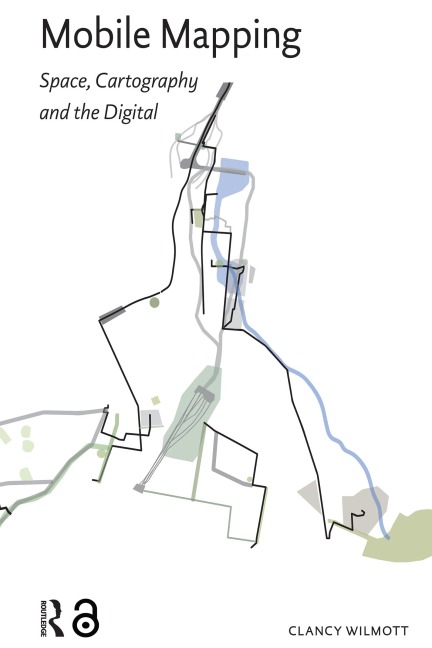
This book argues for a theory of mobile mapping, a situated and spatial approach towards researching how everyday digital mobile media practices are bound up in global systems of knowledge and power. Drawing from literature in media studies and geography -- and the work of Michel Foucault and Doreen Massey -- it examines how geographical and historical material, social, and cultural conditions are embedded in the way in which contemporary (digital) cartographies are read, deployed, and engaged. This is explored through seventeen walking interviews in Hong Kong and Sydney, as potent discourses like cartographic reason continue to transform and weave through the world in ways that haunt mobile mapping and bring old conflicts into new media. In doing so, Mobile Mapping offers an interdisciplinary rethinking about how multiple translations of spatial knowledges between rational digital epistemologies and tacit ways of understanding space and experience might be conceptualized and researched.
Clancy Wilmott is Assistant Professor in the Berkeley Centre for New Media and the Department of Geography at the University of California, Berkeley. She was previously Lecturer in Human Geography at the University of Manchester, Vice-Chancellors Postdoctoral Research Fellow at RMIT University, and a Postdoctoral Researcher on European Research Council project Charting the Digital based at the Centre for Interdisciplinary Methodologies of the University of Warwick. Her research focuses on the relationship between digital tech nologies and spatial representation across cartography and new media.
Part One: Maps, Mappers, Mapping, 1. Introduction: mapping beyond the map, 2. Tools: epistemologies, methodologies, an-archaeologies, Part Two: Space/Sydney, 3. Other spaces, 4. Unsettling spaces, Marianna/Landscapes, Kyja/Grids, Tanija/Infrastructures, 5. Feeling spaces, Sarah/Hauntings, Nick/Intuitions, Shaun/Embodiments, 6.Imagining spaces, Cliff/Stories, Benjamin/Possibilities, Cassie/Dreams, Part Three: Cartography/Cities, 7. Drawing the line, 8. Here, there be digits., Part Four: Digital/Hong Kong, 9. Other digitalities, 10. Classifying the digital, Daren/Names, Ellen/Identities, Ravi/Numbers, Vicki/Lines, 11. Stabilising the digital, Taylor/memories, Camillie/mobilities, Magdalna/natures, Mohammed/topographies, Part Five: Mobile Mapping, 12. Conclusion: Endings and Beginnings, 13. Index
Dieses eBook wird im PDF-Format geliefert und ist mit einem Adobe Kopierschutz (DRM) versehen. Sie können dieses eBook mit allen Geräten lesen, die das PDF-Format und den Adobe Kopierschutz (DRM) unterstützen.
Zum Beispiel mit den folgenden Geräten:
• tolino Reader
Laden Sie das eBook direkt über den Reader-Shop auf dem tolino herunter oder übertragen Sie das eBook auf Ihren tolino mit einer kostenlosen Software wie beispielsweise Adobe Digital Editions.
• Sony Reader & andere eBook Reader
Laden Sie das eBook direkt über den Reader-Shop herunter oder übertragen Sie das eBook mit der kostenlosen Software Sony READER FOR PC/Mac oder Adobe Digital Editions auf ein Standard-Lesegeräte mit epub- und Adobe DRM-Unterstützung.
• Tablets & Smartphones
Möchten Sie dieses eBook auf Ihrem Smartphone oder Tablet lesen, finden Sie hier unsere kostenlose Lese-App für iPhone/iPad und Android Smartphone/Tablets.
• PC & Mac
Lesen Sie das eBook direkt nach dem Herunterladen mit einer kostenlosen Lesesoftware, beispielsweise Adobe Digital Editions, Sony READER FOR PC/Mac oder direkt über Ihre eBook-Bibliothek in Ihrem Konto unter „Meine eBooks“ - „online lesen“.
Schalten Sie das eBook mit Ihrer persönlichen Adobe ID auf bis zu sechs Geräten gleichzeitig frei.
Bitte beachten Sie, dass die Kindle-Geräte das Format nicht unterstützen und dieses eBook somit nicht auf Kindle-Geräten lesbar ist.