Und dann auf "Zum Home-Bildschirm [+]".

Stöbern
genialokal zum Startbildschirm hinzufügen
Installieren Sie die genialokal App auf Ihrem Startbildschirm für einen schnellen Zugriff und eine komfortable Nutzung.
Installieren Sie die genialokal App auf Ihrem Startbildschirm für einen schnellen Zugriff und eine komfortable Nutzung.
Ihr gewünschter Artikel ist in 0 Buchhandlungen vorrätig - wählen Sie hier eine Buchhandlung in Ihrer Nähe aus:

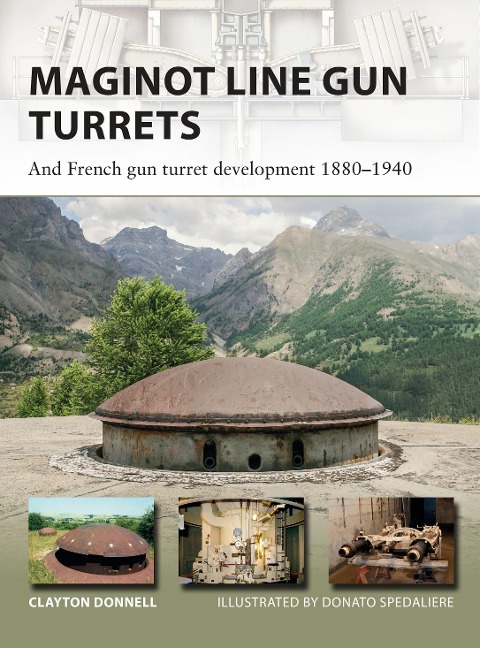
The Maginot Line was one of the most advanced networks of fortifications in history. Built in the aftermath of World War I, and stretching along the French eastern border from Belgium to Switzerland, it was designed to prevent German troops from ever setting foot on French soil again. Its primary defensive weapons were the gun turrets. Beginning development in the 1870s and improving on German designs, they were constructed out of steel wedges and could revolve and disappear from sight after firing, making them impervious to enemy bombardment. They were deadly accurate and created havoc on the German units that attacked the line during their invasion of France in 1940. This fully illustrated study will examine the technical details of the French artillery turrets. It will show the evolution of the design of the guns and turrets used in the French forts before and during World War I, then those built exclusively for the Maginot Line to give a comprehensive overview of the weapons designed to protect France from invasion.
Clayton Donnell has had a life-long fascination with the Brialmont forts built at Liège and Namur. He spent his early years living in Belgium, and often visited the sites of the forts. Over the years he has amassed a large collection of material relating to this period, and has translated much of it from French to English. He has previously co-written Modern European Military Fortifications, 1870-1950: A Selected Annotated Bibliography (Praeger, 2004), and has created websites on the forts of Liège and Namur, and the Maginot Line.
Introduction Design and Development Operation History Variants Colour plate commentary