Und dann auf "Zum Home-Bildschirm [+]".

Stöbern
genialokal zum Startbildschirm hinzufügen
Installieren Sie die genialokal App auf Ihrem Startbildschirm für einen schnellen Zugriff und eine komfortable Nutzung.
Installieren Sie die genialokal App auf Ihrem Startbildschirm für einen schnellen Zugriff und eine komfortable Nutzung.
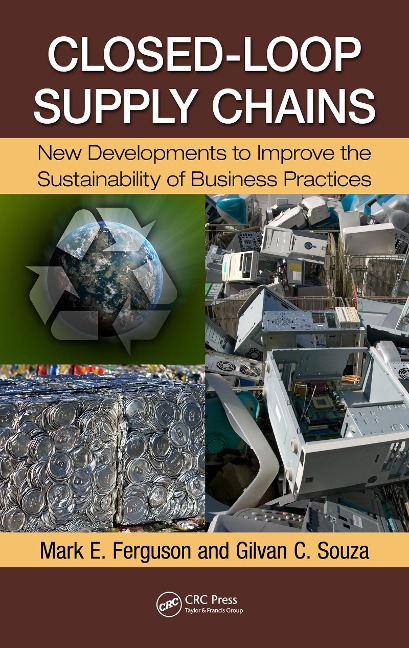
Closed-loop supply chain activities such as remanufacturing, recycling, dismantling for spare parts, and reverse logistics have helped many companies tap into new revenue streams by finding secondary markets for their products, all while reducing their overall carbon footprint. Written by academic experts, in language that is accessible to practitioners, this authoritative resource examines recent research and case studies of companies running profitable reuse/remanufacture operations in various industries. It illustrates profitable practices in returned and recovered products, clearly explaining how to: design a reverse logistics network, conduct production planning, implement effective marketing strategies, and apply closed-loop supply chain strategies in industries besides manufacturing. From product development to materials to assembly and profitability, this complete resource explores the impact of these processes across all aspects of the supply chain.
Mark Ferguson is a professor of Management Science and Wilbur S. Smith Distinguished Fellow at the Moore School of Business, University of South Carolina. He received his PhD in Business Administration, with a concentration in Operations Management from Duke University in 2001. He holds a BS in Mechanical Engineering from Virginia Tech and an MS in Industrial Engineering from Georgia Tech. Dr. Ferguson's research interests involve many areas of supply chain management and sustainability including production planning policies for remanufacturing, product line extensions involving remanufactured products, the use of leasing and trade-in policies to recover end-of-use products, and business strategies for responding to secondary markets. Dr. Ferguson serves as the faculty director for Technology and Management Program (www.mgt.gatech.edu/tm) and the coordinator for the focused research area on dynamic pricing and revenue management (http://mgt.gatech.edu/fac_research/centers_initiatives/pricing/index.html). Two of his papers have won best paper awards from the Production and Operations Management Society and several of his research projects have been funded by the National Science Foundation. Prior to joining Georgia Tech, he had five years of experience as a manufacturing engineer and supply chain manager with IBM. Gilvan "Gil" Souza is an Associate Professor of Operations Management at the Kelley School of Business, Indiana University. Prior to coming to Kelley, Gil was a tenured associate professor at the University of Maryland. He received a Ph.D. in operations management from UNC, an MBA from Clemson University, and a BS in aeronautical engineering from ITA (Brazil). Prior to entering academic, Gil had about five years of experience in product development and product planning at Volkswagen of Brazil. His research focuses in supply chain management, remanufacturing, and sustainable operat
A Commentary on Closed Loop Supply Chains. STRATEGIC CONSIDERATIONS. Strategic Issues in Closed Loop Supply Chains with Remanufacturing. Environmental Legislation Regarding Product Take-back and Recovery. Product Design Issues. TACTICAL CONSIDERATIONS. Designing the Reverse Logistics Network. Product Acquisition, Grading, and Disposition Decisions. Production Planning in Remanufacturing. Analyzing the Market for Remanufactured Products. INDUSTRY CHARACTERISTICS AND CASE STUDIES. Examples of Existing Profitable Practices in Product Take-back and Recovery. Reuse and Recycling in the Movie Industry. Reverse Supply Chain in Hospitals: Lessons from Three Case Studies in Montreal. INTERDISCIPLINARY RESEARCH ON CLOSED LOOP SUPPLY CHAINS. Interdisciplinarity in Closed-Loop Supply Chain Management Research. Empirical Studies in Closed-loop Supply Chains: Can We Build a Greener Mousetrap?. Conclusion and Future Research Directions.
Dieses eBook wird im PDF-Format geliefert und ist mit einem Adobe Kopierschutz (DRM) versehen. Sie können dieses eBook mit allen Geräten lesen, die das PDF-Format und den Adobe Kopierschutz (DRM) unterstützen.
Zum Beispiel mit den folgenden Geräten:
• tolino Reader
Laden Sie das eBook direkt über den Reader-Shop auf dem tolino herunter oder übertragen Sie das eBook auf Ihren tolino mit einer kostenlosen Software wie beispielsweise Adobe Digital Editions.
• Sony Reader & andere eBook Reader
Laden Sie das eBook direkt über den Reader-Shop herunter oder übertragen Sie das eBook mit der kostenlosen Software Sony READER FOR PC/Mac oder Adobe Digital Editions auf ein Standard-Lesegeräte mit epub- und Adobe DRM-Unterstützung.
• Tablets & Smartphones
Möchten Sie dieses eBook auf Ihrem Smartphone oder Tablet lesen, finden Sie hier unsere kostenlose Lese-App für iPhone/iPad und Android Smartphone/Tablets.
• PC & Mac
Lesen Sie das eBook direkt nach dem Herunterladen mit einer kostenlosen Lesesoftware, beispielsweise Adobe Digital Editions, Sony READER FOR PC/Mac oder direkt über Ihre eBook-Bibliothek in Ihrem Konto unter „Meine eBooks“ - „online lesen“.
Schalten Sie das eBook mit Ihrer persönlichen Adobe ID auf bis zu sechs Geräten gleichzeitig frei.
Bitte beachten Sie, dass die Kindle-Geräte das Format nicht unterstützen und dieses eBook somit nicht auf Kindle-Geräten lesbar ist.