Und dann auf "Zum Home-Bildschirm [+]".

Stöbern
genialokal zum Startbildschirm hinzufügen
Installieren Sie die genialokal App auf Ihrem Startbildschirm für einen schnellen Zugriff und eine komfortable Nutzung.
Installieren Sie die genialokal App auf Ihrem Startbildschirm für einen schnellen Zugriff und eine komfortable Nutzung.
Ihr gewünschter Artikel ist in 0 Buchhandlungen vorrätig - wählen Sie hier eine Buchhandlung in Ihrer Nähe aus:

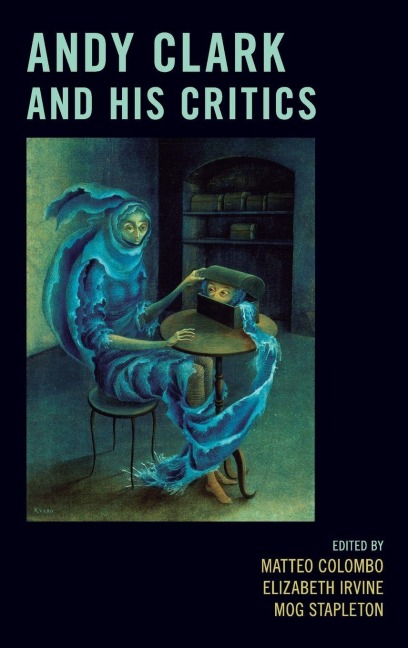
Andy Clark is a leading philosopher of cognitive science, whose work has had an extraordinary impact throughout philosophy, psychology, neuroscience, and robotics. His monographs have led the way for new research programs in the philosophy of mind and cognition: Microcognition (1989) and Associative Engines (1993) introduced the philosophical community to connectionist research and the novel issues it raised; Being There (1997) showed the relevance of embodiment, dynamical systems theory, and minimal computation frameworks for the study of the mind; Natural Born Cyborgs (OUP 2003) presented an accessible development of embodied and embedded approaches to understanding human nature and cognition; Supersizing the Mind (OUP 2008) developed this yet further along with the famous "Extended Mind" hypothesis; and Surfing Uncertainty (OUP 2017) presents a framework for uniting perception, action, and the embodied mind. In Andy Clark and His Critics, a range of high-profile researchers in philosophy of mind, philosophy of cognitive science, and empirical cognitive science, critically engage with Clark's work across the themes of: Extended, Embodied, Embedded, Enactive, and Affective Minds; Natural Born Cyborgs; and Perception, Action, and Prediction. Daniel Dennett provides a foreword on the significance of Clark's work, and Clark replies to each section of the book, thus advancing current literature with original contributions that will form the basis for new discussions, debates and directions in the discipline.
Matteo Colombo is Associate Professor in the Tilburg Center for Logic, Ethics, and Philosophy of Science, and in the Department of Philosophy at Tilburg University. Elizabeth Irvine is a Lecturer at Cardiff University. Mog Stapleton is a Research Fellow in the School of Philosophy, Psychology and Language Sciences at the University of Edinburgh.
- Foreword Daniel C. Dennett - List of Contributors - Introduction Matteo Colombo, Liz Irvine and Mog Stapleton - Part 1: Extensions and Alterations - Chapter 1: Extended Cognition and Extended Consciousness David Chalmers - Chapter 2: The Elusive Extended Mind: Extended information processing doesn't equal extended mind - Fred Adams - Chapter 3: Clark on Language, Cognition, and Extended Cognition Kenneth Aizawa - Chapter 4: Extended Mental Features Kathalin Farkas - Chapter 5: Extended Affectivity, Reconsidered Michelle Maiese - Chapter 6: Matters of the Flesh: The Role(s) of Body in Cognition Lawrence Shapiro - Chapter 7: Breaking the Waves: Beyond Parity and Complementarity in the Arguments for Extended Cognition - Michael Wheeler - Part 2: On Being a Cyborg - Chapter 8: Supercharged Apes versus Supersized Minds: Embracing Continuity while Accepting Difference Louise Barrett - Chapter 9: Building Inner Tools Robert Goldstone - Chapter 10: When is a Mind Extended? David Kirsh - Chapter 11: The Archaeology of the Extended Mind Kim Sterelny - Part 3: Embodied, Extended, but Predictive Too? - Chapter 12: The World Well Gained: On the epistemic implications of ecological information - Michael Anderson and Anthony Chemero - Chapter 13: Beyond the Desert Landscape Karl Friston - Chapter 14: Quick'n'lean or Slow and Rich? Andy Clark on predictive processing and embodied cognition - Jakob Hohwy - Chapter 15: How Radical is Predictive Processing? Nico Orlandi and Geoff Lee - Chapter 16: Ways of Mindmaking Jesse Prinz - Chapter 17: Being a Beast Machine: The origins of selfhood in control-oriented interoceptive inference Anil Seth - Chapter 18: The Minds of Insects Barbara Webb - Replies to Critics - In Search of the Embodied, Extended, Enactive, Predictive (EEE-P) Mind Andy Clark - Index