Und dann auf "Zum Home-Bildschirm [+]".

Stöbern
genialokal zum Startbildschirm hinzufügen
Installieren Sie die genialokal App auf Ihrem Startbildschirm für einen schnellen Zugriff und eine komfortable Nutzung.
Installieren Sie die genialokal App auf Ihrem Startbildschirm für einen schnellen Zugriff und eine komfortable Nutzung.
Ihr gewünschter Artikel ist in 0 Buchhandlungen vorrätig - wählen Sie hier eine Buchhandlung in Ihrer Nähe aus:

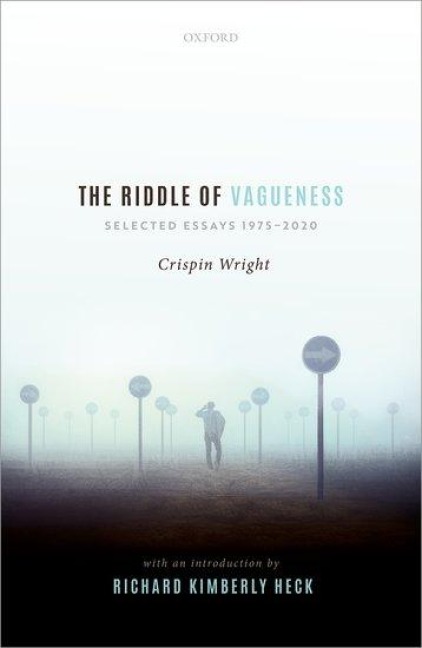
What should we make of the vagueness we find in our language and thought? This has been one of the most debated questions in philosophy in recent decades. Crispin Wright has been a key figure in this area since the 1970s, and now at last his highly influential work on the topic is drawn together in a book.
Crispin Wright did his Ph.D. at Cambridge before being elected Prize Fellow (1969) at All Souls College Oxford, where he spent the first nine years of his career. He was appointed to the Chair of Logic and Metaphysics at St Andrews in 1978, at that time the youngest ever appointment to an established chair in philosophy in the UK. At St Andrews, his achievements included appointment (1999) to the first Wardlaw University Professorship and the foundation (1998) and Directorship for its first decade of the research centre, Arché. He is currently Global Distinguished Professor of Philosophy at New York University and Professor of Philosophical Research at the University of Stirling. Previously, he has taught at Oxford, Columbia, Michigan, Princeton, St Andrews, and at Aberdeen from 2009-15 where he held the Regius Chair of Logic and directed the Northern Institute of Philosophy.
Preface and Acknowledgements
Origins of the Essays
Introduction
1: On the Coherence of Vague Predicates
2: Language-Mastery and the Sorites Paradox
3: Hairier than Putnam Thought (with Stephen Read)
4: Further Reflections on the Sorites Paradox
5: Is Higher Order Vagueness Coherent?
6: The Epistemic Conception of Vagueness
7: On Being in a Quandary: Relativism, Vagueness, Logical Revisionism
8: Rosenkranz on Quandary, Vagueness, and Intuitionism
9: Vagueness: a Fifth Column Approach
10: Vagueness-related Partial Belief and the Constitution of Borderline Cases
11: "Wang's Paradox"
12: The Illusion of Higher-Order Vagueness
13: On the Characterisation of Borderline Cases
14: Intuitionism and Vagueness
Appendix to Chapter 14