Und dann auf "Zum Home-Bildschirm [+]".

Stöbern
genialokal zum Startbildschirm hinzufügen
Installieren Sie die genialokal App auf Ihrem Startbildschirm für einen schnellen Zugriff und eine komfortable Nutzung.
Installieren Sie die genialokal App auf Ihrem Startbildschirm für einen schnellen Zugriff und eine komfortable Nutzung.
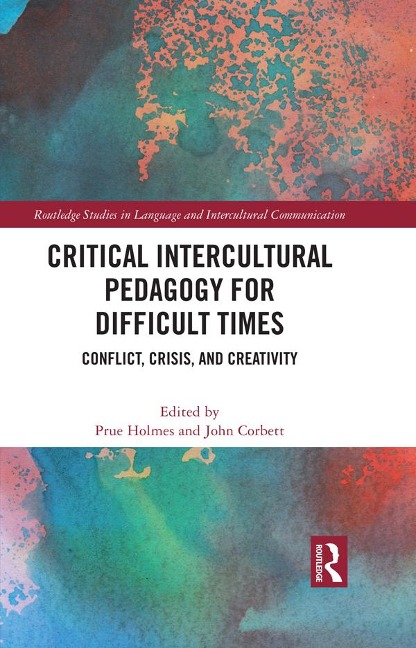
This collection lends a critical decolonising lens to intercultural communication research, bringing together perspectives on how forms of education embedded in the arts and humanities can open up intercultural understanding among young people in conditions of conflict and protracted crises. The book draws on case studies from a range of educational contexts in the Global South which engage in creative arts methodologies to foreground decolonising approaches to intercultural communication in which researchers question their own power in the research process. The volume offers intercultural resources that can be used by researchers and community support groups to foster active intercultural communication, dialogue, participation, and responsibility among young people in these settings and those who may be marginalised from them. The collection also highlights the reflexive accounts of researchers working in a transnational, interdisciplinary, and multilingual research network and the subsequent opportunities and challenges of working in such networks. Advocating for intercultural understanding among young people in higher education and a greater focus on social justice in intercultural communication research, this book will be of interest to students and researchers in applied linguistics, language education, intercultural education, and multilingualism.
Prue Holmes is Professor in the School of Education at Durham University, UK. John Corbett is Professor of English at Beijing Normal University-Hong Kong Baptist University United International College.
Chapter 1. Introduction: Critical intercultural pedagogy in contexts of conflict and crises Prue Holmes and John Corbett Part I - The case studies: Examples of critical intercultural pedagogy for language and intercultural communication in contexts of crises Chapter 2. Pre-service language teachers as multilingual mediators Beatriz Peña Dix Chapter 3. Connecting Palestine and Brazil: Towards a critical and creative intercultural pedagogy for online intercultural exchange Refaat Alreer, Nazmi Al-Masri, Bruno Ferreira di Lima and Janaina Weissheimer Chapter 4. Hearing the intercultural voices: Shared religio-cultural music and dialogue among Turkish students and Syrian refugee youths Zeynep Özde Atesok, Ayse Zisan Furat and Ubeydullah Sezikli Chapter 5. To be with the Other on campus: Learning for intercultural understanding through participatory photography Filiz Göktuna Yaylaci, Ali Faruk Yaylaci and Kadriye Kobak Chapter 6. Participation, understanding, and dialogue: Intercultural learning among students in higher education and refugee youths Prue Holmes, Marta Moskal and Taha Rajab Part II - Responses from the Global South: Decentering "Western" and "Eurocentric" epistemologies and pedagogies Chapter 7. Intercultural responsibility in conditions of conflict and crises: Glocademics in action Manuela Guilherme Chapter 8. 'I'm afraid there are no easy fixes': Reflections on teaching intercultural communication through embracing vulnerability Khawla Badwan Chapter 9. Intersecting languages, cultures, and identities in decoloniality Clarissa Menezes Jordão Chapter 10. Interculturality, interculturalidad, and the colonial difference Robert Aman Part III - Building multilingual intercultural research networks in higher education Chapter 11. The establishment, affordances, and impact of an international research network: Building an intercultural pedagogy for higher education in conditions of conflict and protracted crises John Corbett Chapter 12. An ethic for researching multilingually in transnational, multilingual, multidisciplinary research teams Prue Holmes and Taha Rajab Afterword Prue Holmes and John Corbett
Dieses eBook wird im PDF-Format geliefert und ist mit einem Adobe Kopierschutz (DRM) versehen. Sie können dieses eBook mit allen Geräten lesen, die das PDF-Format und den Adobe Kopierschutz (DRM) unterstützen.
Zum Beispiel mit den folgenden Geräten:
• tolino Reader
Laden Sie das eBook direkt über den Reader-Shop auf dem tolino herunter oder übertragen Sie das eBook auf Ihren tolino mit einer kostenlosen Software wie beispielsweise Adobe Digital Editions.
• Sony Reader & andere eBook Reader
Laden Sie das eBook direkt über den Reader-Shop herunter oder übertragen Sie das eBook mit der kostenlosen Software Sony READER FOR PC/Mac oder Adobe Digital Editions auf ein Standard-Lesegeräte mit epub- und Adobe DRM-Unterstützung.
• Tablets & Smartphones
Möchten Sie dieses eBook auf Ihrem Smartphone oder Tablet lesen, finden Sie hier unsere kostenlose Lese-App für iPhone/iPad und Android Smartphone/Tablets.
• PC & Mac
Lesen Sie das eBook direkt nach dem Herunterladen mit einer kostenlosen Lesesoftware, beispielsweise Adobe Digital Editions, Sony READER FOR PC/Mac oder direkt über Ihre eBook-Bibliothek in Ihrem Konto unter „Meine eBooks“ - „online lesen“.
Schalten Sie das eBook mit Ihrer persönlichen Adobe ID auf bis zu sechs Geräten gleichzeitig frei.
Bitte beachten Sie, dass die Kindle-Geräte das Format nicht unterstützen und dieses eBook somit nicht auf Kindle-Geräten lesbar ist.