Und dann auf "Zum Home-Bildschirm [+]".

Stöbern
genialokal zum Startbildschirm hinzufügen
Installieren Sie die genialokal App auf Ihrem Startbildschirm für einen schnellen Zugriff und eine komfortable Nutzung.
Installieren Sie die genialokal App auf Ihrem Startbildschirm für einen schnellen Zugriff und eine komfortable Nutzung.
Ihr gewünschter Artikel ist in 0 Buchhandlungen vorrätig - wählen Sie hier eine Buchhandlung in Ihrer Nähe aus:

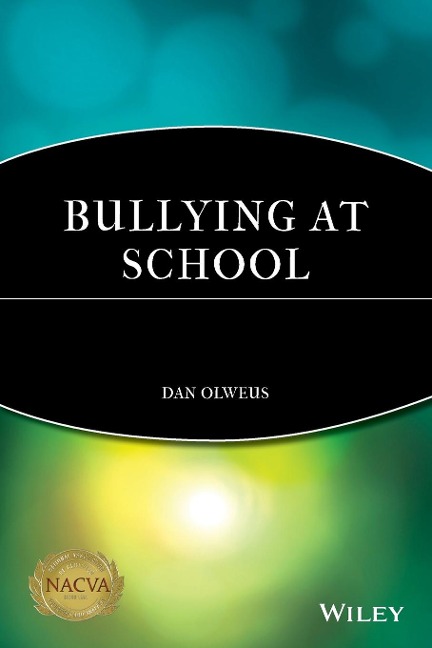
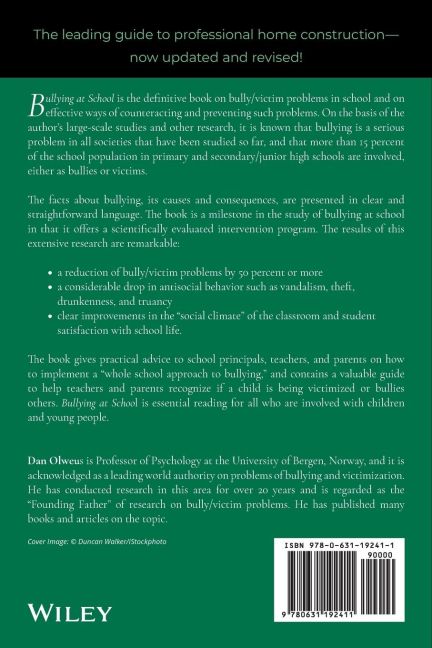
Bullying at School is the definitive book on bully/victim problems in school and on effective ways of counteracting and preventing such problems. On the basis of the author's large-scale studies and other research, it is known that bullying is a serious problem in all societies that have been studied so far, and that more than 15 percent of the school population in primary and secondary/junior high schools are involved, either as bullies or victims. The facts about bullying, its causes and consequences, are presented in clear and straightforward language. The book is a milestone in the study of bullying at school in that it offers a scientifically evaluated intervention program. The results of this extensive research are remarkable: - a reduction of bully/victim problems by 50 percent or more - a considerable drop in antisocial behavior such as vandalism, theft, drunkenness, and truancy - clear improvements in the "social climate" of the classroom and student satisfaction with school life.
The book gives practical advice to school principals, teachers, and parents on how to implement a "whole school approach to bullying," and contains a valuable guide to help teachers and parents recognize if a child is being victimized or bullies others. Bullying at School is essential reading for all who are involved with children and young people.
Dan Olweus is Professor of Psychology at the University of Bergen, Norway, and it is acknowledged as a leading world authority on problems of bullying and victimization. He has conducted research in this area for over 20 years and is regarded as the "Founding Father" of research on bully/victim problems. He has published many books and articles on the topic.
Foreword ix Acknowledgments xl Introduction 1 Part I What We Know About Bullying 5 Stories from the Press 7 What is Meant by Bullying? 8 Some Information About the Recent Studies 10 One Student out of Seven 13 Bully/Victim Problems in Different Grades 14 Have Bully/Victim Problems Increased? 17 Bullying Among Boys and Girls 18 How Much Do the Teachers Do? How Much Do the Parents Know? 20 Bullying at School and on the Way to and from School 21 Comparison between Norway and Sweden 21 Is Bullying Primarily a Big-City Problem? 23 The Size of the School and the Class 23 Supervision during Recess and Lunch Time 25 On Analyses at Different Levels 26 Stability of Bully/Victim Problems over Time 27 Is Bullying a Consequence of Competition at School? 28 What Role do External Deviations Play? 30 What Characterizes the Typical Victims? 31 What Characterizes the Typical Bullies? 34 Physical Weakness and Strength 36 A Concrete Picture 37 What Kind of Rearing Conditions Create Aggressive Children? 39 Group Mechanisms 43 Other Factors 45 A Wider Perspective on Bully/Victim Problems 45 A Question of Fundamental Democratic Rights 48 Portrait Sketches of Henry and Roger, a Victim and a Bully 49 Guide for the Identification of Possible Victims and Bullies 53 Being a Victim - Possible Signs 54 Being a Bully - Possible Signs 58 Part II What We Can Do About Bullying 61 Overview of Intervention Program 64 Goals 65 Awareness and Involvement 66 Measures at the School Level 69 A School Conference Day 69 Supervision and Outdoor Environment 70 Contact Telephone 74 A General PTA Meeting 75 Teacher Groups for the Development of the Social Milieu of the School 77 Study Groups in Parent-Teacher Associations (Parent Circles) 79 Measures at the Class Level 81 Class Rules about Bullying 81 Praise 85 Sanctions 86 Class Meetings 88 Cooperative Learning 89 Common Positive Activities 92 Class PTA Meetings 93 Measures at the Individual Level 97 Serious Talks with the Bully 97 Talks with the Victim 97 Talks with the Parents 100 What Can the Parents of the Bully Do? 101 What Can the Parents of the Victim Do? 103 Use of Imagination 105 Discussion Groups for Parents of Bullied or Bullying Students 106 Change of Class or School 107 Part III Effects of the Intervention Program 109 Main Findings 113 Brief Comments 114 Basic Principles 115 Additional Characteristics 116 Part IV Additional Practical Advice and a Core Program 119 Support from the Principal and Formation of a Coordinating Group 122 Awareness and Involvement 123 Adequate Supervision During Recess and Lunch Time 124 Class Rules and Class Meetings 124 Talks with Involved Students and Their Parents 125 Overview of Core Program 127 Final words 128 References 129 Index 137