Und dann auf "Zum Home-Bildschirm [+]".

Stöbern
genialokal zum Startbildschirm hinzufügen
Installieren Sie die genialokal App auf Ihrem Startbildschirm für einen schnellen Zugriff und eine komfortable Nutzung.
Installieren Sie die genialokal App auf Ihrem Startbildschirm für einen schnellen Zugriff und eine komfortable Nutzung.
Ihr gewünschter Artikel ist in 0 Buchhandlungen vorrätig - wählen Sie hier eine Buchhandlung in Ihrer Nähe aus:

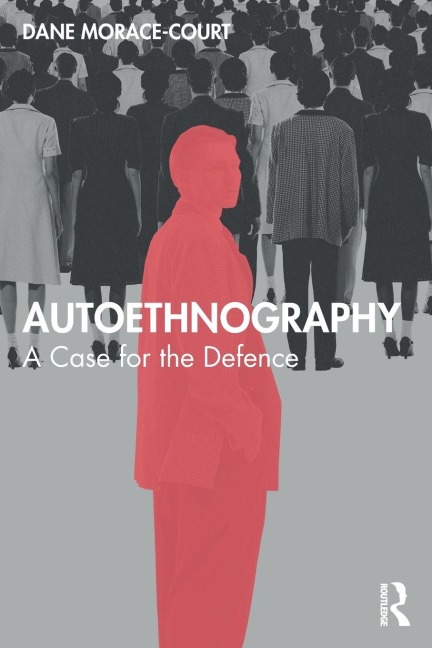
Autoethnography: A Case for the Defence presents a thoughtful and compelling exploration of autoethnography as a research methodology, addressing the growing wave of academic, analytical, and ethical critiques that accompany its rising prominence.
Dane Morace-Court is a senior lecturer in Education at Southampton Solent University. Having used autoethnography as a methodological approach in his own doctoral thesis, Dr. Morace-Court brings a first-hand understanding of the challenges, ethical considerations and potential rewards of such an approach.
1. Chapter One: Introduction to Autoethnography 2. Chapter Two: Can't We All Just Get Along? On the Bifurcation of Evocative and Analytical Autoethnography 3. Chapter Three: Self-Obsession Masquerading as Scholarship? On the Claim that Autoethnography is Narcissistic 4. Chapter Four: Unreliable Narrators: On the Claim that Autoethnography Lacks Validity and Reliability 5. Chapter Five: It's Not Rocket Science: On the Claim that Autoethnography is not Scientific 6. Chapter Six: This Might Get Personal: On the Claim that Autoethnography is an Emotional, Rather than Analytical, Framework 7. Chapter Seven: The Art of Snore: On the Claim that Autoethnography is Uninteresting 8. Chapter Eight: Sharing is Not Caring: On the Claim that Autoethnography is Not Ethical 9. Chapter Nine: Blurred Lines? On the Claim that Autoethnography Blurs the Genres of Creative Writing and Critical Inquiry. 10. Chapter Ten: Nuance to Nonsense: On the Claim that Autoethnography Oversimplifies Complex Social Phenomena 11. Chapter Eleven: Truth Hurts? On the Claim that Autoethnography Further Entrenches Marginalisation 12. Chapter Twelve: I Rest my Case: Conclusions in the Defence of Autoethnography