Und dann auf "Zum Home-Bildschirm [+]".

Stöbern
genialokal zum Startbildschirm hinzufügen
Installieren Sie die genialokal App auf Ihrem Startbildschirm für einen schnellen Zugriff und eine komfortable Nutzung.
Installieren Sie die genialokal App auf Ihrem Startbildschirm für einen schnellen Zugriff und eine komfortable Nutzung.
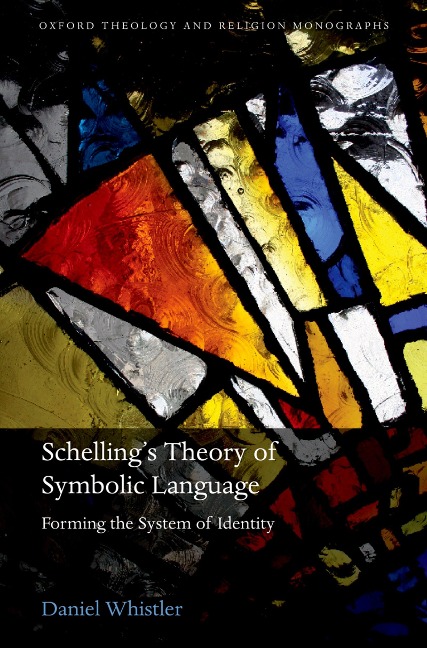
This study reconstructs F.W.J. Schelling's philosophy of language based on a detailed reading of §73 of Schelling's lectures on the Philosophy of Art. Daniel Whistler argues that the concept of the symbol present in this lecture course, and elsewhere in Schelling's writings of the period, provides the key for a non-referential conception of language, where what matters is the intensity at which identity is produced. Such a reconstruction leads Whistler to a detailed analysis of Schelling's system of identity, his grand project of the years 1801 to 1805, which has been continually neglected by contemporary scholarship. In particular, Whistler recovers the concepts of quantitative differentiation and construction as central to Schelling's project of the period. This reconstruction also leads to an original reading of the origins of the concept of the symbol in German thought: there is not one 'romantic symbol', but a whole plethora of experiments in theorising symbolism taking place at the turn of the nineteenth century. At stake, then, is Schelling as a philosopher of language, Schelling as a systematiser of identity, and Schelling as a theorist of the symbol.
- I: Context - 1: The symbol in the Goethezeit - 2: Language in the Goethezeit - II: System - 3: The symbol and the Identitätssystem - 4: Schelling's metaphysics - 5: Quantitative differentiation - 6: Construction - III: Symbol - 7: §39 of the Philosophie der Kunst - 8: Language in the Identitätssystem - 9: §73 of the Philosophie der Kunst - IV: Metaphilosophy - 10: Science without reference - 11: Systematic eclecticism
Dieses eBook wird im PDF-Format geliefert und ist mit einem Adobe Kopierschutz (DRM) versehen. Sie können dieses eBook mit allen Geräten lesen, die das PDF-Format und den Adobe Kopierschutz (DRM) unterstützen.
Zum Beispiel mit den folgenden Geräten:
• tolino Reader
Laden Sie das eBook direkt über den Reader-Shop auf dem tolino herunter oder übertragen Sie das eBook auf Ihren tolino mit einer kostenlosen Software wie beispielsweise Adobe Digital Editions.
• Sony Reader & andere eBook Reader
Laden Sie das eBook direkt über den Reader-Shop herunter oder übertragen Sie das eBook mit der kostenlosen Software Sony READER FOR PC/Mac oder Adobe Digital Editions auf ein Standard-Lesegeräte mit epub- und Adobe DRM-Unterstützung.
• Tablets & Smartphones
Möchten Sie dieses eBook auf Ihrem Smartphone oder Tablet lesen, finden Sie hier unsere kostenlose Lese-App für iPhone/iPad und Android Smartphone/Tablets.
• PC & Mac
Lesen Sie das eBook direkt nach dem Herunterladen mit einer kostenlosen Lesesoftware, beispielsweise Adobe Digital Editions, Sony READER FOR PC/Mac oder direkt über Ihre eBook-Bibliothek in Ihrem Konto unter „Meine eBooks“ - „online lesen“.
Schalten Sie das eBook mit Ihrer persönlichen Adobe ID auf bis zu sechs Geräten gleichzeitig frei.
Bitte beachten Sie, dass die Kindle-Geräte das Format nicht unterstützen und dieses eBook somit nicht auf Kindle-Geräten lesbar ist.