Und dann auf "Zum Home-Bildschirm [+]".

Stöbern
genialokal zum Startbildschirm hinzufügen
Installieren Sie die genialokal App auf Ihrem Startbildschirm für einen schnellen Zugriff und eine komfortable Nutzung.
Installieren Sie die genialokal App auf Ihrem Startbildschirm für einen schnellen Zugriff und eine komfortable Nutzung.
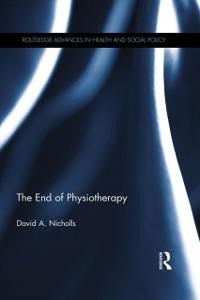
Physiotherapy is arriving at a critical point in its history. Since World War I, physiotherapy has been one of the largest allied health professions and the established provider of orthodox physical rehabilitation. But ageing populations of increasingly chronically ill people, a growing scepticism towards biomedicine and the changing economy of healthcare threaten physiotherapy's long-held status. Paradoxically, physiotherapy's affinity for treating the 'body-as-machine' has resulted in an almost complete inability to identify the roots of the profession's present problems, or define possible ways forward. Physiotherapists need to engage in critically informed theoretical discussion about the profession's past, present and future - to explore their practice from economic, philosophical, political and sociological perspectives. The End of Physiotherapy aims to explain how physiotherapy has arrived at this critical point in its history, and to point to a new future for the profession. The book draws on critical analyses of the historical and social conditions that have made present-day physiotherapy possible. Nicholls examines some of the key discourses that have had a positive impact on the profession in the past, but now threaten to derail it. This book makes it possible for physiotherapists to think otherwise about their profession and their day-to-day practice. It will be essential reading for scholars and students of physiotherapy, interprofessional and community rehabilitation, as well as appealing to those working in medical sociology, the medical humanities, medical history and health care policy.
David A. Nicholls is Associate Professor in the School of Clinical Sciences, Auckland University of Technology, New Zealand.
PART I 1 Introduction; 2 Physical therapies before 1894; 3 The quest for legitimacy (1894-1914); 4 The pursuit of orthodoxy (1914-1973); 5 Physiotherapy under neoliberalism (1973-present); PART II; 6 The body; 7 Posture and movement; 8 Function and rehabilitation; PART III; 9 Implications for education, practice, regulation and research; 10 The end of physiotherapy; Epilogue: Methodology.
Dieses eBook wird im PDF-Format geliefert und ist mit einem Adobe Kopierschutz (DRM) versehen. Sie können dieses eBook mit allen Geräten lesen, die das PDF-Format und den Adobe Kopierschutz (DRM) unterstützen.
Zum Beispiel mit den folgenden Geräten:
• tolino Reader
Laden Sie das eBook direkt über den Reader-Shop auf dem tolino herunter oder übertragen Sie das eBook auf Ihren tolino mit einer kostenlosen Software wie beispielsweise Adobe Digital Editions.
• Sony Reader & andere eBook Reader
Laden Sie das eBook direkt über den Reader-Shop herunter oder übertragen Sie das eBook mit der kostenlosen Software Sony READER FOR PC/Mac oder Adobe Digital Editions auf ein Standard-Lesegeräte mit epub- und Adobe DRM-Unterstützung.
• Tablets & Smartphones
Möchten Sie dieses eBook auf Ihrem Smartphone oder Tablet lesen, finden Sie hier unsere kostenlose Lese-App für iPhone/iPad und Android Smartphone/Tablets.
• PC & Mac
Lesen Sie das eBook direkt nach dem Herunterladen mit einer kostenlosen Lesesoftware, beispielsweise Adobe Digital Editions, Sony READER FOR PC/Mac oder direkt über Ihre eBook-Bibliothek in Ihrem Konto unter „Meine eBooks“ - „online lesen“.
Schalten Sie das eBook mit Ihrer persönlichen Adobe ID auf bis zu sechs Geräten gleichzeitig frei.
Bitte beachten Sie, dass die Kindle-Geräte das Format nicht unterstützen und dieses eBook somit nicht auf Kindle-Geräten lesbar ist.