Und dann auf "Zum Home-Bildschirm [+]".

Stöbern
genialokal zum Startbildschirm hinzufügen
Installieren Sie die genialokal App auf Ihrem Startbildschirm für einen schnellen Zugriff und eine komfortable Nutzung.
Installieren Sie die genialokal App auf Ihrem Startbildschirm für einen schnellen Zugriff und eine komfortable Nutzung.
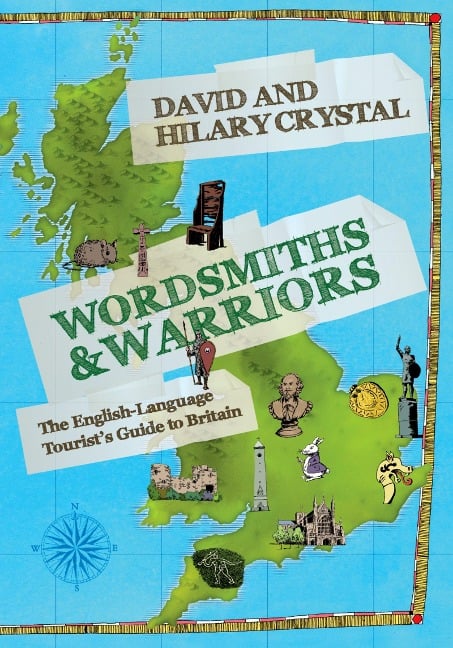
Wordsmiths and Warriors explores the heritage of English through the places in Britain that shaped it. It unites the warriors, whose invasions transformed the language, with the poets, scholars, reformers, and others who helped create its character. The book relates a real journey. David and Hilary Crystal drove thousands of miles to produce this fascinating combination of English-language history and travelogue, from locations in south-east Kent to the Scottish lowlands, and from south-west Wales to the East Anglian coast. David provides the descriptions and linguistic associations, Hilary the full-colour photographs. They include a guide for anyone wanting to follow in their footsteps but arrange the book to reflect the chronology of the language. This starts with the Anglo-Saxon arrivals in Kent and in the places that show the earliest evidence of English. It ends in London with the latest apps for grammar. In between are intimate encounters with the places associated with such writers as Chaucer, Shakespeare, and Wordsworth; the biblical Wycliffe and Tyndale; the dictionary compilers Cawdrey, Johnson, and Murray; dialect writers, elocutionists, and grammarians, and a host of other personalities. Among the book's many joys are the diverse places that allow warriors such as Byrhtnoth and King Alfred to share pages with wordsmiths like Robert Burns and Tim Bobbin, and the unexpected discoveries that enliven every stage of the authors' epic journey.
David Crystal is known throughout the world as a writer, editor, lecturer and broadcaster on language. He has published extensively on the history and development of English, including The Stories of English (2004), Evolving English (2010), Begat: The King James Bible and the English Language (2010), The Story of English in 100 Words (2011), and Spell It Out: The Singular Story of English Spelling (2012). Hilary Crystal trained as a speech therapist, worked for a while in clinical linguistic research, then became a sub-editor for the various volumes in the Cambridge and Penguin families of encyclopedias. She has designed several books, notably the anthologies of the poetry of John Bradburne edited by David.
- 1: Pegwell Bay: arrival - 2: Caistor St Edmund: the earliest known English word - 3: Undley Common: the first recorded English sentence - 4: Jarrow: Bede and the origins of English - 5: Lindisfarne: glossaries and translations - 6: Ruthwell: the finest runic inscription - 7: Stourton and Edington: King Alfred and the birth of English - 8: Maldon: the ultimate warrior wordsmith - 9: Winchester: the first standard English - 10: Cerne Abbas: Ælfric and the first English conversation - 11: Ely: Wulfstan and Old English style - 12: Peterborough: the Anglo-Saxon Chronicle - 13: Battle and Normans Bay: the French connection - 14: Bourne: Orrm and English spelling - 15: Areley Kings: Layamon's English Chronicle - 16: Chester and Berkeley: Higden, Trevisa, and the rise of English - 17: Rhuddlan: the English language in Wales - 18: Manorbier: little England beyond Wales - 19: Dunfermline: the birth of Scots English - 20: Talbot Yard, London SE1: Chaucer and Middle English - 21: Canterbury: from ancient to modern - 22: Cursitor Street, London EC4: Chancery and standard English - 23: Tothill Street, London SW1: Caxton and printing English - 24: St Albans: Juliana Berners and collective nouns - 25: Paston: a family of letters - 26: Lutterworth: John Wycliffe and Bible translation - 27: North Nibley: William Tyndale and the English Bible - 28: Chichester: William Bullokar and the first English grammar - 29: Suffolk Lane and St Paul's, London EC4: Richard Mulcaster and the status of English - 30: Stratford-upon-Avon: Shakespeare and English idiom - 31: Park Street, London SE1: Shakespeare and linguistic innovation - 32: Oakham: Robert Cawdrey and the first dictionary - 33: Willoughby: John Smith and new Englishes - 34: East India Dock, London E14: the East India Company and global English - 35: Hampton Court Palace: King James and his Bible - 36: Black Notley: John Ray and English proverbs - 37: Aldwincle: John Dryden and an English Academy - 38: Old Broad Street, London EC2: the Royal Society and scientific English - 39: Rochdale: Tim Bobbin and local dialect - 40: Lichfield: Johnson and the dictionary - 41: Old St Pancras Church, London NW1: John Walker and pronunciation - 42: York: Lindley Murray and English grammar - 43: Alloway: Robert Burns and Scots - 44: Peebles and Edinburgh: the Chambers brothers and encyclopedic English - 45: Grasmere: William Wordsworth and poetic language - 46: West Malvern: Roget and the thesaurus - 47: Bath: Isaac Pitman and English shorthand - 48: Oxford: James Murray and the Oxford English Dictionary - 49: Winterborne Came: William Barnes and speech-craft - 50: Higher Bockhampton: Thomas Hardy and Wessex dialect - 51: Saltaire: Joseph Wright and English dialects - 52: Hinton St George: Henry Fowler and English usage - 53: Ayot St Lawrence: George Bernard Shaw and spelling reform - 54: Laugharne: Dylan Thomas and Welsh English - 55: Tilbury: the Empire Windrush and new dialects - 56: University College, London WC1: Daniel Jones and English phonetics - 57: University College, London WC1: the Survey of English Usage - Regional Grouping - Index of Places - General Index
Dieses eBook wird im PDF-Format geliefert und ist mit einem Adobe Kopierschutz (DRM) versehen. Sie können dieses eBook mit allen Geräten lesen, die das PDF-Format und den Adobe Kopierschutz (DRM) unterstützen.
Zum Beispiel mit den folgenden Geräten:
• tolino Reader
Laden Sie das eBook direkt über den Reader-Shop auf dem tolino herunter oder übertragen Sie das eBook auf Ihren tolino mit einer kostenlosen Software wie beispielsweise Adobe Digital Editions.
• Sony Reader & andere eBook Reader
Laden Sie das eBook direkt über den Reader-Shop herunter oder übertragen Sie das eBook mit der kostenlosen Software Sony READER FOR PC/Mac oder Adobe Digital Editions auf ein Standard-Lesegeräte mit epub- und Adobe DRM-Unterstützung.
• Tablets & Smartphones
Möchten Sie dieses eBook auf Ihrem Smartphone oder Tablet lesen, finden Sie hier unsere kostenlose Lese-App für iPhone/iPad und Android Smartphone/Tablets.
• PC & Mac
Lesen Sie das eBook direkt nach dem Herunterladen mit einer kostenlosen Lesesoftware, beispielsweise Adobe Digital Editions, Sony READER FOR PC/Mac oder direkt über Ihre eBook-Bibliothek in Ihrem Konto unter „Meine eBooks“ - „online lesen“.
Schalten Sie das eBook mit Ihrer persönlichen Adobe ID auf bis zu sechs Geräten gleichzeitig frei.
Bitte beachten Sie, dass die Kindle-Geräte das Format nicht unterstützen und dieses eBook somit nicht auf Kindle-Geräten lesbar ist.