Und dann auf "Zum Home-Bildschirm [+]".

Stöbern
genialokal zum Startbildschirm hinzufügen
Installieren Sie die genialokal App auf Ihrem Startbildschirm für einen schnellen Zugriff und eine komfortable Nutzung.
Installieren Sie die genialokal App auf Ihrem Startbildschirm für einen schnellen Zugriff und eine komfortable Nutzung.
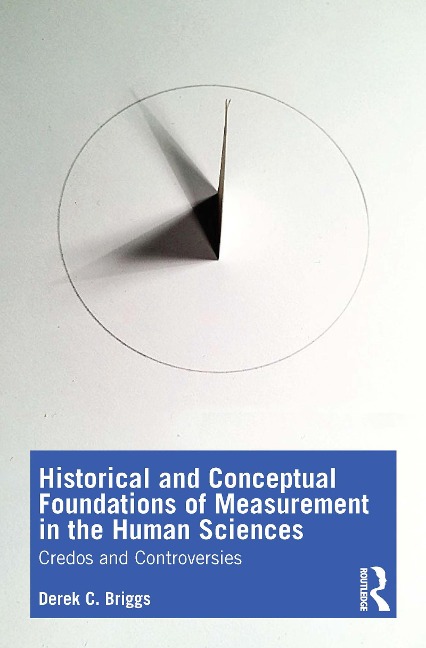
Historical and Conceptual Foundations of Measurement in the Human Sciences explores the assessment and measurement of nonphysical attributes that define human beings: abilities, personalities, attitudes, dispositions, and values. The proposition that human attributes are measurable remains controversial, as do the ideas and innovations of the six historical figures-Gustav Fechner, Francis Galton, Alfred Binet, Charles Spearman, Louis Thurstone, and S. S. Stevens-at the heart of this book. Across 10 rich, elaborative chapters, readers are introduced to the origins of educational and psychological scaling, mental testing, classical test theory, factor analysis, and diagnostic classification and to controversies spanning the quantity objection, the role of measurement in promoting eugenics, theories of intelligence, the measurement of attitudes, and beyond. Graduate students, researchers, and professionals in educational measurement and psychometrics will emerge with a deeper appreciation for both the challenges and the affordances of measurement in quantitative research.
Derek C. Briggs is Professor in the Research and Evaluation Methodology Program in the School of Education and Director of the Center for Assessment Design Research and Evaluation at the University of Colorado Boulder, USA. A former editor of the journal Educational Measurement: Issues & Practice, he is the 2021-2022 President of the National Council on Measurement in Education.
Chapter 1: What is Measurement? 1.1 Keating's War and Thorndike's Credo 1.2 What is (and What is Not) Measurement? 1.3 Educational and Psychological Measurement 1.4 Overview of this Book Chapter 2. Psychophysical Measurement: Gustav Fechner and the Just Noticeable Difference 2.1 Overview 2.2 The Origins of Psychophysics 2.3 The Method of Right and Wrong Cases (The Constant Method) 2.4 Criticisms 2.5 Fechner's Legacy 2.6 Sources and Further Reading Chapter 3. Whenever you Can, Count: Francis Galton and the Measurement of Individual Differences 3.1 Overview 3.2 Galton's Background 3.3 Three Influences on Galton's Thinking 3.4 The Concept of Relative Measurement 3.5 Galton's Conceptualization of Measurement Chapter 4. Anthropometric Laboratories, Regression, and the Cautionary Tale of Eugenics 4.1 Galton's Instrumental Innovations 4.2 The Discovery of Regression and Correlation 4.3 The Horror of Eugenics 4.4 Galton's Legacy 4.5 Sources and Further Reading Chapter 5. Mental Tests and Measuring Scales: The Innovations of Alfred Binet 5.1 Overview 5.2 Binet's Background 5.3 The Binet-Simon Measuring Scale 5.4 Binet's Conceptualization of Measurement 5.5 Criticisms 5.6 Binet's Legacy 5.7 Sources and Further Reading Chapter 6. Measurement Error and the Concept of Reliability 6.1 Overview 6.2 Spearman's Background 6.3 Disattenuating Correlation Coefficients 6.4 Replications, Occasions, and Measurement Error 6.5 Varying Test Items and the Spearman-Brown Prophecy Formula 6.6 The Development of Classical Test Theory Chapter 7. Measurement Through Correlation: Spearman's Theory of Two Factors 7.1 Formalization of the Theory of Two Factors 7.2 Method of Corroborating the Theory 7.3 Building a Model of Human Cognition 7.4 The Interpretation of g 7.5 The Utility of the Two-Factor Theory 7.6 Spearman's Conceptualization of Measurement Chapter 8. Theory vs. Method in the Measurement of Intelligence 8.1 Challenges to the Theory of Two Factors 8.2 Godfrey Thomson's Sampling Theory of Ability 8.3 Edwin Wilson and the Indeterminacy of g 8.4 Louis Thurstone's Multiple Factor Method 8.5 Spearman On Defense 8.6 Spearman's Legacy 8.7 Sources and Further Reading Chapter 9. The Seeds of Psychometrics: Thurstone's Subjective Units 9.1 Overview 9.2 Thurstone's Background 9.3 Toward Psychological Measurement 9.4 Constructing a Psychological Continuum 9.5 Thurstone's Conceptualization of Measurement 9.6 Likert Scales 9.7 Thurstone's Legacy 9.8. Sources and Further Reading Chapter 10. Representation, Operations, and the Scale Taxonomy of S. S. Stevens 10.1 Overview 10.2 Stevens's Background 10.3 Norman Campbell and the Representational Approach to Measurement 10.4 Stevens's Conceptualization of Measurement 10.5 The Process of Operational Measurement 10.6 Criticisms 10.7 Stevens's Legacy to Measurement 10.8 Sources and Further Reading
Dieses eBook wird im PDF-Format geliefert und ist mit einem Adobe Kopierschutz (DRM) versehen. Sie können dieses eBook mit allen Geräten lesen, die das PDF-Format und den Adobe Kopierschutz (DRM) unterstützen.
Zum Beispiel mit den folgenden Geräten:
• tolino Reader
Laden Sie das eBook direkt über den Reader-Shop auf dem tolino herunter oder übertragen Sie das eBook auf Ihren tolino mit einer kostenlosen Software wie beispielsweise Adobe Digital Editions.
• Sony Reader & andere eBook Reader
Laden Sie das eBook direkt über den Reader-Shop herunter oder übertragen Sie das eBook mit der kostenlosen Software Sony READER FOR PC/Mac oder Adobe Digital Editions auf ein Standard-Lesegeräte mit epub- und Adobe DRM-Unterstützung.
• Tablets & Smartphones
Möchten Sie dieses eBook auf Ihrem Smartphone oder Tablet lesen, finden Sie hier unsere kostenlose Lese-App für iPhone/iPad und Android Smartphone/Tablets.
• PC & Mac
Lesen Sie das eBook direkt nach dem Herunterladen mit einer kostenlosen Lesesoftware, beispielsweise Adobe Digital Editions, Sony READER FOR PC/Mac oder direkt über Ihre eBook-Bibliothek in Ihrem Konto unter „Meine eBooks“ - „online lesen“.
Schalten Sie das eBook mit Ihrer persönlichen Adobe ID auf bis zu sechs Geräten gleichzeitig frei.
Bitte beachten Sie, dass die Kindle-Geräte das Format nicht unterstützen und dieses eBook somit nicht auf Kindle-Geräten lesbar ist.