Und dann auf "Zum Home-Bildschirm [+]".

Stöbern
genialokal zum Startbildschirm hinzufügen
Installieren Sie die genialokal App auf Ihrem Startbildschirm für einen schnellen Zugriff und eine komfortable Nutzung.
Installieren Sie die genialokal App auf Ihrem Startbildschirm für einen schnellen Zugriff und eine komfortable Nutzung.
Ihr gewünschter Artikel ist in 0 Buchhandlungen vorrätig - wählen Sie hier eine Buchhandlung in Ihrer Nähe aus:

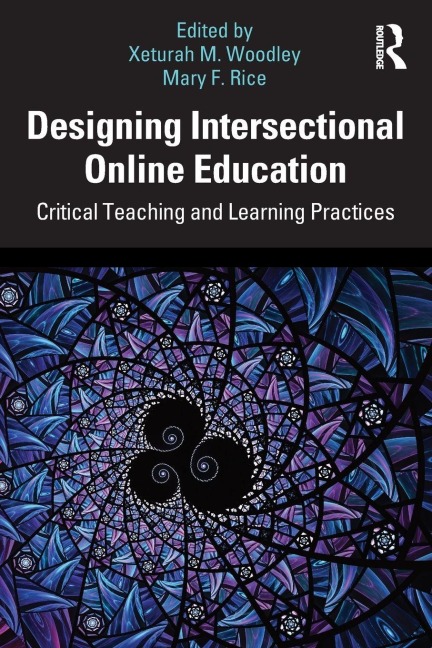
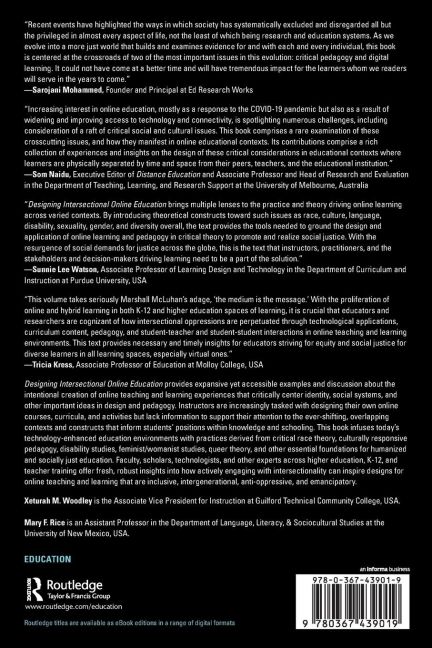
Designing Intersectional Online Education provides expansive yet accessible examples and discussion about the intentional creation of online teaching and learning experiences that critically center identity, social systems, and other important ideas in design and pedagogy. Instructors are increasingly tasked with designing their own online courses, curricula, and activities but lack information to support their attention to the ever-shifting, overlapping contexts and constructs that inform students' positions within knowledge and schooling. This book infuses today's technology-enhanced education environments with practices derived from critical race theory, culturally responsive pedagogy, disability studies, feminist/womanist studies, queer theory, and other essential foundations for humanized and socially just education. Faculty, scholars, technologists, and other experts across higher education, K-12, and teacher training offer fresh, robust insights into how actively engaging with intersectionality can inspire designs for online teaching and learning that are inclusive, intergenerational, anti-oppressive, and emancipatory.
Xeturah M. Woodley is the Associate Vice President for Instruction at Guilford Technical Community College, USA. Mary F. Rice is an Assistant Professor in the Department of Language, Literacy, & Sociocultural Studies at the University of New Mexico, USA.
1. Critical Pedagogy & Culturally Responsive Pedagogy: An Introduction 2. Designing for Cultural Responsiveness in P20 Online Learning Environments 3. Interest Convergence: Higher Education Fragility, Online Learning, and Critical Race Theory 4. We Are One, but We Are Many: Using DStudies to Inform Intersectional Education online 5. Womanist and Feminist Pedagogy: Infusing the Wisdom of Women into Online Education 6. Multiplying the Possibilities of Knowledge: Queering Online Teaching and Learning 7. Using Freirean and Rogerian Theory to Create Anti-racist and Peace-based Intersectional Online Learning Communities 8. Telecollaboration and Critical Cultural Connections 9. Queering Online Pedagogies in Gender & Sexuality Studies 10. Tensions in Adapting a Mandatory Indigenous Education Course to an Online Environment 11. An Autoethnographic Rhapsody of Learning to Teach Diverse K-12 Students Online 12. Teaching writing informed by Systemic Functional Linguistics: Bringing Professional Development Up to Scale Through Online Courses