Und dann auf "Zum Home-Bildschirm [+]".

Stöbern
genialokal zum Startbildschirm hinzufügen
Installieren Sie die genialokal App auf Ihrem Startbildschirm für einen schnellen Zugriff und eine komfortable Nutzung.
Installieren Sie die genialokal App auf Ihrem Startbildschirm für einen schnellen Zugriff und eine komfortable Nutzung.
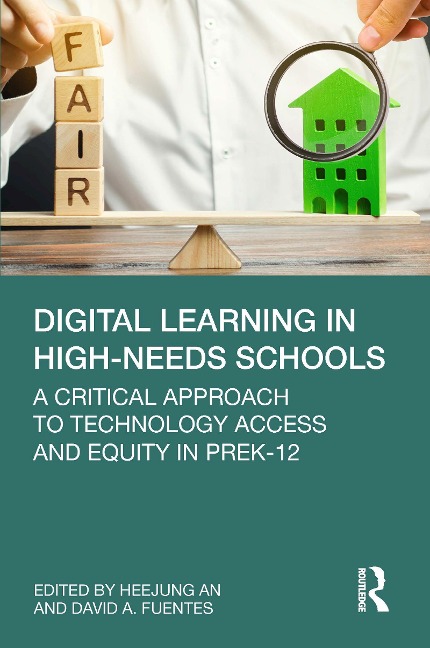
Digital Learning in High-Needs Schools examines the challenges and affordances that arise when high-needs school communities integrate educational technologies into their unique settings. Although remote, blended, and networked learning are ubiquitous today, a number of cultural, economic, and political realities-from the digital divide and digital literacy to poverty and language barriers-affect our most vulnerable and underresourced teachers and students. This book uses critical theory to compassionately scrutinize and unpack the systemic issues that impact high-needs schools' implementation of digital learning tools. Incisive sociocultural analyses across fifteen original chapters explore the intersection of society, technology, people, politics, and education in high-needs school contexts. Informed by real-world cases pertaining to technology infrastructure, formative feedback, Universal Design for Learning, and more, these chapters illuminate how best practices emerge from culturally responsive and context-specific foundations.
Heejung An is Professor in the Department of Educational Leadership and Professional Studies in the College of Education at William Paterson University of New Jersey, USA. David A. Fuentes is Interim Associate Dean and Professor in the College of Education at William Paterson University of New Jersey, USA.
Section I: Understanding the Intersection of Students, Families, and Schooling in High-Needs Communities 1. Understanding the Sociocultural and Sociopolitical Contexts of U.S. High-Needs Public Schools Before, During, and After the COVID-19 Pandemic 2. Ramifications of the Digital Divide on Cognitive Development and School Preparedness 3. Strategies to Help Administrators, Teachers, and Parents to Achieve Equitable Digital Learning in U.S. High-Needs School Communities Section II: Vision and Leadership for Digital Learning in High-Needs Communities 4. Bridging the Digital Divide: An Analysis of Federal, State, and Local Policies in U.S. Schools 5. Twitter for Professional Development and Learning in High-Needs Schools: Considerations for School Leaders 6. Feedback, Evaluation, and Grading: The Unique Considerations Distance Learning Poses to the Evaluation Cycle and the Task of Ensuring Equitable Practices 7. Students' Informational Needs: Applying the Principles of Universal Design to Address Inequity in High-Needs Schools During Virtual Learning Section III: Pedagogical Strategies and Digital Tools Across the Curriculum 8. Content-Neutral Technologies as a Pedagogical Response in High-Needs Schools and Communities: Design Thinking, Making, and Learning 9. Strategies to Facilitate Digital Learning in Urban High-Needs Social Studies Classrooms 10. Designing a Culturally Responsive Multilingual Arts-Integration Program: Read-Aloud and Book-Inspired Art-Making Videos 11. The Influence of an Online Mathematics Activity on Elementary School Students' Engagement and Learning in a High-Needs Context 12. Digital Learning for Students With Disabilities 13. Using Bitmoji® and Google Classroom® to Support Remote Literacy Instruction in High-Needs Schools 14. A Whole New World: Virtual Excursions for Learners From Urban Settings 15. Rural Social Studies Teachers' Postpandemic Use of Technology Tools
Dieses eBook wird im PDF-Format geliefert und ist mit einem Adobe Kopierschutz (DRM) versehen. Sie können dieses eBook mit allen Geräten lesen, die das PDF-Format und den Adobe Kopierschutz (DRM) unterstützen.
Zum Beispiel mit den folgenden Geräten:
• tolino Reader
Laden Sie das eBook direkt über den Reader-Shop auf dem tolino herunter oder übertragen Sie das eBook auf Ihren tolino mit einer kostenlosen Software wie beispielsweise Adobe Digital Editions.
• Sony Reader & andere eBook Reader
Laden Sie das eBook direkt über den Reader-Shop herunter oder übertragen Sie das eBook mit der kostenlosen Software Sony READER FOR PC/Mac oder Adobe Digital Editions auf ein Standard-Lesegeräte mit epub- und Adobe DRM-Unterstützung.
• Tablets & Smartphones
Möchten Sie dieses eBook auf Ihrem Smartphone oder Tablet lesen, finden Sie hier unsere kostenlose Lese-App für iPhone/iPad und Android Smartphone/Tablets.
• PC & Mac
Lesen Sie das eBook direkt nach dem Herunterladen mit einer kostenlosen Lesesoftware, beispielsweise Adobe Digital Editions, Sony READER FOR PC/Mac oder direkt über Ihre eBook-Bibliothek in Ihrem Konto unter „Meine eBooks“ - „online lesen“.
Schalten Sie das eBook mit Ihrer persönlichen Adobe ID auf bis zu sechs Geräten gleichzeitig frei.
Bitte beachten Sie, dass die Kindle-Geräte das Format nicht unterstützen und dieses eBook somit nicht auf Kindle-Geräten lesbar ist.