Und dann auf "Zum Home-Bildschirm [+]".

Stöbern
genialokal zum Startbildschirm hinzufügen
Installieren Sie die genialokal App auf Ihrem Startbildschirm für einen schnellen Zugriff und eine komfortable Nutzung.
Installieren Sie die genialokal App auf Ihrem Startbildschirm für einen schnellen Zugriff und eine komfortable Nutzung.
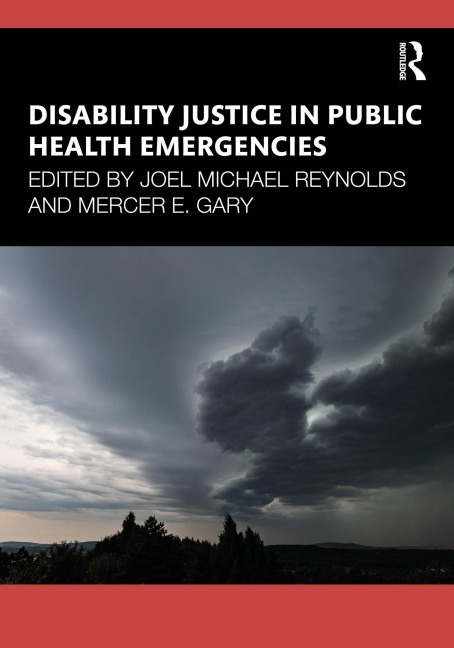
Disability Justice in Public Health Emergencies is the first book to highlight contributions from critical disability scholarship to the fields of public health ethics and disaster ethics. It takes up such contributions with the aim of charting a path forward for clinicians, bioethicists, public health experts, and anyone involved in emergency planning to better care for disabled people-and thereby for all people-in the future. Across 11 chapters, the contributors detail how existing public health emergency responses have failed and still fail to address the multi-faceted needs of disabled people. They analyze complications in the context of epidemic and pandemic disease and emphasize that vulnerabilities imposed upon disabled people track and foster patterns of racial and class domination. The central claim of the volume is that the ethical and political insights of disability theory and activism provide key resources for equitable disaster planning for all. The volume builds upon the existing efforts of disability communities to articulate emergency planning priorities and response measures that take into account the large body of qualitative and quantitative research on disabled people's health, needs, and experiences. It is only by listening to disabled people's voices that we will all fare better in future public health emergencies. The book will be of interest to scholars and graduate students working in bioethics, disability studies, public health policy, medical sociology, and the medical humanities.
Joel Michael Reynolds is a Senior Research Scholar at the Kennedy Institute of Ethics, an Associate Professor of Philosophy and Disability Studies at Georgetown University, Faculty in the Pellegrino Center for Clinical Bioethics and the Department of Family Medicine at the Georgetown University School of Medicine and Medical Center, and a Senior Advisor to and Fellow of The Hastings Center. They are author or coauthor of six books and over sixty publications spanning philosophy, public health, and biomedical ethics. Mercer E. Gary is an Assistant Professor of Philosophy at Drexel University and a Presidential Scholar at The Hastings Center. Her first book, The Limits of Care: Making Feminist Sense of Technology Relations, is under contract with Oxford University Press.
Why Only Disability Justice Can Prepare Us for the Next Public Health Emergency Mercer E. Gary and Joel Michael Reynolds Part I: Crisis in the Clinic 1. Disability Rights and Disability Justice as Gestalt Shifts for Triage Decision-Making in a Pandemic Katie Savin and Laura Guidry-Grimes 2. Incorporating Social Determinants of Health into Crisis Standards of Care April Dworetz 3. Tragic Choices: Disability, Triage, and Equity Amidst a Global Pandemic Joseph A. Stramondo Part II: Multiply Marginalized 4. "We are a Compromise": A Social Security Model of Disability During Covid-19 Katie Savin 5. Chronic Injustice: On Racialized Disablement and the Urgency of the Everyday Desiree Valentine 6. Long COVID and Disability: Navigating the Future Nicholas G. Evans 7. Patient-Centered Communication and Resource Allocation for Non-Speaking People During Crises Ally Peabody Smith Part III: Before the Next Pandemic 8. Long Covid and Disability Justice: Critiquing the Present, Forming the Future Sarah Clark Miller 9. Not Everything is a Pandemic: The Challenge of Disability Justice Perry Zurn 10. Education as Bioethics: Oppression and Pandemic Public Education Kevin Timpe 11. Building Institutional Trustworthiness in Emergency Conditions: Lessons from Disability Scholarship and Activism Corinne Lajoie
Dieses eBook wird im PDF-Format geliefert und ist mit einem Adobe Kopierschutz (DRM) versehen. Sie können dieses eBook mit allen Geräten lesen, die das PDF-Format und den Adobe Kopierschutz (DRM) unterstützen.
Zum Beispiel mit den folgenden Geräten:
• tolino Reader
Laden Sie das eBook direkt über den Reader-Shop auf dem tolino herunter oder übertragen Sie das eBook auf Ihren tolino mit einer kostenlosen Software wie beispielsweise Adobe Digital Editions.
• Sony Reader & andere eBook Reader
Laden Sie das eBook direkt über den Reader-Shop herunter oder übertragen Sie das eBook mit der kostenlosen Software Sony READER FOR PC/Mac oder Adobe Digital Editions auf ein Standard-Lesegeräte mit epub- und Adobe DRM-Unterstützung.
• Tablets & Smartphones
Möchten Sie dieses eBook auf Ihrem Smartphone oder Tablet lesen, finden Sie hier unsere kostenlose Lese-App für iPhone/iPad und Android Smartphone/Tablets.
• PC & Mac
Lesen Sie das eBook direkt nach dem Herunterladen mit einer kostenlosen Lesesoftware, beispielsweise Adobe Digital Editions, Sony READER FOR PC/Mac oder direkt über Ihre eBook-Bibliothek in Ihrem Konto unter „Meine eBooks“ - „online lesen“.
Schalten Sie das eBook mit Ihrer persönlichen Adobe ID auf bis zu sechs Geräten gleichzeitig frei.
Bitte beachten Sie, dass die Kindle-Geräte das Format nicht unterstützen und dieses eBook somit nicht auf Kindle-Geräten lesbar ist.