Und dann auf "Zum Home-Bildschirm [+]".

Stöbern
genialokal zum Startbildschirm hinzufügen
Installieren Sie die genialokal App auf Ihrem Startbildschirm für einen schnellen Zugriff und eine komfortable Nutzung.
Installieren Sie die genialokal App auf Ihrem Startbildschirm für einen schnellen Zugriff und eine komfortable Nutzung.
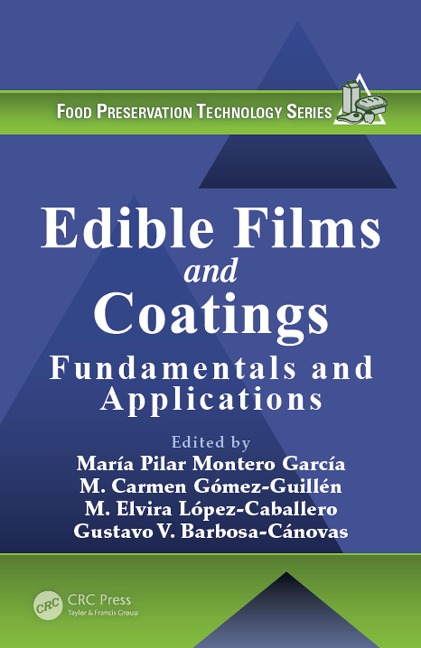
The search for better strategies to preserve foods with minimal changes during processing has been of great interest in recent decades. Traditionally, edible films and coatings have been used as a partial barrier to moisture, oxygen, and carbon dioxide through selective permeability to gases, as well as improving mechanical handling properties. The advances in this area have been breathtaking, and in fact their implementation in the industry is already a reality. Even so, there are still new developments in various fields and from various perspectives worth reporting. Edible Films and Coatings: Fundamentals and Applications discusses the newest generation of edible films and coatings that are being especially designed to allow the incorporation and/or controlled release of specific additives by means of nanoencapsulation, layer-by-layer assembly, and other promising technologies. Covering the latest novelties in research conducted in the field of edible packaging, it considers state-of-the-art innovations in coatings and films; novel applications, particularly in the design of gourmet foods; new advances in the incorporation of bioactive compounds; and potential applications in agronomy, an as yet little explored area, which could provide considerable advances in the preservation and quality of foods in the field.
Gustavo V. Barbosa-Canovas Department of Biological Systems Engineering, Washington State University, Pullman, Washington. M. Carmen Gomez-Guillen, M. Elvira Lopez-Caballero and Maria Pilar Montero Garcia, all Department of Products, Institute of Food Science, Technology and Nutrition, Spanish National Research Council, Madrid, Spain.
Section I Preparation, Properties, and Characterization of Coatings and Films 1. Standard and New Processing Techniques Used in the Preparation of Films and Coatings at the Lab Modeling 3. Barrier Properties of Films Section II Traditional and Alternative Sources for Biopolymeric Film and Coating Matrices 4. Films and Coatings from Vegetable Protein 5. Films and Coatings from Animal Protein 6. Films and Coatings from Collagen and Gelatin7. Films and Coatings from Starch and Gums 8. Films and Coatings from Lignocellulosic Polymers 9. Films and Coatings from Chitosan 10. Films and Coatings from Lipids and Wax 11. Films and Coatings from Agro-Industrial Residues Section III Strategies to Optimize Coating and Film Functionality 12. Conventional and Alternative Plasticizers and Cross-Linkers 13. Nanocompounds as Formulating Aids 14. Antioxidant Films and Coatings 15. Antimicrobial Edible Films and Coatings Section IV Encapsulation and Controlled Release in Films and Coatings 16. Methods of Encapsulation17. Encapsulation of Flavors and Aromas: Controlled Release 18. Encapsulation of Active/Bioactive/Probiotic Agents Section V Applications of Films and Coatings in Foodstuffs 19. Application of Edible Films and Coatings on Fruits and Vegetables 20. Edible Film and Coating Applications for Fresh-Cut and Minimally Processed Fruits and Vegetables 21. Edible Packaging in Muscle Food 22. Applications of Films and Coatings in Intermediate Moisture and Thermally Processed Food 23. Applications of Films and Coatings for Special Missions Section VI Coatings and Films: Drawbacks and Challenges24. Films and Coatings: Migration of Ingredients25. Migration Analysis of Compounds in Food Packaging 26. Edible Films and Coatings: Sensory Aspects 27. Digestibility and Toxicology of Edible Films and Coatings 28. Biodegradable Polymer for Food Packaging: Degradation and Waste Management 29. Agricultural Applications of Biodegradable Films
Dieses eBook wird im PDF-Format geliefert und ist mit einem Adobe Kopierschutz (DRM) versehen. Sie können dieses eBook mit allen Geräten lesen, die das PDF-Format und den Adobe Kopierschutz (DRM) unterstützen.
Zum Beispiel mit den folgenden Geräten:
• tolino Reader
Laden Sie das eBook direkt über den Reader-Shop auf dem tolino herunter oder übertragen Sie das eBook auf Ihren tolino mit einer kostenlosen Software wie beispielsweise Adobe Digital Editions.
• Sony Reader & andere eBook Reader
Laden Sie das eBook direkt über den Reader-Shop herunter oder übertragen Sie das eBook mit der kostenlosen Software Sony READER FOR PC/Mac oder Adobe Digital Editions auf ein Standard-Lesegeräte mit epub- und Adobe DRM-Unterstützung.
• Tablets & Smartphones
Möchten Sie dieses eBook auf Ihrem Smartphone oder Tablet lesen, finden Sie hier unsere kostenlose Lese-App für iPhone/iPad und Android Smartphone/Tablets.
• PC & Mac
Lesen Sie das eBook direkt nach dem Herunterladen mit einer kostenlosen Lesesoftware, beispielsweise Adobe Digital Editions, Sony READER FOR PC/Mac oder direkt über Ihre eBook-Bibliothek in Ihrem Konto unter „Meine eBooks“ - „online lesen“.
Schalten Sie das eBook mit Ihrer persönlichen Adobe ID auf bis zu sechs Geräten gleichzeitig frei.
Bitte beachten Sie, dass die Kindle-Geräte das Format nicht unterstützen und dieses eBook somit nicht auf Kindle-Geräten lesbar ist.