Und dann auf "Zum Home-Bildschirm [+]".

Stöbern
genialokal zum Startbildschirm hinzufügen
Installieren Sie die genialokal App auf Ihrem Startbildschirm für einen schnellen Zugriff und eine komfortable Nutzung.
Installieren Sie die genialokal App auf Ihrem Startbildschirm für einen schnellen Zugriff und eine komfortable Nutzung.


Ihr gewünschter Artikel ist in 0 Buchhandlungen vorrätig - wählen Sie hier eine Buchhandlung in Ihrer Nähe aus:

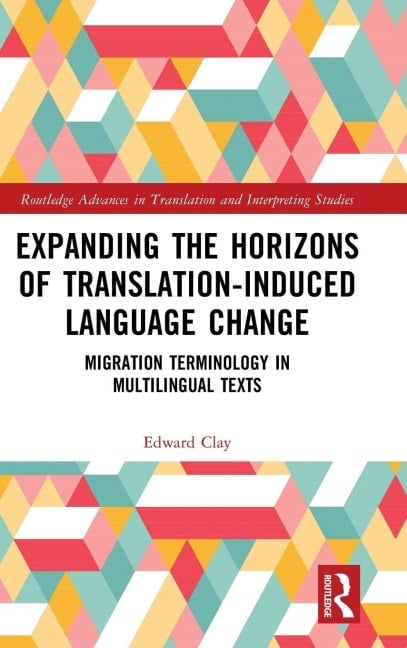
This book offers a comprehensive examination of translation-induced language change, arguing for a view of translation as a language contact scenario supported by case studies from multilingual texts on migration.
Edward Clay is a Research Fellow at the University of Birmingham, UK.
Part I: Theoretical Considerations Chapter 1. Introduction 1.1 Outline of the book Chapter 2. Terminology and translation-induced language change 2.1 What is terminology? 2.1.1 Concepts and terms 2.1.2 Terminological variation 2.1.3 Interlingual variation in terminology 2.1.4 Determinologisation 2.2 Translation-induced language change 2.2.1 Language change and language contact 2.2.2 Translation as a contact scenario 2.2.3 Case studies: Discursive features 2.2.4 Case studies: Morphosyntax and lexis 2.2.5 Limitations and counterarguments 2.2.6 Possible causes 2.3 Concluding remarks Chapter 3. Multilingual legal text production - a site for translation-induced language change? 3.1 Legal translation 3.2 The EU translation process 3.3 Term formation and translation in the EU 3.4 Translation technology in the EU 3.5 Concluding remarks Chapter 4. The language of migration law and migration in the press 4.1 The language of migration law 4.2 Migration in the press Part II: Empirical Applications Chapter 5. Observing translation-induced language change in EU legal discourse on migration 5.1 Corpus-based approach 5.2 The EUMigrLaw corpus 5.2.1 Defining legal discourse 5.2.2 Creating the EUMigrLaw corpus 5.2.3 The development of EU migration and asylum law 5.3 The EUMigrLaw corpus analysis 5.3.1 Methodology 5.3.2 Quantitative analysis - Intralingual terminological variation 5.3.3 Quantitative analysis - Interlingual terminological variation 5.3.4 Qualitative analysis - General observations 5.3.5 Influence of English terminology 5.3.6 The case of IRREGULAR MIGRANT 5.4 Summary of results 5.5 Discussion Chapter 6. Crossing genre boundaries - Expanding the research scope 6.1 The MigrationInTheNews corpus 6.2 Building the MigrationInTheNews corpus 6.3 Methodology 6.3.1 Three indicators of terminological convergence/divergence 6.4 Quantitative results on terminological convergence/divergence 6.5 Terminological trends 6.5.1 THIRD-COUNTRY NATIONAL 6.5.2 IRREGULAR MIGRANT 6.5.3 UNION CITIZEN 6.5.4 ASYLUM SEEKER and REFUGEE 6.5.5 MIGRANT WORKER 6.6 Discussion 6.6.1 Translation-induced language change and determinologisation 6.6.2 Factors preventing cross-over 6.6.3 A widening terminological gap 6.6.4 The influence of the media on legal discourse Chapter 7. Conclusion