Und dann auf "Zum Home-Bildschirm [+]".

Stöbern
genialokal zum Startbildschirm hinzufügen
Installieren Sie die genialokal App auf Ihrem Startbildschirm für einen schnellen Zugriff und eine komfortable Nutzung.
Installieren Sie die genialokal App auf Ihrem Startbildschirm für einen schnellen Zugriff und eine komfortable Nutzung.
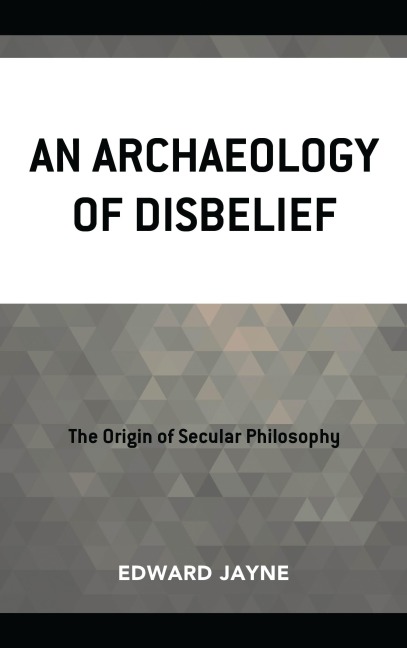
An Archaeology of Disbelief traces the origin of secular philosophy to pre-Socratic Greek philosophers who proposed a physical universe without supernatural intervention. Some mentioned the Homeric gods, but others did not. Atomists and Sophists identified themselves as agnostics if not outright atheists, and in reaction Plato featured transcendent spiritual authority. However, Aristotle offered a physical cosmology justified by evidence from a variety of scientific fields. He also revisited many pre-Socratic assumptions by proposing that existence consists of mass in motion without temporal or spatial boundaries. In many ways his analysis anticipated Newton's concept of gravity, Darwin's concept of evolution, and Einstein's concept of relativity.
Aristotle's follower Strato invented scientific experimentation. He also inspired the pursuit of science and advocated the rejection of all beliefs unconfirmed by science. Carneades in turn distorted Aristotelian logic to ridicule the god concept, and Lucretius proposed a grand secular cosmology in his epic De Rerum Natura. In the two dialogues, Academica and De Natura Deorum, Cicero provided a useful retrospective assessment of this entire movement.
The Roman Empire and advent of Christianity effectively terminated Greek philosophy except for Platonism reinvented as stoicism. Widespread destruction of libraries eliminated most early secular texts, and the Inquisition played a major role in preventing secular inquiry. Aquinas later justified Aristotle in light of Christian doctrine, and secularism's revival was postponed until the seventeenth century's paradoxical reaction against his interpretation of Aristotle. Today it nevertheless remains possible to trace western civilization's remarkable secular achievement to its initial breakthrough in ancient Greece. The purpose of this book is accordingly to trace the origin and development of its secular thought through close examination of texts that still exist today in light of Aristotle's writings.
Edward Jayne's earlier publications feature literary deception as explained in his book Negative Poetics as well as the inception of constitutional law in the United States. He has taught at fourteen colleges and universities, including three abroad.
00-Title
01-Dedication
02-Table of Contents
03-Preface
04-Introduction
I. An Economic Explanation
II. Loss of Textual Evidence
III. Respectable Remnants
IV. Five Secularists Still Available Today
05-Chapter One: The Pre-Socratic Philosophers
I.Thales
II.Anaximander
III.Anaximenes
IV.Xenophanes
V.Pherecydes
VI.Pythagoras and the Pythagoreans
VII.Heraclitus
VIII.Parmenides
IX.Zeno of Elea
X.Melissus
XI.Empedocles
XII.Anaxagoras
XIII.Diogenes Apollonius
XIV.Leucippus
XV.Democritus
XVI.Final Considerations
06-Chapter Two: Plato and the Age of Pericles
I.Sophists
II.Protagoras
III.Socrates
IV.Plato
07-Chapter Three: Early Aristotle
I.Comparison with Plato
II.Christian Interpolations
III.Physics
IV. Metaphysics
08-Chapter Four: Late Aristotle
I.De Caelo (On the Heavens)
II.On Generation and Corruption
III.De Anima (On the Soul)
IV.Nicomachean Ethics
V.Conclusion
09-Chapter Five: The Lyceum after Aristotle
I.Theophrastus
II. Strato of Lampsacus
10-Chapter Six: The Epicureans
I. Epicurus
II.Lucretius
11-Chapter Seven: Skepticism
I. Pyrrho
II. Arcesilaus
III. Carneades
12-Chapter Eight: Cicero
I.Academica
II.On the Nature of the Gods
13-Epilogue
14-Bibliography
Index
Dieses eBook wird im PDF-Format geliefert und ist mit einem Adobe Kopierschutz (DRM) versehen. Sie können dieses eBook mit allen Geräten lesen, die das PDF-Format und den Adobe Kopierschutz (DRM) unterstützen.
Zum Beispiel mit den folgenden Geräten:
• tolino Reader
Laden Sie das eBook direkt über den Reader-Shop auf dem tolino herunter oder übertragen Sie das eBook auf Ihren tolino mit einer kostenlosen Software wie beispielsweise Adobe Digital Editions.
• Sony Reader & andere eBook Reader
Laden Sie das eBook direkt über den Reader-Shop herunter oder übertragen Sie das eBook mit der kostenlosen Software Sony READER FOR PC/Mac oder Adobe Digital Editions auf ein Standard-Lesegeräte mit epub- und Adobe DRM-Unterstützung.
• Tablets & Smartphones
Möchten Sie dieses eBook auf Ihrem Smartphone oder Tablet lesen, finden Sie hier unsere kostenlose Lese-App für iPhone/iPad und Android Smartphone/Tablets.
• PC & Mac
Lesen Sie das eBook direkt nach dem Herunterladen mit einer kostenlosen Lesesoftware, beispielsweise Adobe Digital Editions, Sony READER FOR PC/Mac oder direkt über Ihre eBook-Bibliothek in Ihrem Konto unter „Meine eBooks“ - „online lesen“.
Schalten Sie das eBook mit Ihrer persönlichen Adobe ID auf bis zu sechs Geräten gleichzeitig frei.
Bitte beachten Sie, dass die Kindle-Geräte das Format nicht unterstützen und dieses eBook somit nicht auf Kindle-Geräten lesbar ist.