Und dann auf "Zum Home-Bildschirm [+]".

Stöbern
genialokal zum Startbildschirm hinzufügen
Installieren Sie die genialokal App auf Ihrem Startbildschirm für einen schnellen Zugriff und eine komfortable Nutzung.
Installieren Sie die genialokal App auf Ihrem Startbildschirm für einen schnellen Zugriff und eine komfortable Nutzung.
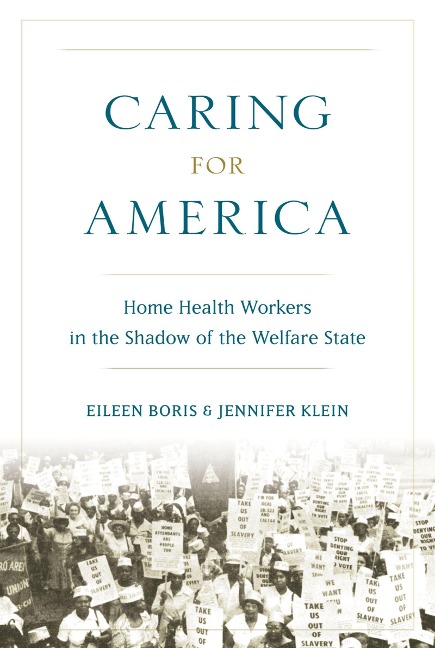
In this sweeping narrative history from the Great Depression of the 1930s to the Great Recession of today, Caring for America rethinks both the history of the American welfare state from the perspective of care work and chronicles how home care workers eventually became one of the most vibrant forces in the American labor movement. Eileen Boris and Jennifer Klein demonstrate the ways in which law and social policy made home care a low-waged job that was stigmatized as welfare and relegated to the bottom of the medical hierarchy. For decades, these front-line caregivers labored in the shadows of a welfare state that shaped the conditions of the occupation. Disparate, often chaotic programs for home care, which allowed needy, elderly, and disabled people to avoid institutionalization, historically paid poverty wages to the African American and immigrant women who constituted the majority of the labor force. Yet policymakers and welfare administrators linked discourses of dependence and independence-claiming that such jobs would end clients' and workers' "dependence" on the state and provide a ticket to economic independence. The history of home care illuminates the fractured evolution of the modern American welfare state since the New Deal and its race, gender, and class fissures. It reveals why there is no adequate long-term care in America. Caring for America is much more than a history of social policy, however; it is also about a powerful contemporary social movement. At the front and center of the narrative are the workers-poor women of color-who have challenged the racial, social, and economic stigmas embedded in the system. Caring for America traces the intertwined, sometimes conflicting search of care providers and receivers for dignity, self-determination, and security. It highlights the senior citizen and independent living movements; the civil rights organizing of women on welfare and domestic workers; the battles of public sector unions; and the unionization of health and service workers. It rethinks the strategies of the U.S. labor movement in terms of a growing care work economy. Finally, it makes a powerful argument that care is a basic right for all and that care work merits a living wage.
Eileen Boris is Hull Professor of Feminist Studies and Professor of History, Black Studies, and Global Studies at University of California, Santa Barbara. Jennifer Klein is Professor of History at Yale University.
Table of Contents
IllustrationsAbbreviationsAcknowledgmentsPreface: The Personal Is PrologueIntroduction: Making the Private PublicChapter 1: Neither Nurses nor MaidsChapter 2: Rehabilitative MissionsChapter 3: Caring for the Great SocietyChapter 4: Welfare Wars, Seventies StyleChapter 5: "Take Us Out of Slavery"Chapter 6: "The Union Is Us"Chapter 7: "We Were the Invisible Workforce"Epilogue: Challenging Care
Dieses eBook wird im PDF-Format geliefert und ist mit einem Adobe Kopierschutz (DRM) versehen. Sie können dieses eBook mit allen Geräten lesen, die das PDF-Format und den Adobe Kopierschutz (DRM) unterstützen.
Zum Beispiel mit den folgenden Geräten:
• tolino Reader
Laden Sie das eBook direkt über den Reader-Shop auf dem tolino herunter oder übertragen Sie das eBook auf Ihren tolino mit einer kostenlosen Software wie beispielsweise Adobe Digital Editions.
• Sony Reader & andere eBook Reader
Laden Sie das eBook direkt über den Reader-Shop herunter oder übertragen Sie das eBook mit der kostenlosen Software Sony READER FOR PC/Mac oder Adobe Digital Editions auf ein Standard-Lesegeräte mit epub- und Adobe DRM-Unterstützung.
• Tablets & Smartphones
Möchten Sie dieses eBook auf Ihrem Smartphone oder Tablet lesen, finden Sie hier unsere kostenlose Lese-App für iPhone/iPad und Android Smartphone/Tablets.
• PC & Mac
Lesen Sie das eBook direkt nach dem Herunterladen mit einer kostenlosen Lesesoftware, beispielsweise Adobe Digital Editions, Sony READER FOR PC/Mac oder direkt über Ihre eBook-Bibliothek in Ihrem Konto unter „Meine eBooks“ - „online lesen“.
Schalten Sie das eBook mit Ihrer persönlichen Adobe ID auf bis zu sechs Geräten gleichzeitig frei.
Bitte beachten Sie, dass die Kindle-Geräte das Format nicht unterstützen und dieses eBook somit nicht auf Kindle-Geräten lesbar ist.