Und dann auf "Zum Home-Bildschirm [+]".

Stöbern
genialokal zum Startbildschirm hinzufügen
Installieren Sie die genialokal App auf Ihrem Startbildschirm für einen schnellen Zugriff und eine komfortable Nutzung.
Installieren Sie die genialokal App auf Ihrem Startbildschirm für einen schnellen Zugriff und eine komfortable Nutzung.
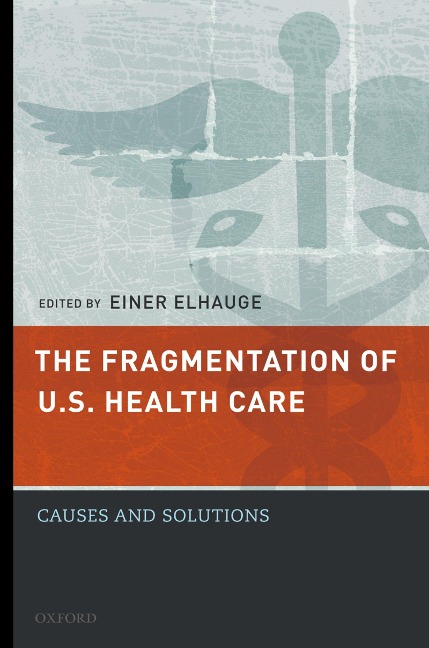
Why is our health care system so fragmented in the care it gives patients? Why is there little coordination amongst the many doctors who treat individual patients, who often even lack access to a common set of medical records? Why is fragmentation a problem even within a single hospital, where errors or miscommunications often seem to result from poor coordination amongst the myriad of professionals treating any one individual patient? Why is health care fragmented both over time, so that too little is spent on preventive care, and across patients, so that resources are often misallocated to the patients who need it least? The Fragmentation of U.S. Health Care: Causes and Solutions approaches these broad questions with a highly interdisciplinary approach. The articles included in the work address legal and regulatory issues, including laws that mandate separate payments for each provider, restrict hospitals or others from controlling or rewarding the set of providers treating a patient to assure coordinated care, and provide affirmative disincentives for coordinating care by paying more for uncoordinated care that requires more services. Business reasons for the current form of hospital organization are considered, and efficiency and design are examined and compared to other industries. The economics of current hospital organization are also taken into account. The authors examine and propose various reforms that make our health care system less fragmented, more efficient, and more medically effective.
Einer Elhauge is the Petrie Professor of Law at Harvard Law School and founding director of the Petrie-Flom Center for Health Law Policy, Biotechnology and Bioethics. He served as Chairman of the Antitrust Advisory Committee to the Obama Campaign and member of Various Health Policy Advisory Committees to that campaign. He teaches a gamut of courses ranging from Antitrust, Contracts, Corporations, Legislation, and Health Care Law. Before coming to Harvard, he was a Professor of Law at the University of California at Berkeley, and clerked for Judge Norris on the 9th Circuit and Justice Brennan on the Supreme Court. He received both his A.B. and his J.D. from Harvard, graduating first in his law school class. He is an author of numerous pieces on a range of topics even broader than he teaches, including antitrust (monopolization, predatory pricing, tying, bundled discounts, loyalty discounts, disgorgement, petitioning and state action immunity, and the Harvard v. Chicago schools of antitrust), public law (statutory interpretation, legislative term limits, the 2000 Presidential election, and the implications of interest group theory for judicial review), corporate law (social responsibility and sale of control doctrine), patent law (patent holdup and royalty stacking), the legal profession (the value of litigation and counseling advice), and health law policy (medical technology assessment, how to make health law a coherent legal field, and how to devise a morally just and cost effective medical system). His most recent books include Statutory Default Rules (Harvard University Press 2008), U.S. Antitrust Law and Economics (Foundation Press 2008), and Global Competition Law and Economics (Hart Publishing 2007). Currently he is working on books about Contract Theory, Health Law Policy, and Re-engineering Human Biology, as well as articles on sundry other topics. To access his website and publications, visit http://www.law.harvard.edu/faculty/elhauge/.
Our Fragmented Health Care System: Causes and Solutions
Chapter 1. Why We Should Care About Healthcare Fragmentation and How to Fix It - Einer Elhauge
Chapter 2. Health Care Fragmentation: We Get What We Pay For -- David Hyman
Chapter 3. Organizational Fragmentation and Care Quality in the US Health Care System -- Randal Cebul, James Rebitzer, Lowell J. Taylor, & Mark Votruba
Chapter 4. Curing Fragmentation With Integrated Delivery Systems: What They Do, What Has Blocked Them, Why We Need Them, And How To Get There From Here -- Alain Enthoven
Chapter 5. Defragmenting Health Care Delivery Through Quality Reporting -- Kristin Madison
Chapter 6. Competition Policy and Organizational Fragmentation in Health Care -- Thomas Greaney
Chapter 7. Of Doctors and Hospitals: Setting the Analytical Framework for Managing and Regulating the Relationship -- James Blumstein
Chapter 8. Property, Privacy and the Pursuit of Integrated Medical Records -- Mark A. Hall and Kevin A. Schulman
Chapter 9. Value-Based Purchasing Opportunities in Traditional Medicare: A Proposal and Legal Evaluation -- Lawrence Casalino & Timothy Jost
Chapter 10. A More Equitable and Efficient Approach to Insuring the Uninsurable -- Eric Helland & Jonathan Klick
Chapter 11. Ending the Specialty Hospital Wars: A Plea for Pilot Programs as Information-Forcing Regulatory Design -- Frank Pasquale
Chapter 12. Fragmentation in Mental Health Benefits and Services: A Preliminary Examination into Consumption and Outcomes -- Barak Richman, Dan Grossman, & Frank Sloan
Chapter 13. From Visible Harm to Relative Risk: Overcoming Fragmented Pharmacovigilance? -- Arthur Daemmrich
Chapter 14. The US Healthcare System: A Product of American History and Values -- David Johnson & Nancy Kane
Chapter 15. American Health Care Policy and Politics: Is Fragmentation a Helpful Category for Understanding Health Reform Experience and Prospects? -- Theodore Marmor
Dieses eBook wird im PDF-Format geliefert und ist mit einem Adobe Kopierschutz (DRM) versehen. Sie können dieses eBook mit allen Geräten lesen, die das PDF-Format und den Adobe Kopierschutz (DRM) unterstützen.
Zum Beispiel mit den folgenden Geräten:
• tolino Reader
Laden Sie das eBook direkt über den Reader-Shop auf dem tolino herunter oder übertragen Sie das eBook auf Ihren tolino mit einer kostenlosen Software wie beispielsweise Adobe Digital Editions.
• Sony Reader & andere eBook Reader
Laden Sie das eBook direkt über den Reader-Shop herunter oder übertragen Sie das eBook mit der kostenlosen Software Sony READER FOR PC/Mac oder Adobe Digital Editions auf ein Standard-Lesegeräte mit epub- und Adobe DRM-Unterstützung.
• Tablets & Smartphones
Möchten Sie dieses eBook auf Ihrem Smartphone oder Tablet lesen, finden Sie hier unsere kostenlose Lese-App für iPhone/iPad und Android Smartphone/Tablets.
• PC & Mac
Lesen Sie das eBook direkt nach dem Herunterladen mit einer kostenlosen Lesesoftware, beispielsweise Adobe Digital Editions, Sony READER FOR PC/Mac oder direkt über Ihre eBook-Bibliothek in Ihrem Konto unter „Meine eBooks“ - „online lesen“.
Schalten Sie das eBook mit Ihrer persönlichen Adobe ID auf bis zu sechs Geräten gleichzeitig frei.
Bitte beachten Sie, dass die Kindle-Geräte das Format nicht unterstützen und dieses eBook somit nicht auf Kindle-Geräten lesbar ist.