Und dann auf "Zum Home-Bildschirm [+]".

Stöbern
genialokal zum Startbildschirm hinzufügen
Installieren Sie die genialokal App auf Ihrem Startbildschirm für einen schnellen Zugriff und eine komfortable Nutzung.
Installieren Sie die genialokal App auf Ihrem Startbildschirm für einen schnellen Zugriff und eine komfortable Nutzung.

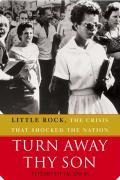

In September 1957, the nation was transfixed by nine black students attempting to integrate Central High School in Little Rock in the wake of the Supreme Court's Brown v. Board of Education decision. Governor Orval Faubus had defied the city's integration plan by calling out the Arkansas National Guard to prevent the students from entering the school. Newspapers across the nation ran front-page photographs of whites, both students and parents, screaming epithets at the quiet, well-dressed black children. President Eisenhower reluctantly deployed troops from the 101st Air-borne, both outside and inside the school. Integration proceeded, but the turmoil of Little Rock had only just begun. Public schools were soon shut down for a full year. Black students endured outrageous provocation by white classmates. Governor Faubus's popularity skyrocketed, while the landmark case Cooper v. Aaron worked its way to the Supreme Court and eventually paved the way for the integration of the south. Betsy Jacoway was a Little Rock student just two years younger than the youngest of the Little Rock Nine. Her "Uncle Virgil" was Superintendent of Schools Virgil Blossom. Congressman Brooks Hays was an old family friend, and her "Uncle Dick" was Richard Butler, the lawyer who argued Cooper v. Aaron before the Supreme Court. Yet, at the time, she was cocooned away from the controversy in a protective shell that was typical for white southern "good girls." Only in graduate school did she begin to question the foundations of her native world, and her own distance from the controversy. Turn Away Thy Son is the product of thirty years of digging behind the conventional account of the crisis, interviewing whites and blacks, officials and students, activists and ordinary citizens. A tour de force of history and memory, it is also a brilliant, multifaceted mirror to hold up to America today. She knows what happened to the brave black students once they got inside the doors of the school. She knows how the whites' fear of "race mixing" drove many locals to extremes of anger, paranoia, and even violence. She knows that Orval Faubus was only a reluctant segregationist, and that her own cousin's timid tokenism precipitated the crisis. Above all, Turn Away Thy Son shows in vivid detail why school desegregation was the hottest of hot-button issues in the Jim Crow south. In the deepest recesses of the southern psyche, Jacoway encounters the fear of giving black men sexual access to white women. The truth about Little Rock differs in many ways from the caricature that emerged in the press and in many histories -- but those differences pale in comparison to the fundamental driving force behind the story. Turn Away Thy Son is a riveting, heartbreaking, eye-opening book.
Elizabeth Jacoway
Preface INTRODUCTION Miscegenation and the Beast CHAPTER 1 Defining The Debate: Harry Ashmore CHAPTER 2 Massive Resistance: Jim Johnson CHAPTER 3 Paternalistic Gentleman: Archie House and the Establishment CHAPTER 4 Blue-Collar Opposition: Amis Guthridge CHAPTER 5 A Time of Panic: Virgil Blossom INTERREGNUM The Chosen Few CHAPTER 6 The Crisis Breaks: Orval Faubus CHAPTER 7 The Minefield in the Middle: Brooks Hays CHAPTER 8 In Search of Compromise: Faubus, Hays, and Eisenhower CHAPTER 9 Central High School, Act One: Daisy Bates CHAPTER 10 Into the Cauldron: The Little Rock Nine CHAPTER 11 A Crisis of Leadership: Robert R. Brown and the Civic Elite CHAPTER 12 Torments Behind Closed Doors: Minnijean Brown CHAPTER 13 The Battle In the Courts: Richard C. Butler CHAPTER 14 Empty Schools: Wiley Branton CHAPTER 15 The Women Organize: Vivion Brewer CHAPTER 16 Rebirth: Everett Tucke CHAPTER 17 The New Elite Consensus: Gaston Williamson CONCLUSION A Bang and a Whimper AFTERWORD A Note on Miscegenation Notes Acknowledgments Index