Und dann auf "Zum Home-Bildschirm [+]".

Stöbern
genialokal zum Startbildschirm hinzufügen
Installieren Sie die genialokal App auf Ihrem Startbildschirm für einen schnellen Zugriff und eine komfortable Nutzung.
Installieren Sie die genialokal App auf Ihrem Startbildschirm für einen schnellen Zugriff und eine komfortable Nutzung.
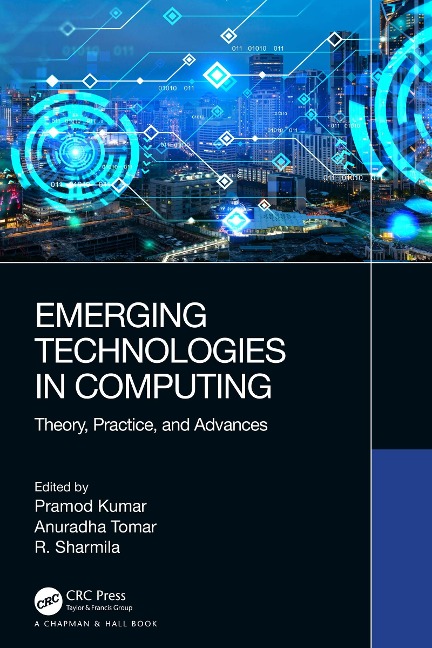
Emerging Technologies in Computing: Theory, Practice, and Advances reviews the past, current, and future needs of technologies in the computer science field while it also discusses the emerging importance of appropriate practices, advances, and their impact. It outlines emerging technologies and their principles, challenges, and applications as well as issues involved in the digital age. With the rapid development of technologies, it becomes increasingly important for us to remain up to date on new and emerging technologies. It draws a clear illustration for all those who have a strong interest in emerging computing technologies and their impacts on society. Features: - Includes high-quality research work by academicians and industrial experts in the field of computing - Offers case studies related to Artificial Intelligence, Blockchain, Internet of Things, Multimedia Big Data, Blockchain, Augmented Reality, Data Science, Robotics, Cybersecurity, 3D Printing, Voice Assistants and Chatbots, and Future Communication Networks - Serves as a valuable reference guide for anyone seeking knowledge about where future computing is heading
Pramod Kumar is Professor, Head & Dean of Research at Krishna Engineering College, India. He previously served as Director of the Tula's Institute, Dehradun, Uttarakhand. With over 20 years' experience in Computer Science, he is a Senior Member of IEEE (SMIEEE), has published research papers in various International Journals and Conferences and authored numerous book chapters, and has organized more than 10 IEEE International Conferences. R. Sharmila is an Assistant Professor in the Department of Computer Science Engineering at Krishna Engineering College, India. Her is highly interdisciplinary, spanning a wide range of topics including: Wireless Sensor Networks, Digital image Processing, Cryptography and Information Security, and Blockchain. Anuradha Tomar is a Postdoctoral Researcher in the EES Group at Eindhoven University, the Netherlands. She is a member of the European Commission's Horizon 2020, UNITED GRID project. She is also an Associate Professor with the Electrical Engineering Department at JSS Academy of Technical Education, India. She is a Senior member of IEEE, Life member of ISTE, IETE, IEI, IAENG. She has published over 70 research/review papers in IEEE Journals and has registered seven patents.
Chapter 1 - Introduction to Emerging Technologies in Computer Science and Its Applications Umang Kant and Vinod Kumar Chapter 2 - Artificial Intelligence Innovations: Infrastructure and Application for Advances in Computational Supremacy Shruti Gupta, Ashish Kumar, Pramod Kumar, and Pastor Arguelles Chapter 3 - Essentials of Internet of Things: Design Principles and Architectures for Its Application in Various Domains Hariprasath Manoharan, Abirami Manoharan, Shankar T., Yuv araja T., and Dinesh Kumar Chapter 4 - Theories of Blockchain: Its Evolution and Application for Security, Privacy and Trust Management Navneet Arora Chapter 5 - Advances in Robotic Systems: Design, Modeling, Development and Control Principles Priyanka Dhuliya, Sunil Semwal, Piyush Dhuliya, and Diwaker Pant Chapter 6 - Data Science Practices: Running the Data Experiments Effectively for Statistical and Predictive Analytics on Data Aatif Jamshed, Asmita Dixit, Amit Sinha, Kanika Gupta, and Manish Kumar Chapter 7 - The Actuality of Augmented Reality: Understanding the Realm of the Theoretical Framework for Embracing Its Potential Facilities Ruchi Goel, Pavi Saraswat, Prashant Naresh, Anuradha Tomar, and Yogesh Kumar Sharma Chapter 8 - Emerging Technologies and Cyber Security: New Horizons of Cyber Security Solutions Neha Tyagi, Hoor Fatima, and Nitin Rakesh Chapter 9 - 3D Printing Procedures: Explore the Endless Possibilities of 3D Object Design, Modeling and Manufacturing Rajesh Pant, Pankaj Negi, Jasmeet Kalra, and Sandeep Tiwari Chapter 10 - Multimedia Big Data: The Multimedia Big Data Impact on Data Storage, Management and Security Strategies for Data Analytics Fatima Ziya, Meenu Shukla, R. Sharmila, Umang Kant, and Jawwad Zaidi Chapter 11 - Voice Assistants and Chatbots Hands on Essentials of UI and Feature Design Development and Testing Pavi Saraswat, Bharat Bhardwaj, Prashant Naresh, Alaknanda Ashok, Raja Kumar, and Manish Kumar Chapter 12 - Future Communication Networks: Architectures, Protocols, and Mechanisms for the Next-Generation Internet Dhananjay Kumar, Sangram Ray, and Sharmistha Adhikari
Dieses eBook wird im PDF-Format geliefert und ist mit einem Adobe Kopierschutz (DRM) versehen. Sie können dieses eBook mit allen Geräten lesen, die das PDF-Format und den Adobe Kopierschutz (DRM) unterstützen.
Zum Beispiel mit den folgenden Geräten:
• tolino Reader
Laden Sie das eBook direkt über den Reader-Shop auf dem tolino herunter oder übertragen Sie das eBook auf Ihren tolino mit einer kostenlosen Software wie beispielsweise Adobe Digital Editions.
• Sony Reader & andere eBook Reader
Laden Sie das eBook direkt über den Reader-Shop herunter oder übertragen Sie das eBook mit der kostenlosen Software Sony READER FOR PC/Mac oder Adobe Digital Editions auf ein Standard-Lesegeräte mit epub- und Adobe DRM-Unterstützung.
• Tablets & Smartphones
Möchten Sie dieses eBook auf Ihrem Smartphone oder Tablet lesen, finden Sie hier unsere kostenlose Lese-App für iPhone/iPad und Android Smartphone/Tablets.
• PC & Mac
Lesen Sie das eBook direkt nach dem Herunterladen mit einer kostenlosen Lesesoftware, beispielsweise Adobe Digital Editions, Sony READER FOR PC/Mac oder direkt über Ihre eBook-Bibliothek in Ihrem Konto unter „Meine eBooks“ - „online lesen“.
Schalten Sie das eBook mit Ihrer persönlichen Adobe ID auf bis zu sechs Geräten gleichzeitig frei.
Bitte beachten Sie, dass die Kindle-Geräte das Format nicht unterstützen und dieses eBook somit nicht auf Kindle-Geräten lesbar ist.