Und dann auf "Zum Home-Bildschirm [+]".

Stöbern
genialokal zum Startbildschirm hinzufügen
Installieren Sie die genialokal App auf Ihrem Startbildschirm für einen schnellen Zugriff und eine komfortable Nutzung.
Installieren Sie die genialokal App auf Ihrem Startbildschirm für einen schnellen Zugriff und eine komfortable Nutzung.
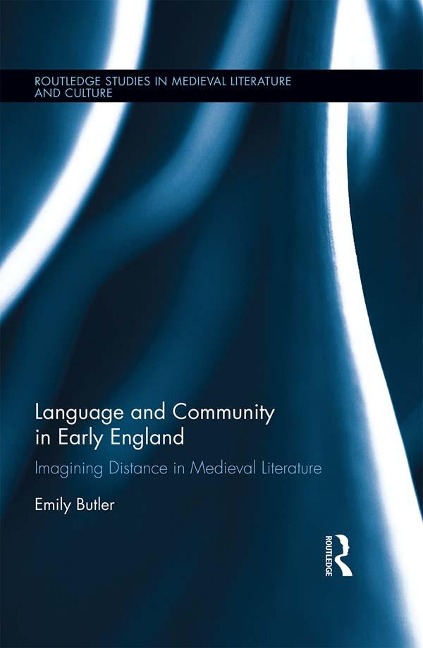
This book examines the development of English as a written vernacular and identifies that development as a process of community building that occurred in a multilingual context. Moving through the eighth century to the thirteenth century, and finally to the sixteenth-century antiquarians who collected medieval manuscripts, it suggests that this important period in the history of English can only be understood if we loosen our insistence on a sharp divide between Old and Middle English and place the textuality of this period in the framework of a multilingual matrix. The book examines a wide range of materials, including the works of Bede, the Alfredian circle, and Wulfstan, as well as the mid-eleventh-century Encomium Emmae Reginae, the Tremulous Hand of Worcester, the Ancrene Wisse, and Matthew Parker's study of Old English manuscripts. Engaging foundational theories of textual community and intellectual community, this book provides a crucial link with linguistic distance. Perceptions of distance, whether between English and other languages or between different forms of English, are fundamental to the formation of textual community, since the awareness of shared language that can shape or reinforce a sense of communal identity only has meaning by contrast with other languages or varieties. The book argues that the precocious rise of English as a written vernacular has its basis in precisely these communal negotiations of linguistic distance, the effects of which were still playing out in the religious and political upheavals of the sixteenth century. Ultimately, the book argues that the tension of linguistic distance provides the necessary energy for the community-building activities of annotation and glossing, translation, compilation, and other uses of texts and manuscripts. This will be an important volume for literary scholars of the medieval period, and those working on the early modern period, both on literary topics and on historical studies of English nationalism. It will also appeal to those with interests in sociolinguistics, history of the English language, and medieval religious history.
Emily Butler, Assistant Professor of English at John Carroll University, USA, is an Anglo-Saxonist working on attitudes to language and how such attitudes shape textual communities and impinge on textual production. Recent work includes articles and papers on the Old English Prose Psalms, Matthew Parker's medieval collection, and the Encomium Emmae Reginae.
Introduction: Community and Distance Chapter 1: Latinity and the English People Chapter 2: Crafting a Textual Kingdom in Wessex Chapter 3: Preaching and Politics in a Time of Conquest Chapter 4: Old and Newer English in the West Midlands Chapter 5: Shewing the Auncient Fayth: An Elizabethan Sequel Conclusion
Dieses eBook wird im PDF-Format geliefert und ist mit einem Adobe Kopierschutz (DRM) versehen. Sie können dieses eBook mit allen Geräten lesen, die das PDF-Format und den Adobe Kopierschutz (DRM) unterstützen.
Zum Beispiel mit den folgenden Geräten:
• tolino Reader
Laden Sie das eBook direkt über den Reader-Shop auf dem tolino herunter oder übertragen Sie das eBook auf Ihren tolino mit einer kostenlosen Software wie beispielsweise Adobe Digital Editions.
• Sony Reader & andere eBook Reader
Laden Sie das eBook direkt über den Reader-Shop herunter oder übertragen Sie das eBook mit der kostenlosen Software Sony READER FOR PC/Mac oder Adobe Digital Editions auf ein Standard-Lesegeräte mit epub- und Adobe DRM-Unterstützung.
• Tablets & Smartphones
Möchten Sie dieses eBook auf Ihrem Smartphone oder Tablet lesen, finden Sie hier unsere kostenlose Lese-App für iPhone/iPad und Android Smartphone/Tablets.
• PC & Mac
Lesen Sie das eBook direkt nach dem Herunterladen mit einer kostenlosen Lesesoftware, beispielsweise Adobe Digital Editions, Sony READER FOR PC/Mac oder direkt über Ihre eBook-Bibliothek in Ihrem Konto unter „Meine eBooks“ - „online lesen“.
Schalten Sie das eBook mit Ihrer persönlichen Adobe ID auf bis zu sechs Geräten gleichzeitig frei.
Bitte beachten Sie, dass die Kindle-Geräte das Format nicht unterstützen und dieses eBook somit nicht auf Kindle-Geräten lesbar ist.