Und dann auf "Zum Home-Bildschirm [+]".

Stöbern
genialokal zum Startbildschirm hinzufügen
Installieren Sie die genialokal App auf Ihrem Startbildschirm für einen schnellen Zugriff und eine komfortable Nutzung.
Installieren Sie die genialokal App auf Ihrem Startbildschirm für einen schnellen Zugriff und eine komfortable Nutzung.
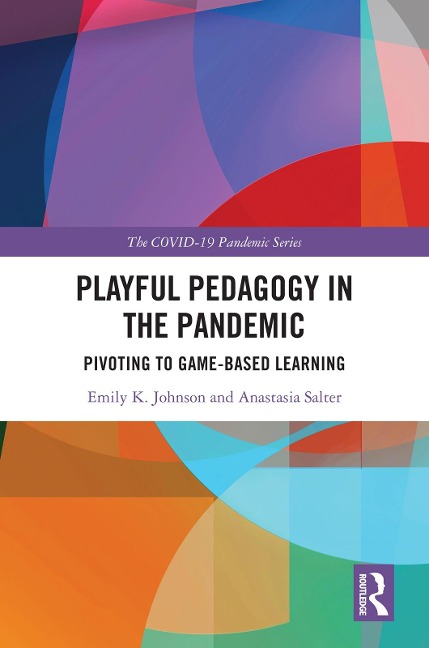
Educational technology adoption is more widespread than ever in the wake of COVID-19, as corporations have commodified student engagement in makeshift packages marketed as gamification. This book seeks to create a space for playful learning in higher education, asserting the need for a pedagogy of care and engagement as well as collaboration with students to help us reimagine education outside of prescriptive educational technology. Virtual learning has turned the course management system into the classroom, and business platforms for streaming video have become awkward substitutions for lecture and discussion. Gaming, once heralded as a potential tool for rethinking our relationship with educational technology, is now inextricably linked in our collective understanding to challenges of misogyny, white supremacy, and the circulation of misinformation. The initial promise of games-based learning seems to linger only as gamification, a form of structuring that creates mechanisms and incentives but limits opportunity for play. As higher education teeters on the brink of unprecedented crisis, this book proclaims the urgent need to find a space for playful learning and to find new inspiration in the platforms and interventions of personal gaming, and in turn restructure the corporatized, surveilling classroom of a gamified world. Through an in-depth analysis of the challenges and opportunities presented by pandemic pedagogy, this book reveals the conditions that led to the widespread failure of adoption of games-based learning and offers a model of hope for a future driven by new tools and platforms for personal, experimental game-making as intellectual inquiry.
Emily K. Johnson is an Assistant Professor of English at the University of Central Florida, USA. She conducts research focusing on user experience (UX), user-centered design, educational technology, learning games, playful/gameful learning, simulations and learning, self-regulated learning, learner motivation, and self-efficacy. She designs and researches educational games in virtual reality, augmented reality, mobile, PC/Mac, and non-traditional platforms. A former middle school teacher, Johnson has published work on games-based learning in journals including Computers & Education; Journal of Universal Computer Science; and Journal of Science Education and Technology. Anastasia Salter is an Associate Professor of English and Director of Graduate Programs at the University of Central Florida, USA, where they also coordinate the innovative interdisciplinary Texts and Technology doctoral program. Their research draws upon humanities methods alongside computational discourse and subjects. They have authored several books, including Twining: Critical and Creative Approaches to Hypertext Narratives (with Stuart Moulthrop, Amherst College Press, 2021), Portrait of the Auteur as Fanboy (with Mel Stanfill, University of Mississippi Press, 2020), and Adventure Games: Playing the Outsider (with Aaron Reed and John Murray, Bloomsbury, 2020). Salter previously wrote for ProfHacker, a blog on technology and pedagogy formerly hosted by the Chronicle of Higher Education and has taught workshops around the world on approaches to experimental, personal games in the classroom.
Preface: Positioning Our Play Introduction: Play for Serious Times 1. The Problem of Gamification 2. These Aren't the Games You're Looking For 3. Searching for Meaningful Pandemic Play 4. Confronting the Perils of Play 5. Designing Playfully for a Distant Future Conclusion: The Fatigue is Real
Dieses eBook wird im PDF-Format geliefert und ist mit einem Adobe Kopierschutz (DRM) versehen. Sie können dieses eBook mit allen Geräten lesen, die das PDF-Format und den Adobe Kopierschutz (DRM) unterstützen.
Zum Beispiel mit den folgenden Geräten:
• tolino Reader
Laden Sie das eBook direkt über den Reader-Shop auf dem tolino herunter oder übertragen Sie das eBook auf Ihren tolino mit einer kostenlosen Software wie beispielsweise Adobe Digital Editions.
• Sony Reader & andere eBook Reader
Laden Sie das eBook direkt über den Reader-Shop herunter oder übertragen Sie das eBook mit der kostenlosen Software Sony READER FOR PC/Mac oder Adobe Digital Editions auf ein Standard-Lesegeräte mit epub- und Adobe DRM-Unterstützung.
• Tablets & Smartphones
Möchten Sie dieses eBook auf Ihrem Smartphone oder Tablet lesen, finden Sie hier unsere kostenlose Lese-App für iPhone/iPad und Android Smartphone/Tablets.
• PC & Mac
Lesen Sie das eBook direkt nach dem Herunterladen mit einer kostenlosen Lesesoftware, beispielsweise Adobe Digital Editions, Sony READER FOR PC/Mac oder direkt über Ihre eBook-Bibliothek in Ihrem Konto unter „Meine eBooks“ - „online lesen“.
Schalten Sie das eBook mit Ihrer persönlichen Adobe ID auf bis zu sechs Geräten gleichzeitig frei.
Bitte beachten Sie, dass die Kindle-Geräte das Format nicht unterstützen und dieses eBook somit nicht auf Kindle-Geräten lesbar ist.