Und dann auf "Zum Home-Bildschirm [+]".

Stöbern
genialokal zum Startbildschirm hinzufügen
Installieren Sie die genialokal App auf Ihrem Startbildschirm für einen schnellen Zugriff und eine komfortable Nutzung.
Installieren Sie die genialokal App auf Ihrem Startbildschirm für einen schnellen Zugriff und eine komfortable Nutzung.
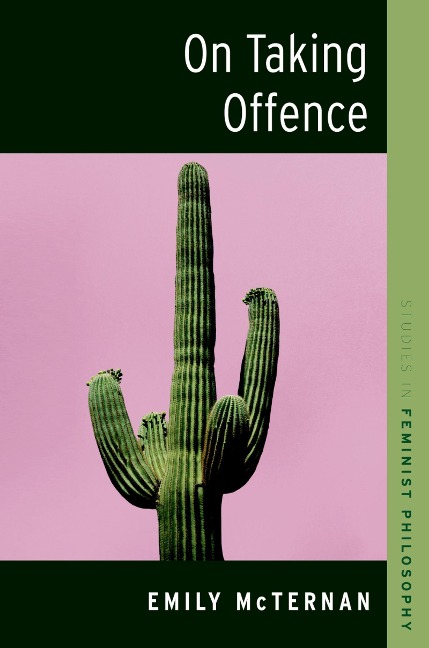
Someone fails to shake your outstretched hand, puts you down in front of others, or makes a joke in poor taste. Should we take offence? Wouldn't it be better if we didn't? In the face of popular criticism of people taking offence too easily, and the social problems that creates, Emily McTernan defends taking offence as often morally appropriate and socially valuable. Within societies marred by inequality, taking offence can resist the day-to-day patterning of social hierarchies.
This book defends the significance of details of our social interactions. Cumulatively, small acts, and the social norms underlying these, can express and reinforce social hierarchies. But by taking offence, we mark an act as an affront to our social standing. We also often communicate our rejection of that affront to others. At times, taking offence can be a way to renegotiate the shared social norms around what counts as respectful treatment. Rather than a mere expression of hurt feelings then, to take offence can be to stand up for one's standing.
When taken by those deemed to have less social standing, to take offence can be a direct act of insubordination against a social hierarchy. Taking offence can resist everyday inequalities. In unequal societies, the inclination to take offence at the right things, and to the right degree, may even be a civic virtue. These right things at which to take offence include many of the very instances that the opponents of a culture of taking offence find most objectionable: apparently trivial and small-scale details of our social interactions.
Emily McTernan is an Associate Professor at University College London. She works on political and social philosophy. She has published work on social norms, equality, civic virtue, infertility, and microaggressions.
Acknowledgements Introduction 1. Taking offence: An emotion reconsidered 1.1. Philosophers on taking offence 1.2. An analysis of taking offence 1.3. Distinguishing offence 1.4. Rethinking offence: Domestic, not catastrophic 1.5. The limits of offence 1.6. Towards a defence: From victimhood to social standing 2. What taking offence does 2.1. Social standing and the role of social norms 2.2. Taking offence and reinforcing norms 2.3. Taking offence and renegotiating norms 2.4. In defence of negotiating social norms 2.5. On negotiating through offence 3. Do sweat the small stuff: The nature and significance of social standing 3.1. Between excess and deficiency 3.2. Social standing as an equal part I: Why the 'small stuff' matters 3.3. Social standing as an equal part II: The power to set the terms 3.4. In defence of the significance of affronts 3.5. Resisting by taking offence 4. The limits of justified offence: On anger, intent, and uptake 4.1. Anger, offence, and the act 4.2. Contesting offence 4.3. 'But I didn't mean it': On intention and blame 4.4. 'But that's not offensive': Disagreement and the offensive 4.5. When offence lacks uptake 5. Only joking!: On the offensiveness of humour 5.1. Theories of humour and the offensive 5.2. Some linguistics of jokes 5.3. How offensive jokes function 5.4. The riskiness of humour 6. A corrective civic virtue: Weighing the costs and benefits of offence 6.1. Offence as a civic virtue: Arguments from equality and civility 6.2. The costs of offence to the offending party 6.3. Justifying the costs of offence 6.4. Burdens on the offended 7. A social approach, our lives online, and the social emotions 7.1. A regulatory turn 7.2. Taking offence online 7.3. The social emotions beyond offence Bibliography Index
Dieses eBook wird im PDF-Format geliefert und ist mit einem Adobe Kopierschutz (DRM) versehen. Sie können dieses eBook mit allen Geräten lesen, die das PDF-Format und den Adobe Kopierschutz (DRM) unterstützen.
Zum Beispiel mit den folgenden Geräten:
• tolino Reader
Laden Sie das eBook direkt über den Reader-Shop auf dem tolino herunter oder übertragen Sie das eBook auf Ihren tolino mit einer kostenlosen Software wie beispielsweise Adobe Digital Editions.
• Sony Reader & andere eBook Reader
Laden Sie das eBook direkt über den Reader-Shop herunter oder übertragen Sie das eBook mit der kostenlosen Software Sony READER FOR PC/Mac oder Adobe Digital Editions auf ein Standard-Lesegeräte mit epub- und Adobe DRM-Unterstützung.
• Tablets & Smartphones
Möchten Sie dieses eBook auf Ihrem Smartphone oder Tablet lesen, finden Sie hier unsere kostenlose Lese-App für iPhone/iPad und Android Smartphone/Tablets.
• PC & Mac
Lesen Sie das eBook direkt nach dem Herunterladen mit einer kostenlosen Lesesoftware, beispielsweise Adobe Digital Editions, Sony READER FOR PC/Mac oder direkt über Ihre eBook-Bibliothek in Ihrem Konto unter „Meine eBooks“ - „online lesen“.
Schalten Sie das eBook mit Ihrer persönlichen Adobe ID auf bis zu sechs Geräten gleichzeitig frei.
Bitte beachten Sie, dass die Kindle-Geräte das Format nicht unterstützen und dieses eBook somit nicht auf Kindle-Geräten lesbar ist.