Und dann auf "Zum Home-Bildschirm [+]".

Stöbern
genialokal zum Startbildschirm hinzufügen
Installieren Sie die genialokal App auf Ihrem Startbildschirm für einen schnellen Zugriff und eine komfortable Nutzung.
Installieren Sie die genialokal App auf Ihrem Startbildschirm für einen schnellen Zugriff und eine komfortable Nutzung.
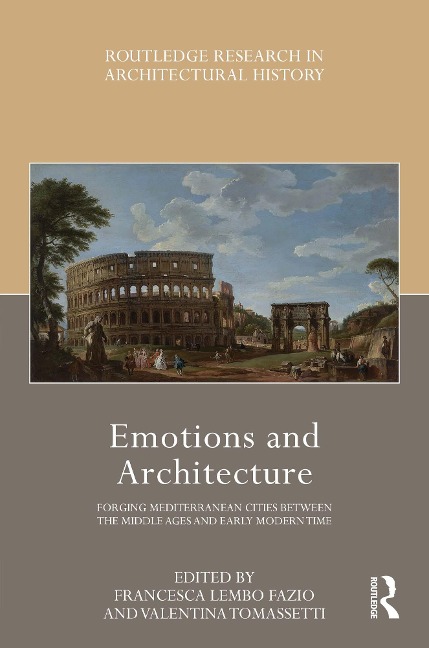
Emotions and Architecture: Forging Mediterranean Cities Between the Middle Ages and Early Modern Time explores architecture as a medium to arouse or conceal emotions, to build consensus through shared values, or to reconnect the urban community to its alleged ancestry. The chapters in this edited collection outline how architectonic symbols, images, and structures were codified - and sometimes recast - to match or to arouse emotions awakened by wars, political dominance, pandemic challenges, and religion. As signs of spiritual and political power, these elements were embraced and modulated locally, providing an endorsement to authorities and rituals for the community. This volume provides an overview of the phenomenon across the Italian region, stressing the transnationality of selected symbols and their various declinations in local contexts. It deepens the issue of refitting symbols, artworks, and structures to arouse emotions by carefully analysing specific cases, such as the Septizodium in Rome, the Holy House of Loreto in Venice, and the reconstruction of L'Aquila. The collection, through its variegated contributions, offers a comprehensive view of the phenomenon: exploring the issue from political, social, religious, and public health perspectives, and seeking to propose a new definition of architecture as a visual emotional language. Together, the chapters show how the representation of virtues and emotions through architecture was part of a symbolic practice shared by many across the Italian context. This book will be of interest to researchers and students studying architectural history, the history of emotions, and the history of art.
Francesca Lembo Fazio is a Research Fellow in the Department of History, Representation and Restoration of Architecture in Sapienza University of Rome. Her research activity focuses on the perception of ruins and spolia, traditional building techniques, and issues of built heritage and climate change. Her main works and publications are on the protection and reuse practices on ancient ruins in Early Modern Rome and on the restoration of modern architecture, from fascism to post-war reconstruction. Valentina Tomassetti is currently a PhD student in the History Department at the University of Warwick. Valentina's research explores the gendered dimensions of female shame, from Renaissance to modern time. Valentina has extensive experience in teaching and has served as Senior Graduate Teaching Assistant between 2018 and 2021. As a proud first-generation graduate, Valentina is passionate about inclusivity and diversity in education. As well as completing her research and collaborating with different charities, Valentina is currently employed as Education and Engagement Officer at UK Parliament.
Lists of figures List of contributors Preface Francesca Lembo Fazio Valentina Tomassetti 1. Fragments, spolia and remains. Emotional antiquities in Rome between the Early Modern and Renaissance era Francesca Lembo Fazio 2. Spaces of Virtue. Transcultural Affection and its Representation in Ottoman-Venetian Relations Luc Wodzicki 3. The Geopolitics of Simulacra and the Seventeenth-Century Venetian Holy House of Loreto Liv Deborah Walberg 4. Mythmaking, Fidelity, and Urbanism in Early Modern Messina and Palermo Tamara Morgenstern 5. Architecture and Emotions in Early Modern Quarantine Centres Marina Inì 6. The rebuilding of L'Aquila after the 1703 quake: death and rebirth Rossana Mancini 7. Identity Perception in Monuments, Ruins and Remains: Roman and Romano-British Heritage in British Travel Accounts c.1770-1820 Barbara Tetti Index
Dieses eBook wird im PDF-Format geliefert und ist mit einem Adobe Kopierschutz (DRM) versehen. Sie können dieses eBook mit allen Geräten lesen, die das PDF-Format und den Adobe Kopierschutz (DRM) unterstützen.
Zum Beispiel mit den folgenden Geräten:
• tolino Reader
Laden Sie das eBook direkt über den Reader-Shop auf dem tolino herunter oder übertragen Sie das eBook auf Ihren tolino mit einer kostenlosen Software wie beispielsweise Adobe Digital Editions.
• Sony Reader & andere eBook Reader
Laden Sie das eBook direkt über den Reader-Shop herunter oder übertragen Sie das eBook mit der kostenlosen Software Sony READER FOR PC/Mac oder Adobe Digital Editions auf ein Standard-Lesegeräte mit epub- und Adobe DRM-Unterstützung.
• Tablets & Smartphones
Möchten Sie dieses eBook auf Ihrem Smartphone oder Tablet lesen, finden Sie hier unsere kostenlose Lese-App für iPhone/iPad und Android Smartphone/Tablets.
• PC & Mac
Lesen Sie das eBook direkt nach dem Herunterladen mit einer kostenlosen Lesesoftware, beispielsweise Adobe Digital Editions, Sony READER FOR PC/Mac oder direkt über Ihre eBook-Bibliothek in Ihrem Konto unter „Meine eBooks“ - „online lesen“.
Schalten Sie das eBook mit Ihrer persönlichen Adobe ID auf bis zu sechs Geräten gleichzeitig frei.
Bitte beachten Sie, dass die Kindle-Geräte das Format nicht unterstützen und dieses eBook somit nicht auf Kindle-Geräten lesbar ist.