Und dann auf "Zum Home-Bildschirm [+]".

Stöbern
genialokal zum Startbildschirm hinzufügen
Installieren Sie die genialokal App auf Ihrem Startbildschirm für einen schnellen Zugriff und eine komfortable Nutzung.
Installieren Sie die genialokal App auf Ihrem Startbildschirm für einen schnellen Zugriff und eine komfortable Nutzung.
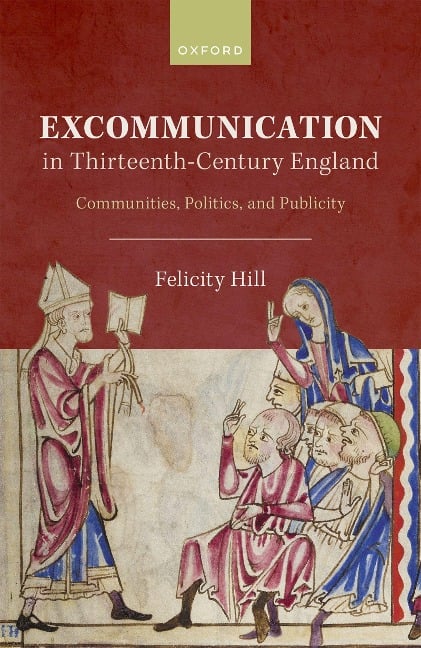
Excommunication was the medieval churchs most severe sanction, used against people at all levels of society. It was a spiritual, social, and legal penalty. Excommunication in Thirteenth-Century England offers a fresh perspective on medieval excommunication by taking a multi-dimensional approach to discussion of the sanction. Using England as a case study, Felicity Hill analyzes the intentions behind excommunication; how it was perceived and received, at both national and local level; the effects it had upon individuals and society. The study is structured thematically to argue that our understanding of excommunication should be shaped by how it was received within the community as well as the intentions of canon law and clerics. Challenging past assumptions about the inefficacy of excommunication, Hill argues that the sanction remained a useful weapon for the clerical elite: bringing into dialogue a wide range of source material allows effectiveness to be judged within a broader context. The complexity of political communication and action are revealed through public, conflicting, accepted and rejected excommunications. Excommunication could be manipulated to great effect in political conflicts and was an important means by which political events were communicated down the social strata of medieval society. Through its exploration of excommunication, the book reveals much about medieval cursing, pastoral care, fears about the afterlife, social ostracism, shame and reputation, and mass communication.
FELICITY HILL is a lecturer in medieval history at the University of St Andrews. She was previously a research fellow at Corpus Christi College, Cambridge, and a Scouloudi fellow at the Institute of Historical Research. She holds degrees from the University of Manchester (BA), University College London (MA), and the University of East Anglia (PhD).
- Introduction - PART I: INDIVIDUALS - 1: The Spiritual Effects of Excommunication: Instilling Fear - 2: Belief, Fear, and Conscience - PART II: COMMUNITIES - 3: Exclusion from the Community of the Faithful - 4: Apathy, Rejection, and Divided Loyalties - PART III: PUBLICITY - 5: Publicity, Reputation, and Scandal - 6: Violence, Excommunication, and Dispute Settlement: Thame, 1292-1294 - 7: Ecclesiastical Broadcasting in the Thirteenth Century: The Origins of the Great - Conclusion - APPENDIX I: IPSO FACTO SENTENCES TO BE REGULARLY PRONOUNCED IN THIRTEENTH-CENTURY ENGLAND - APPENDIX II: WILLIAM OF PAGULA'S LIST OF IPSO FACTO SENTENCES (OCULIS SACERDOTIS, C. 1320)
Dieses eBook wird im PDF-Format geliefert und ist mit einem Adobe Kopierschutz (DRM) versehen. Sie können dieses eBook mit allen Geräten lesen, die das PDF-Format und den Adobe Kopierschutz (DRM) unterstützen.
Zum Beispiel mit den folgenden Geräten:
• tolino Reader
Laden Sie das eBook direkt über den Reader-Shop auf dem tolino herunter oder übertragen Sie das eBook auf Ihren tolino mit einer kostenlosen Software wie beispielsweise Adobe Digital Editions.
• Sony Reader & andere eBook Reader
Laden Sie das eBook direkt über den Reader-Shop herunter oder übertragen Sie das eBook mit der kostenlosen Software Sony READER FOR PC/Mac oder Adobe Digital Editions auf ein Standard-Lesegeräte mit epub- und Adobe DRM-Unterstützung.
• Tablets & Smartphones
Möchten Sie dieses eBook auf Ihrem Smartphone oder Tablet lesen, finden Sie hier unsere kostenlose Lese-App für iPhone/iPad und Android Smartphone/Tablets.
• PC & Mac
Lesen Sie das eBook direkt nach dem Herunterladen mit einer kostenlosen Lesesoftware, beispielsweise Adobe Digital Editions, Sony READER FOR PC/Mac oder direkt über Ihre eBook-Bibliothek in Ihrem Konto unter „Meine eBooks“ - „online lesen“.
Schalten Sie das eBook mit Ihrer persönlichen Adobe ID auf bis zu sechs Geräten gleichzeitig frei.
Bitte beachten Sie, dass die Kindle-Geräte das Format nicht unterstützen und dieses eBook somit nicht auf Kindle-Geräten lesbar ist.