Und dann auf "Zum Home-Bildschirm [+]".

Stöbern
genialokal zum Startbildschirm hinzufügen
Installieren Sie die genialokal App auf Ihrem Startbildschirm für einen schnellen Zugriff und eine komfortable Nutzung.
Installieren Sie die genialokal App auf Ihrem Startbildschirm für einen schnellen Zugriff und eine komfortable Nutzung.
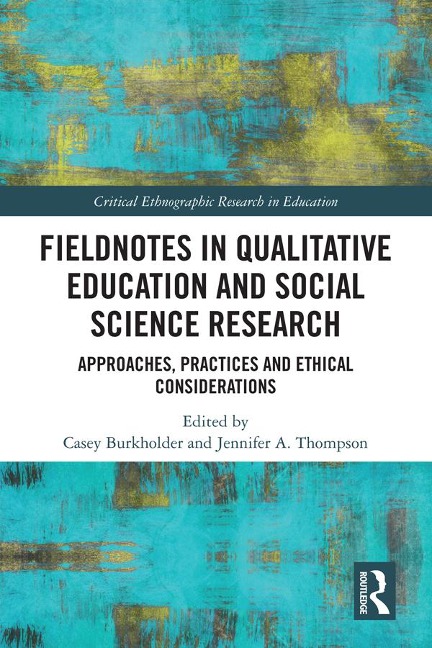
Building upon the incorporation of fieldnotes into anthropological research, this edited collection explores fieldnote practices from within education and the social sciences. Framed by social justice concerns about power in knowledge production, this insightful collection explores methodological questions about the production, use, sharing, and dissemination of fieldnotes. Particular attention is given to the role of context and author positionality in shaping fieldnotes practices. Why do researchers take fieldnotes? What do their fieldnotes look like? What ethical concerns do different types of fieldnotes practices provoke? By drawing on case studies from numerous international contexts, including Argentina, Cameroon, Canada, Ghana, Hong Kong, Hungary, Kenya, Lebanon, Malawi, the Netherlands, South Africa, and the US, the text provides comprehensive and nuanced answers to these questions. This text will be of interest to academics and scholars conducting research across the social sciences, and in particular, in the fields of anthropology and education.
Casey Burkholder is Assistant Professor in the Faculty of Education at the University of New Brunswick, Canada. Jennifer A. Thompson is Postdoctoral Fellow in the School of Psychoeducation at Université de Montréal, Canada.
List of figures List of tables Notes on contributors Acknowledgments Series Editor Foreword What about Fieldnotes: An introduction Jennifer Thompson and Casey Burkholder Part I Producing fieldnotes - Writing in my little red book: The process of taking fieldnotes in primary school case study research in Kirinyaga, Kenya Catherine Vanner - Fieldnotes as a square dance: What can be learned through a metaphor Wendy Crocker and Lori McKee - Fieldnotes in marginal landscapes: Toward an Anthropocene ethic of care for small thingsJennifer MacLatchy - Fieldnotes as an imbricated space of observation, interpretation, analysis, and reflexivity Soon Young Jang - Reflexive uncertainty: Fieldnotes and emotion in participatory visual researchJennifer Thompson Part II Using fieldnotes - When fieldnotes don't work as expected: The challenges of team research with war-affected populations Bree Akesson and Kearney Coupland - Move like honey: Activating fieldnotes for building cultural health capital LaShaune Johnson - Performing fieldtexts Mary Ott - The poetry of fieldnotes Adam Vincent - The editing and rewriting of fieldnotes in ethnographic research Cecilia Vindrola-Padros Part III Sharing fieldnotes - Fieldnotes as private, public, and rhetorical achievement Dmitri Detwyler - Co-production, friendship, and transparency in Anthropological fieldnotes Janneke Verheijen and Sjaak van der Geest - Bumbling along together: Producing collaborative fieldnotes Andrea Wojcik, Rachel Allison, and Anna Harris - Vlogging as sense-making: Fostering diffractive practitioners Julie Rust and Sarah Altman - Analyzing a public digital archive of comic-style fieldnotesCasey Burkholder Part IV Reflecting on fieldnotes practice - Fieldnotes and lived experience of housing precarity: Co-creating transparent research practices for social change Jayne Malenfant - Reconceptualising fieldnotes: The materiality of making knowledge for an embodied, dialogical, creative understanding of self-other Daisy Pillay, Simita Sharan and Jacquie Hendrikse - Queering fieldnote practice with queer, trans, and non-binary populations Amelia Thorpe Index
Dieses eBook wird im PDF-Format geliefert und ist mit einem Adobe Kopierschutz (DRM) versehen. Sie können dieses eBook mit allen Geräten lesen, die das PDF-Format und den Adobe Kopierschutz (DRM) unterstützen.
Zum Beispiel mit den folgenden Geräten:
• tolino Reader
Laden Sie das eBook direkt über den Reader-Shop auf dem tolino herunter oder übertragen Sie das eBook auf Ihren tolino mit einer kostenlosen Software wie beispielsweise Adobe Digital Editions.
• Sony Reader & andere eBook Reader
Laden Sie das eBook direkt über den Reader-Shop herunter oder übertragen Sie das eBook mit der kostenlosen Software Sony READER FOR PC/Mac oder Adobe Digital Editions auf ein Standard-Lesegeräte mit epub- und Adobe DRM-Unterstützung.
• Tablets & Smartphones
Möchten Sie dieses eBook auf Ihrem Smartphone oder Tablet lesen, finden Sie hier unsere kostenlose Lese-App für iPhone/iPad und Android Smartphone/Tablets.
• PC & Mac
Lesen Sie das eBook direkt nach dem Herunterladen mit einer kostenlosen Lesesoftware, beispielsweise Adobe Digital Editions, Sony READER FOR PC/Mac oder direkt über Ihre eBook-Bibliothek in Ihrem Konto unter „Meine eBooks“ - „online lesen“.
Schalten Sie das eBook mit Ihrer persönlichen Adobe ID auf bis zu sechs Geräten gleichzeitig frei.
Bitte beachten Sie, dass die Kindle-Geräte das Format nicht unterstützen und dieses eBook somit nicht auf Kindle-Geräten lesbar ist.