Und dann auf "Zum Home-Bildschirm [+]".

Stöbern
genialokal zum Startbildschirm hinzufügen
Installieren Sie die genialokal App auf Ihrem Startbildschirm für einen schnellen Zugriff und eine komfortable Nutzung.
Installieren Sie die genialokal App auf Ihrem Startbildschirm für einen schnellen Zugriff und eine komfortable Nutzung.

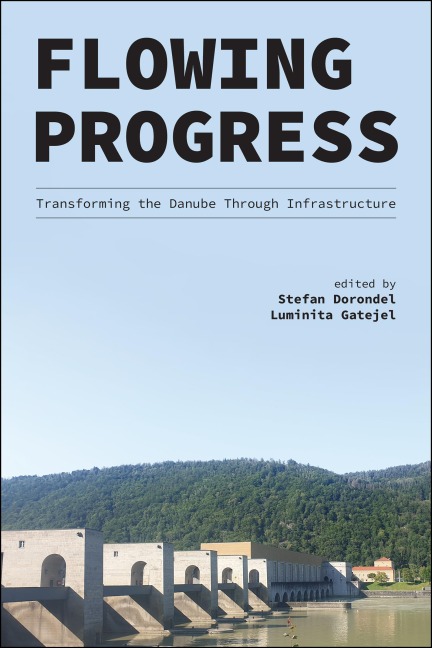

Flowing Progress: Transforming the Danube Through Infrastructure focuses on how different political regimes and forms of governance have imagined and technologically transformed the most international river in the world. Multidisciplinary and drawing on methodologies of history, anthropology of infrastructure, and science, technology, and society, this collection explores the tensions between the river and its natural pulses, the humans that populate its floodplains, state agencies, and infrastructure. The book engages the concept of disturbance to point out the circular and spiraling dynamics between hydrological processes and technopolitical and economic practices. Disturbance denotes a specific type of long-term dynamic between human attempts to control the Danube, the material systems they implemented to achieve these goals, and the agency of the river that both enabled the functioning of infrastructure and the breakdown of such arrangements. It draws particular attention to the concerted efforts to contain and optimize the Danube's flow, adding layer after layer of dams, channels, and pipes that could potentially escalate the power of a leashed river. Taking a longer historical perspective from the sixteenth century until today, the volume provides a variety of relevant case studies and local contexts in the Ottoman and Habsburg empires, and their successor states Austria, Hungary, Bulgaria, Romania, and Serbia which show different ways of how humans have imagined and coped with this mighty river.
Preface, by Stefan Dorondel and Luminita Gatejel Introduction: Disturbance: Danube River, Infrastructure, State, by Stefan Dorondel and Luminita Gatejel 1 Coping with the River: Nature, Empire, and the Making of the Early Modern Ottoman Danube, by Deniz Armagan Akto and Onur Inal 2 A Young State Empowered by Technology? Floods and the Politics of Responsibility in Wallachia During the 1840s, by Luminita Gatejel 3 Free from Hindrances: Shipping and Fishing Mobility Systems in the Danube Delta Region (1856-1914), by Constantin Ardeleanu 4 A Watershed Crisis: Hydrology and the Politics of Revisionism in Post-Trianon Hungary, by Steven Jobbitt 5 Floods and the Affective State on the Bulgarian Lower Danube, by Stelu -erban 6 The Other 1956: The Danube and Flood Narratives in Hungary, by Robert Nemes 7 Socialist Infrastructure and its Afterlife: Romania's Danube-Black Sea Canal, by Constantin Iordachi 8 The Ethnography of a Flood and the Failure of Infrastructure, by Stefan Dorondel 9 The Specter of Infrastructure Over Belgrade's Urban Oasis: The Layered Past and the Uncertain Future of the Great War Island, by Milica Prokic 10 Disturbance on the Upper Danube: A Long-Term Socio-Ecological Perspective on Floods, by Gertrud Haidvogl, Severin Hohensinner, and Martin Schmid Index About the Contributors