Und dann auf "Zum Home-Bildschirm [+]".

Stöbern
genialokal zum Startbildschirm hinzufügen
Installieren Sie die genialokal App auf Ihrem Startbildschirm für einen schnellen Zugriff und eine komfortable Nutzung.
Installieren Sie die genialokal App auf Ihrem Startbildschirm für einen schnellen Zugriff und eine komfortable Nutzung.
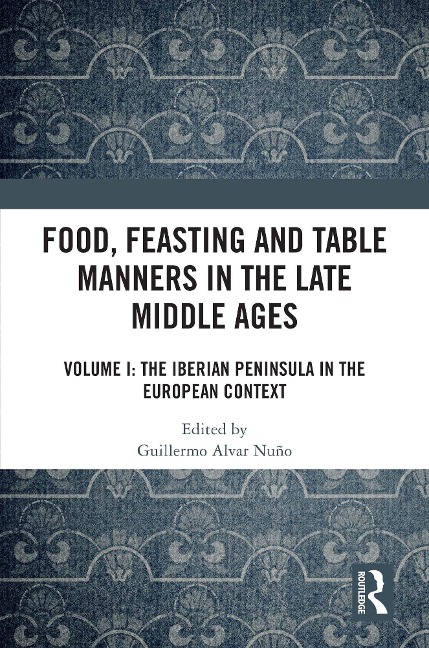
This book offers a study of what and how people ate in the Iberian Peninsula between the twelfth and fifteenth centuries. It has long been recognized that Mediterranean cultures attach great importance to communal meals and food cooked with great refinement. However, whilst medieval feasting in England, France and Italy has been thoroughly studied, Spain and Portugal have both been somewhat neglected in this area of study. This volume analyses how medieval men of the Iberian Peninsula questioned themselves about different aspects deemed important in social feasting. It investigates the acquisition of table manners and rhetorical skills, the interaction between medicine and eating, and the presence of food in literature and religion. The book also shows how this shared society and culture, as well as their attitude towards food, connected them to a Western European tradition. The book will appeal to scholars and students alike interested in food and feasting from the perspectives of literature, history, language, art, religion and medicine, and to those interested in a social, cultural and literary overview of life in the Iberian Peninsula during the late Middle Ages.
Guillermo Alvar Nuño obtained his PhD in Latin Philology from the Complutense University of Madrid. He developed his teaching career at the Université de Franche-Comté (Besançon, France, 2014-2017) and the University of Alcalá (2017-), where he currently teaches subjects related to the ancient and medieval worlds. As a researcher, he has worked with late antique and medieval pedagogical texts on the moral formation of ancient and medieval man. He has also researched the development of the courtly model in medieval Europe, the influence of classical authors in the Middle Ages and the development of Spanish humanism in the fifteenth and sixteenth centuries.
Introduction / Framing the importance of banquets in the late Middle Ages (Guillermo Alvar Nuño) / 1. How should I eat before a king? Feasts as public display of moral manners (Guillermo Alvar Nuño) / 2. Rhetorics as a social virtue: holding conversations when eating in public (María Díez Yáñez) / 3. The theory of humours applied to food in the Middle Ages: from the Graeco-Roman tradition to mediaeval Latin Europe (María Teresa Santamaría Hernández) / 4. Biblical feasts in the thirteenth century: miniatures in the Bibles historiales (Elisa Borsari) / 5. A caution against excess: Gula in John Gower's works (Antonio Cortijo Ocaña) / 6. Eating with the lords of Portugal: continuities and discontinuities from the thirteenth to the sixteenth centuries (Margarida Esperança Pina) / 7. Imagining the meal of a crusader: food, feasting and fasting in Baudouin de Sebourc (Claude Roussel) / 8. Don Juan Manuel and food: eating and didacticism. Mirrors of princes, regiments of health and treatises on the virtues and vices in the world view of a fourteenth-century Castilian aristocrat (Barry Taylor) / 9. Food, political elites and cultural invective in the poetry of the Cancioneros (Andrea Zinato) / 10. Religious context and eating in late Middle Ages castile: aubergines as a conflict between Jews, Muslims, and Christians (Hélène Jawhara Piñer) / 11. Food in popular culture: wording, practice and symbolic aspects in Castilian proverb collections (Alexandra Oddo) / 12. The land of Cockaigne in European literatures (thirteenth-fourteenth centuries) (Filippo Ribani)
Dieses eBook wird im PDF-Format geliefert und ist mit einem Adobe Kopierschutz (DRM) versehen. Sie können dieses eBook mit allen Geräten lesen, die das PDF-Format und den Adobe Kopierschutz (DRM) unterstützen.
Zum Beispiel mit den folgenden Geräten:
• tolino Reader
Laden Sie das eBook direkt über den Reader-Shop auf dem tolino herunter oder übertragen Sie das eBook auf Ihren tolino mit einer kostenlosen Software wie beispielsweise Adobe Digital Editions.
• Sony Reader & andere eBook Reader
Laden Sie das eBook direkt über den Reader-Shop herunter oder übertragen Sie das eBook mit der kostenlosen Software Sony READER FOR PC/Mac oder Adobe Digital Editions auf ein Standard-Lesegeräte mit epub- und Adobe DRM-Unterstützung.
• Tablets & Smartphones
Möchten Sie dieses eBook auf Ihrem Smartphone oder Tablet lesen, finden Sie hier unsere kostenlose Lese-App für iPhone/iPad und Android Smartphone/Tablets.
• PC & Mac
Lesen Sie das eBook direkt nach dem Herunterladen mit einer kostenlosen Lesesoftware, beispielsweise Adobe Digital Editions, Sony READER FOR PC/Mac oder direkt über Ihre eBook-Bibliothek in Ihrem Konto unter „Meine eBooks“ - „online lesen“.
Schalten Sie das eBook mit Ihrer persönlichen Adobe ID auf bis zu sechs Geräten gleichzeitig frei.
Bitte beachten Sie, dass die Kindle-Geräte das Format nicht unterstützen und dieses eBook somit nicht auf Kindle-Geräten lesbar ist.