Und dann auf "Zum Home-Bildschirm [+]".

Stöbern
genialokal zum Startbildschirm hinzufügen
Installieren Sie die genialokal App auf Ihrem Startbildschirm für einen schnellen Zugriff und eine komfortable Nutzung.
Installieren Sie die genialokal App auf Ihrem Startbildschirm für einen schnellen Zugriff und eine komfortable Nutzung.

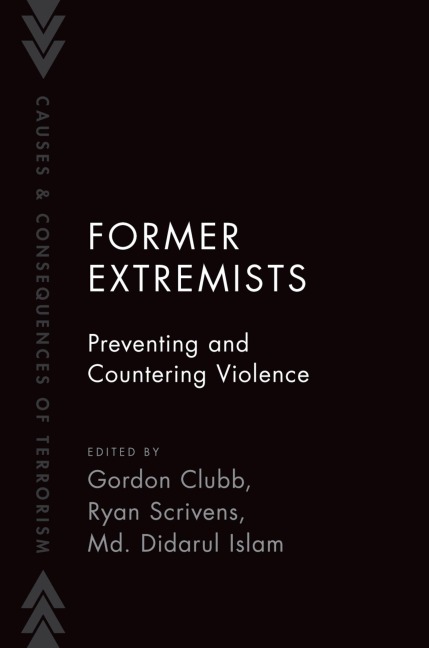
This is an open access title available under the terms of a CC BY-NC-ND 4.0 International licence. It is free to read on the Oxford Academic platform and offered as a free PDF download from OUP and selected open access locations.
This collection is the first on ex-extremists and combatants (Formers) in violence prevention work. While the engagement of Formers in violence prevention programs--especially in the context of countering and preventing violent extremism (P/CVE), and peacebuilding--has expanded across the world, their involvement has been controversial and contested. This volume captures a variety of work Formers are engaged in across a range of contexts, broadly divided into three themes on their effectiveness, ethical considerations, and implementation. Written by a range of authors with diverse perspectives including academics, former extremists, peer mentors, program leaders, and practicing psychologists, chapters include Formers in North American research, the role of former Northern Irish combatants in peacebuilding, collaborating with Formers, the ethical imperatives of engaging Formers in P/CVE efforts, and more. Taken together, the book ultimately offers a snapshot of the ongoing policy debates while contributing to the future direction of work involving Formers in violence prevention.
Gordon Clubb is an Associate Professor at the University of Leeds. He has written several publications on de-radicalization and has been regularly invited to present research to international practitioner audiences. He has conducted research on the role of "Formers" in countering violent extremism and peacebuilding. Another dimension of his work looks at how de-radicalization programs can generate positive public relations and how community support for reintegration of ex-extremists can be facilitated through messaging and transparency. Ryan Scrivens is an Assistant Professor in the School of Criminal Justice at Michigan State University. He is also an Associate Director at the International CyberCrime Research Centre at Simon Fraser University and a Research Fellow at the VOX-Pol Network of Excellence. He conducts problem-oriented interdisciplinary research with a focus on terrorists' and extremists' use of the Internet, right-wing terrorism and extremism, and combating violent extremism. Md. Didarul Islam is an Assistant Professor at the Department of World Religions and Culture, University of Dhaka. He is a commonwealth scholar pursuing his Doctoral Studies at the School of Politics and International Studies, University of Leeds. His doctoral research focuses on how a norm receiving state frames and formulates Countering Violent Extremism (CVE) policy from a public policy perspective. His research interests include CVE, counterterrorism, radicalization, international security, public policy, migration, and religion and politics.
Introduction Gordon Clubb, Ryan Scrivens and Md. Didarul Islam Section 1: Academic Perspectives Chapter 1: Understanding the Effectiveness of Formers: Contexts and Measurements Daniel Koehler Chapter 2: "Informed Informants": An Empirical Exploration of Using Formers within P/CVE Work in the UK Suraj Lakhani Chapter 3: Being a Former, Becoming a Mentor, and the Value of Using Formers in the Swedish Exit Program Tina Wilchen Christensen Chapter 4: Moral Injury, Moral Blindness, Political Non-Repentance: Former ETA Members and Prevention and Countering Violent Extremism Rogelio Alonso Chapter 5: Former Extremists in North American Research Ryan Scrivens, Steven Windisch, and Pete Simi Chapter 6: "Informative, Shocking, Entertaining": Two Decades of Talks by Former Extremists in German Schools Maria Walsh and Antje Gansewig Chapter 7: The Role of Former Northern Irish Combatants in Building Peace and Preventing Violence: Community and Combatant Perspectives Neil Ferguson and Patrick Flack Chapter 8: Missed Potential for Former Fighters' Involvement in Conflict Prevention: The Case of Burundi Guðrún Sif Friðriksdóttir Chapter 9: Do Former Child Soldiers Have a Role in Peacebuilding in Colombia? Patrícia Nabuco Martuscelli and Rafael Duarte Villa Section 2: Practitioner Perspectives Chapter 10: Formers in Lebanon Christina Foerch and Julie M. Norman Chapter 11: Transitioning from Former Violent Extremist to Exit Peer Specialist Katharina Meredith and Robert Örell Chapter 12: Collaboration with Former Extremists Lynn Davies Chapter 13: How I Understand the Role of Former as a Former Turned Activist Mubin Shaikh Chapter 14: Former Extremists as Peer Mentors in P/CVE Sara Winegar Budge Chapter 15: Life after Hate Brad Galloway Chapter 16: From Former to Practitioner Chris Buckley Chapter 17: The Ethical Imperatives of Engaging Formers in P/CVE Efforts Ross Frenett Conclusion: Norms and Standards for Formers Engaging in Violence Prevention Gordon Clubb, Ryan Scrivens and Md. Didarul Islam