Und dann auf "Zum Home-Bildschirm [+]".

Stöbern
genialokal zum Startbildschirm hinzufügen
Installieren Sie die genialokal App auf Ihrem Startbildschirm für einen schnellen Zugriff und eine komfortable Nutzung.
Installieren Sie die genialokal App auf Ihrem Startbildschirm für einen schnellen Zugriff und eine komfortable Nutzung.
Ihr gewünschter Artikel ist in 0 Buchhandlungen vorrätig - wählen Sie hier eine Buchhandlung in Ihrer Nähe aus:

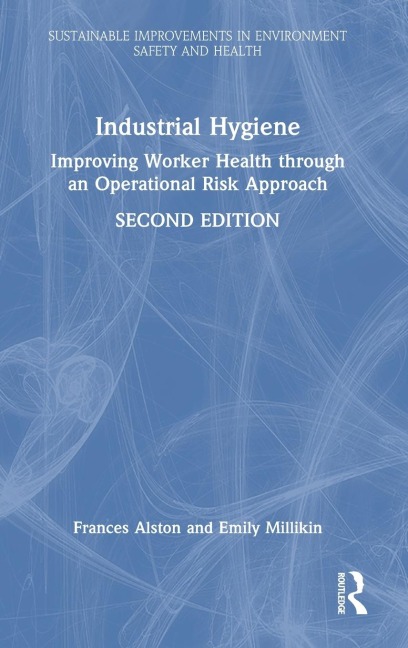

Society is informed on the impacts on human health and environment with a noticeable decrease in the acceptance of this risk by workers and the public.The second edition of Industrial Hygiene focuses on implementation of an industrial hygiene program, using a risk-based approach to ensure a higher level of worker protection.
Frances E. Alston has more than 35 years of leadership experience in high hazards, diverse work cultures. She is an instructor at a major university, a senior manager in an international company, and the Past President (2018) of the American Society for Engineering Management. Dr. Alston is also a fellow of the American Society for Engineering Management (ASEM) and has built a solid career leading the development and management of Environment, Safety, Health, and Quality (ESH&Q) programs in challenging cultural environments. She has a Ph.D. in Industrial and System Engineering and an MSE degree in Engineering Management, both from the University of Alabama. She earned a master's degree in Hazardous and Waste Materials Management/Environmental Engineering from Southern Methodist University and a Bachelor of Science degree in Industrial Hygiene and Safety/Chemistry from Saint Augustine's University. She holds certifications as a Certified Hazardous Materials Manager (CHMM) and a Certified Professional Engineering Manager (CPEM). Emily J. Millikin has over 39 years of leadership experience in regulatory, environmental, radiation protection, and safety and health at Department of Energy (DOE) and Department of Defense (DOD) chemical and radiological operations and remediation. She has held various executive leadership positions in different operational environments and is a proven leader in achieving excellence in both program and field execution of safety and health, radiation protection, quality assurance, environmental, industrial hygiene, safety culture, and voluntary protection programs. Ms. Millikin earned a B.S. in Environmental Health with majors in both Industrial Hygiene and Health Physics from Purdue University. She is a Certified Industrial Hygienist (CIH) and Certified Safety Professional (CSP) and serves as an Advisory Board Member to the DOE National Supplementary Screening Program. Ms. Millikin currently provides consulting services to the DOE at the Hanford Site, Washington.
Contents Preface About the authors Acronyms Chapter 1 Occupational Safety and Health in the Workplace 1.1 Introduction 1.2 Multiple Facets of the Safety and Health Professional 1.3 Industrial Hygiene Program Tenants 1.4 Application and Implementation of Industrial Hygiene Program Elements 1.4.1 Program Management and Administration 1.4.2 Hazard Identification and Control Process 1.4.3 Occupational Health Management 1.4.4 Instrumentation and Calibration 1.4.5 Data Management, Records and Reporting 1.4.6 Training and Qualification 1.4.7 Continuous Improvement 1.5 Industrial Hygiene Key Focus Areas and Risk Reduction Questions to Ponder for Learning Chapter 2 Art of Science of Industrial Hygiene 2.1 Introduction 2.2 The Art of Industrial Hygiene 2.2.1 The Art of Hazard Recognition and Control 2.2.2 The Art of an Occupational Exposure Monitoring Strategy 2.2.3 The Art of the Occupational Health Program 2.2.4 The Art of People Management 2.2.4.1 Solicit Feedback from the Workforce 2.2.4.2 Team with the Workforce in Preventing Hazards 2.2.4.3 Provide Positive Feedback 2.2.4.4 Be Respectful and Trusting 2.3 The Science of Industrial Hygiene 2.3.1 The Science of Hazard Recognition and Control 2.3.2 The Science of an Occupational Exposure Monitoring Strategy 2.3.3 The Science of the Occupational Health Program 2.3.4 The Science of People Management Questions to Ponder for Learning Chapter 3 Industrial Hygiene Professional 3.1 Introduction 3.2 Role of the Industrial Hygiene Professional 3.3 Leadership and Organizational Structure 3.3.1 Flat Organizational Structure 3.3.2 Hierarchical Organizational Structure 3.4 Communication for Results 3.4.1 Technical and Non-Technical Workers and Colleagues 3.4.2 Risk/Exposure Assessment Data and Results 3.4.3 Relationship with the Workforce 3.4.4 Engagement on Work Planning Teams 3.5 Corporate Programmatic Support Role 3.6 Industrial Hygienist as an Expert Witness 3.7 Continuing Education and Professional Development 3.7.1 College and University Curricula 3.7.2 Retention of the Industrial Hygiene Professional 3.7.3 Industrial Hygiene Certification 3.7.4 Continuing Education 3.7.5 Job Rotation 3.7.6 Industrial Hygiene as a Generalist 3.8 Legal and Ethical Aspects of Industrial Hygiene 3.8.1 Professionalism 3.8.2 Accountability 3.8.3 Humility 3.8.4 Reliability 3.8.5 Trustworthiness 3.9 Management of Industrial Hygiene Projects 3.10 Emergency Response and Monitoring Questions to Ponder for Learning Chapter 4 Strategies for Exposure Monitoring and Instrumentation 4.1 Introduction 4.2 Regulatory Aspects of Industrial Hygiene 4.3 Quantitative and Qualitative Exposure and Risk Assessment 4.3.1 Quantitative Exposure and Risk Assessment 4.3.2 Qualitative Exposure and Risk Assessment 4.4 Process Flow of Exposure Assessment 4.4.1 Defining the Scope of Work 4.4.2 Developing a Monitoring Plan 4.4.3 Implementing the Characterization and Monitoring Plan 4.4.4 Similar Exposure Groups 4.4.5 Occupational Exposure Control Banding 4.4.6 Evaluating Data and Characterizing Exposures 4.4.6.1 Application of non-threshold versus linear threshold models 4.4.6.2 Occupational Exposure and Administrative Control Limits 4.4.7 Develop Controls 4.4.8 Document Results 4.4.8.1 Peer Review and Validation 4.4.9 Communicate Data Results 4.4.10 Develop a Reevaluation Plan 4.5 Occupational Safety and Health Characterization and Monitoring Equipment 4.5.1 Diffusion Detector Tubes 4.5.2 Vapor Monitor Badges 4.5.3 Personal Air Sampling Pumps 4.5.4 Handheld Electronic Monitors 4.5.5 Fixed Air Monitors 4.6 Case Studies to Facilitate Thoughtful Learning 4.6.1 "The Presence of Intermittent Odor" 4.6.2 "The Presence of Intermittent Odor" Lessons Learned 4.6.3 "I Have Been Sick for 6 Months" 4.6.4 "I Have Been Sick for 6 Months" Lessons Learned Questions to Ponder for Learning Chapter 5 Risk-Based Industrial Hygiene 5.1 Introduction 5.2 Importance of Risk Assessment and a Risk-Based Approach to Hazard Management 5.3 Identifying and Controlling Workplace Risks 5.4 Addressing Industrial Hygiene Risks in the Workplace 5.4.1 Industrial Hygiene Risk Assessment 5.5 Risk Ranking 5.6 Integration of a Rick-Based Consensus Standard Into Industrial Hygiene 5.6.1 Industrial Hygiene Program Management and Administration 5.6.2 Hazard Identification and Control Process 5.6.3 Occupational Health Management 5.6.4 Instrumentation and Calibration 5.6.5 Data Management, Records, and Reporting 5.6.6 Training and Qualification 5.6.7 Continuous Improvement 5.7 Risk Communications 5.8 Risk Acceptance Questions to Ponder for Learning Chapter 6 Recognizing, Evaluating, and Controlling Workplace Hazards 6.1 Introduction 6.2 Historical Chemical and Industrial Hazards 6.3 Chemical, Physical, Biological and Industrial Hazards of the Past Decade 6.4 Workplace Hazard Inventories 6.4.1 Task Hazard Inventory 6.4.2 Facility Hazard Inventory 6.5 Injury and Illness Logs and Inspection Trending 6.6 Chemical Inventories: Usage, Storage, and Disposal Records 6.7 Biological and Radiological Hazards Considerations 6.8 Regulatory Inspections and Violations 6.9 Hazard Control and Work Execution 6.9.1 Hazard Elimination 6.9.2 Product Substitution 6.9.3 Engineering Controls 6.9.4 Work Practices and Administrative Controls 6.9.5 Personal Protective Equipment 6.10 Integration of Hazard Recognition and Controls 6.10.1 Planning Work 6.10.2 Authorizing Work 6.10.3 Work Execution 6.10.4 Project Closeout 6.11 Management by Walk-Around 6.11.1 Preparation 6.11.2 Communication 6.11.3 Persistence to Connect 6.12 Safety Through Design Designing Hazards Out of the Process 6.13 Employee Engagement Questions to Ponder for Learning Chapter 7 Medical Monitoring and Surveillance of the Worker 7.1 Introduction 7.2 Medical Monitoring and Surveillance Program 7.3 Establishment of Company Policies, Protocols, and Procedures 7.4 Scheduling and Tracking of Physicals 7.5 Interfacing with Medical Professionals 7.6 Notification of Test Results 7.7 Analysis of Occupational Health Dat 7.8 Medical Monitoring Records and Reporting 7.9 Case Study 1: Chromium IV Exposure 7.10 Case Study 2: Beryllium Exposure Questions to Ponder for Learning Chapter 8 Workforce Training on Hazard Recognition and Control 8.1 Introduction 8.2 Why Provide Workplace Training? 8.3 Developing an Effective Training Strategy 8.4 Hazard Recognition, Evaluation, and Control Training 8.4.1 Hazard Anticipation 8.4.2 Hazard Recognition and Identification 8.4.3 Evaluate Hazards 8.4.4 Controlling Hazards 8.5 Trainer Knowledge and Qualification 8.6 Training Effectiveness Evaluation 8.7 Other Training Methods and Tools 8.7.1 Process or Tool Mock-Up 8.7.2 Peer-to-Peer Training 8.7.3 Training on the Job Site 8.7.4 Hazard Identification Checklist 8.7.5 The Use of Case Studies to Enforce Learning 8.7.6 Micro Learning Questions to Ponder for Learning Chapter 9 Industrial Hygiene and Emergency Response 9.1 Introduction 9.1.1 Hurricane Katrina - United States 9.1.2 La Porte, Texas Chemical Plant - United States 9.1.3 September 11, 2001 - United States 9.1.4 Collapse of the Rana Plaza - Bangladesh 9.1.5 Glasgow Explosion - Scotland 9.2 Approaches to Emergency Response 9.3 Initiating Event 9.4 Event Notification 9.5 Risk Prioritization 9.6 Event Response 9.6.1 Resources and Equipment 9.6.2 Logistical Support 9.6.3 Event Response Communication 9.6.4 Event or Site Transition 9.7 Lessons Learned From 9/11 9.7.1 Event Notification 9.7.2 Event Response 9.7.3 Site Transition Questions to Ponder for Learning Chapter 10 Evaluating the Industrial Hygiene Program 10.1 Introduction 10.2 Identifying the Program and Process to Assess 10.3 Identifying Key Attributes to Assess 10.4 Developing the Assessment Plan and Lines of Inquiry 10.5 Performing the Assessment 10.6 Data Analysis 10.6.1 Data Organization 10.6.2 Analysis Method 10.6.3 Risk Management of Identified Hazards 10.6.4 Relationship of Data to Existing Programs and Processes 10.6.5 Data Storage and Management 10.7 Document Assessment Results Questions to Ponder for Learning Chapter 11 Continuous Improvement 11.1 Introduction 11.2 Continuous Improvement Process 11.3 Establishing the Performance Baseline 11.4 Identify Areas for Improvement 11.5 Industrial Hygiene Continuous Improvement Plan 11.5.1 Goals and Objectives 11.5.2 Corrective Actions and Improvement Initiatives 11.6 Performance Monitoring and Metrics 11.7 Case Study: Tungsten Tools Questions to Ponder for Learning Index