Und dann auf "Zum Home-Bildschirm [+]".

Stöbern
genialokal zum Startbildschirm hinzufügen
Installieren Sie die genialokal App auf Ihrem Startbildschirm für einen schnellen Zugriff und eine komfortable Nutzung.
Installieren Sie die genialokal App auf Ihrem Startbildschirm für einen schnellen Zugriff und eine komfortable Nutzung.
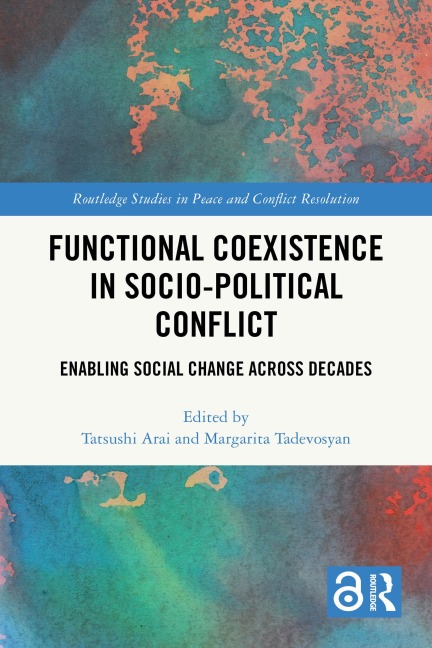
This book introduces the concept of functional coexistence as a context for building practical strategies for long-term conflict intervention and social change. Functional coexistence is a pragmatic relationship of mutual non-recognition sustained in the absence of physical violence. In this volume, a team of internationally recognized scholar-practitioners of peacebuilding presents seven in-depth case studies of functional coexistence, expanding its potential for practical conflict intervention. Bridging theory to evidence and vision to practice, the book offers guideposts for sustained conflict intervention, presents compelling examples of peace potential within the context of functional coexistence, and identifies common pathways for change among them. It also proposes a customized framework for program evaluation and highlights the merit of long-term policymaking and funding. Instead of losing hope based on traditional expectations of conflict resolution and reconciliation, this pioneering study of conflict non-resolution demonstrates the power of tenacious pragmatism, strategically guided by a decades-long historical view of social change. This book will be of interest to students of conflict resolution, peacebuilding, international relations, foreign policy, and security studies. The Open Access version of this book, available at http://www.taylorfrancis.com, has been made available under a Creative Commons Attribution-Non Commercial-No Derivatives (CC-BY-NC-ND) 4.0 license.
Tatsushi Arai is Associate Professor of Peace and Conflict Studies at Kent State University, USA, with extensive practitioner experience. He is author or editor of four books, including Creativity and Conflict Resolution: Alternative Pathways to Peace (2009). Margarita Tadevosyan is Research Assistant Professor and the Executive Director of the Center for Peacemaking Practice at the Jimmy and Rosalynn Carter School for Peace and Conflict Resolution at George Mason University, USA.
Part I: Theory of Functional Coexistence Chapter 1: Introduction: Facing Unresolved Conflict Chapter 3: Implications of Functional Coexistence for Conflict Intervention and Peacebuilding Part II: Cases of Enduring Functional Coexistence Introduction to Part II Chapter 4: Functional Coexistence in Local Communities in Post-Khmer Rouge Cambodia Chapter 5: Functional Coexistence in Cyprus: Negotiating the Seemingly Non-negotiable Limits of Mutually Acceptable Actions Across the Intercommunal Divide Chapter 6: Northern Ireland: (Dys)functional Coexistence Chapter 7: Agonistic Democracy: The Way Forward to Sustain Functional Coexistence in the Western Balkans? Part III: Cases of Emerging and/or Transitional States of Coexistence Introduction to Part III Chapter 8: Toward Functional Coexistence in Armenia-Turkey Relations: A Critical Analysis of the Normalization Process Chapter 9: Coexistence and Domination: Arab-Jewish Relations in Israel Chapter 10: Time for a New Approach to the Armenia-Azerbaijan Conflict: Prospects for Functional Coexistence Part Four: Implications for Theory, Practice and Policymaking Chapter 11: A Broader Landscape of Functional Coexistence: Lessons Learned from the Cases and Implications for Future Inquiry Chapter 12: Implications of Functional Coexistence for Peacebuilding Evaluation, Policymaking, and Funding Conclusion On the Journey of Functional Coexistence: Looking Back and Looking Forward
Dieses eBook wird im PDF-Format geliefert und ist mit einem Adobe Kopierschutz (DRM) versehen. Sie können dieses eBook mit allen Geräten lesen, die das PDF-Format und den Adobe Kopierschutz (DRM) unterstützen.
Zum Beispiel mit den folgenden Geräten:
• tolino Reader
Laden Sie das eBook direkt über den Reader-Shop auf dem tolino herunter oder übertragen Sie das eBook auf Ihren tolino mit einer kostenlosen Software wie beispielsweise Adobe Digital Editions.
• Sony Reader & andere eBook Reader
Laden Sie das eBook direkt über den Reader-Shop herunter oder übertragen Sie das eBook mit der kostenlosen Software Sony READER FOR PC/Mac oder Adobe Digital Editions auf ein Standard-Lesegeräte mit epub- und Adobe DRM-Unterstützung.
• Tablets & Smartphones
Möchten Sie dieses eBook auf Ihrem Smartphone oder Tablet lesen, finden Sie hier unsere kostenlose Lese-App für iPhone/iPad und Android Smartphone/Tablets.
• PC & Mac
Lesen Sie das eBook direkt nach dem Herunterladen mit einer kostenlosen Lesesoftware, beispielsweise Adobe Digital Editions, Sony READER FOR PC/Mac oder direkt über Ihre eBook-Bibliothek in Ihrem Konto unter „Meine eBooks“ - „online lesen“.
Schalten Sie das eBook mit Ihrer persönlichen Adobe ID auf bis zu sechs Geräten gleichzeitig frei.
Bitte beachten Sie, dass die Kindle-Geräte das Format nicht unterstützen und dieses eBook somit nicht auf Kindle-Geräten lesbar ist.