Und dann auf "Zum Home-Bildschirm [+]".

Stöbern
genialokal zum Startbildschirm hinzufügen
Installieren Sie die genialokal App auf Ihrem Startbildschirm für einen schnellen Zugriff und eine komfortable Nutzung.
Installieren Sie die genialokal App auf Ihrem Startbildschirm für einen schnellen Zugriff und eine komfortable Nutzung.
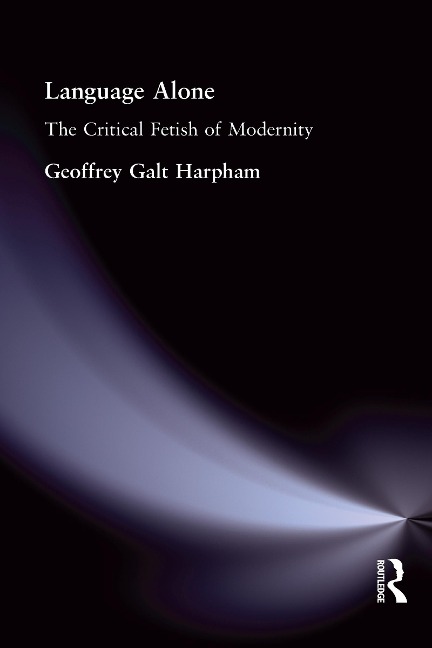
How did the concept of language come to dominate modern intellectual history? In Language Alone, Geoffrey Galt Harpham provides at once the most comprehensive survey and most telling critique of the pervasive role of language in modern thought. He shows how thinkers in such diverse fields as philosophy, psychoanalysis, anthropology, and literary theory have made progress by referring their most difficult theoretical problems to what they presumed were the facts of language. Through a provocative reassessment of major thinkers on the idea of language-Saussure, Wittgenstein, Derrida, Rorty, and Chomsky, among them-and detailed accounts of the discourses of ethics and ideology in particular, Harpham demonstrates a remarkable consensus among intellectuals of the past century and beyond that philosophical and other problems can best be understood as linguistic problems. And furthermore, that a science of language can therefore illuminate them. Conspicuously absent from this consensus, he shows, is any consideration of contemporary linguistics, or any awareness of the growing agreement among linguists that the nature of language as such cannot be known. Ultimately, Harpham argues, the thought of language has dominated modern intellectual history because of its singular capacity to serve as a proxy for a host of concerns, questions, and anxieties-our place in the order of things, our rights and obligations, our nature or essence-that resist a strictly rational formulation. Language Alone will interest literary critics, philosophers, and anyone with an interest in the uses of language in contemporary thought.
Geoffrey Galt Harpham is Professor of English at Tulane University. His many books include On the Grotesque, TheAscetic Imperative in Culture and Criticism, Getting ItRight: Language, Literature, and Ethics, One of Us: TheMastery of Joseph Conrad, and Shadows of Ethics:Criticism and the Just Society.
Preface Chapter One: Language for Beginners 1. Turning (in)to Language 2. Saussure and the Concrete Object of Language 3. Metaphor and the Law of Return: Saussure, Derrida and Rorty 4.Language and Human Nature 5. Science and the Thought of Language Chapter Two: Ideology and the Form of Language 1. Ideology and History 2. Marxism and the Economic Specter 3. From Post-Modernism to Post-Marxism; or, It's Not the Economy, Stupid 4. Language and the Psycho-Ideological Subject 5. Inversions Chapter Three: Ethics and the Law of Language 1. Words as Guides: Modernity from Hume to Bernard Williams 2. Language as Law: On the Kantian Maxim The Irrational Law: Nietzsche, Levinas, Deconstruction Law and Language of the Unconcscious: Freud, Chomsky, Lacan 3. Words against War: The Dream of a Virtuous Language 4. Language Against the Law: Postmodernism, Feminism, and the Fundamentals of Language 5. Coda: On Culture In Conclusion: Language and Humanity Works Cited
Dieses eBook wird im PDF-Format geliefert und ist mit einem Adobe Kopierschutz (DRM) versehen. Sie können dieses eBook mit allen Geräten lesen, die das PDF-Format und den Adobe Kopierschutz (DRM) unterstützen.
Zum Beispiel mit den folgenden Geräten:
• tolino Reader
Laden Sie das eBook direkt über den Reader-Shop auf dem tolino herunter oder übertragen Sie das eBook auf Ihren tolino mit einer kostenlosen Software wie beispielsweise Adobe Digital Editions.
• Sony Reader & andere eBook Reader
Laden Sie das eBook direkt über den Reader-Shop herunter oder übertragen Sie das eBook mit der kostenlosen Software Sony READER FOR PC/Mac oder Adobe Digital Editions auf ein Standard-Lesegeräte mit epub- und Adobe DRM-Unterstützung.
• Tablets & Smartphones
Möchten Sie dieses eBook auf Ihrem Smartphone oder Tablet lesen, finden Sie hier unsere kostenlose Lese-App für iPhone/iPad und Android Smartphone/Tablets.
• PC & Mac
Lesen Sie das eBook direkt nach dem Herunterladen mit einer kostenlosen Lesesoftware, beispielsweise Adobe Digital Editions, Sony READER FOR PC/Mac oder direkt über Ihre eBook-Bibliothek in Ihrem Konto unter „Meine eBooks“ - „online lesen“.
Schalten Sie das eBook mit Ihrer persönlichen Adobe ID auf bis zu sechs Geräten gleichzeitig frei.
Bitte beachten Sie, dass die Kindle-Geräte das Format nicht unterstützen und dieses eBook somit nicht auf Kindle-Geräten lesbar ist.