Und dann auf "Zum Home-Bildschirm [+]".

Stöbern
genialokal zum Startbildschirm hinzufügen
Installieren Sie die genialokal App auf Ihrem Startbildschirm für einen schnellen Zugriff und eine komfortable Nutzung.
Installieren Sie die genialokal App auf Ihrem Startbildschirm für einen schnellen Zugriff und eine komfortable Nutzung.
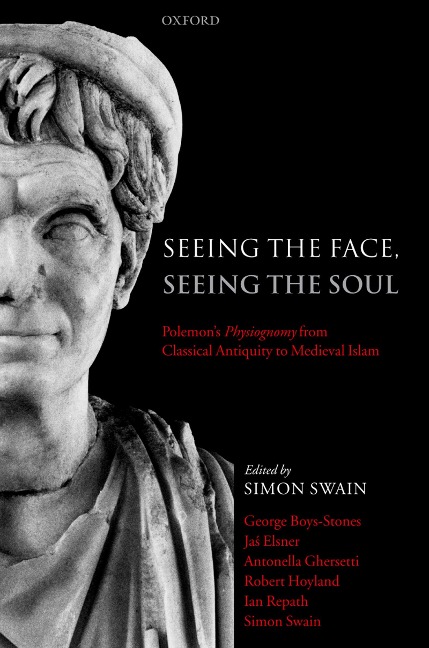
Polemon of Laodicea (near modern Denizli, south-west Turkey) was a wealthy Greek aristocrat and a key member of the intellectual movement known as the Second Sophistic. Among his works was the Physiognomy, a manual on how to tell character from appearance, thus enabling its readers to choose friends and avoid enemies on sight. Its formula of detailed instruction and personal reminiscence proved so successful that the book was re-edited in the fourth century by Adamantius in Greek, translated and adapted by an unknown Latin author of the same era, and translated in the early Middle Ages into Syriac and Arabic. The surviving versions of Adamantius, Anonymus Latinus, and the Leiden Arabic more than make up for the loss of the original. The present volume is the work of a team of leading Classicists and Arabists. The main surviving versions in Greek and Latin are translated into English for the first time. The Leiden Arabic translation is authoritatively re-edited and translated, as is a sample of the alternative Arabic Polemon. The texts and translations are introduced by a series of masterly studies that tell the story of the origins, function, and legacy of Polemon's work, a legacy especially rich in Islam. The story of the Physiognomy is the story of how one man's obsession with identifying enemies came to be taken up in the fascinating transmission of Greek thought into Arabic.
Simon Swain is Professor of Classics at the University of Warwick.
George Boys-Stones is Lecturer in Classics, University of Durham.
Jas Elsner is Humfry Payne Senior Research Fellow, Corpus Christi College, Oxford.
Antonella Ghersetti is Lecturer, Universita Ca' Foscari, Venice.
Robert Hoyland is Reader in Arabic and Middle East Studies, School of History, University of St Andrews.
Ian Repath is Lecturer in Classics, University of Wales at Lampeter.
- 1: Simon Swain: Introduction - I. Antiquity - 2: George Boys-Stones: Physiognomy and Ancient Psychological Theory - 3: Simon Swain: Polemon's Physiognomy - 4: Jas Elsner: Physiognomics: Art and Text - II. Islam - 5: Robert Hoyland: The Islamic Background to Polemon's Treatise - 6: Antonella Ghersetti: The Semiotic Paradigm: Physiognomy and Medicine in Islamic Culture - 7: Antonella Ghersetti with Simon Swain: Polemon's Physiognomy in the Arabic Tradition - III. Texts and Translations - 8: Robert Hoyland: A New Edition and Translation of the Leiden Polemon - 9: Antonella Ghersetti: The Istanbul Polemon (TK Recension): Edition and Translation of the Introduction - 10: Ian Repath: The Physiognomy of Adamantius the Sophist - 11: Ian Repath: Anonymus Latinus, Book of Physiognomy
Dieses eBook wird im PDF-Format geliefert und ist mit einem Adobe Kopierschutz (DRM) versehen. Sie können dieses eBook mit allen Geräten lesen, die das PDF-Format und den Adobe Kopierschutz (DRM) unterstützen.
Zum Beispiel mit den folgenden Geräten:
• tolino Reader
Laden Sie das eBook direkt über den Reader-Shop auf dem tolino herunter oder übertragen Sie das eBook auf Ihren tolino mit einer kostenlosen Software wie beispielsweise Adobe Digital Editions.
• Sony Reader & andere eBook Reader
Laden Sie das eBook direkt über den Reader-Shop herunter oder übertragen Sie das eBook mit der kostenlosen Software Sony READER FOR PC/Mac oder Adobe Digital Editions auf ein Standard-Lesegeräte mit epub- und Adobe DRM-Unterstützung.
• Tablets & Smartphones
Möchten Sie dieses eBook auf Ihrem Smartphone oder Tablet lesen, finden Sie hier unsere kostenlose Lese-App für iPhone/iPad und Android Smartphone/Tablets.
• PC & Mac
Lesen Sie das eBook direkt nach dem Herunterladen mit einer kostenlosen Lesesoftware, beispielsweise Adobe Digital Editions, Sony READER FOR PC/Mac oder direkt über Ihre eBook-Bibliothek in Ihrem Konto unter „Meine eBooks“ - „online lesen“.
Schalten Sie das eBook mit Ihrer persönlichen Adobe ID auf bis zu sechs Geräten gleichzeitig frei.
Bitte beachten Sie, dass die Kindle-Geräte das Format nicht unterstützen und dieses eBook somit nicht auf Kindle-Geräten lesbar ist.