Und dann auf "Zum Home-Bildschirm [+]".

Stöbern
genialokal zum Startbildschirm hinzufügen
Installieren Sie die genialokal App auf Ihrem Startbildschirm für einen schnellen Zugriff und eine komfortable Nutzung.
Installieren Sie die genialokal App auf Ihrem Startbildschirm für einen schnellen Zugriff und eine komfortable Nutzung.
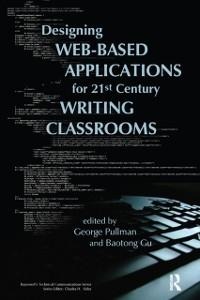
Designing Web-Based Applications for 21st Century Writing Classrooms brings together, for the first time, a group of scholars and teachers who have been developing, on their own initiative, web-based solutions to technical and professional writing instructional problems. In industry the perennial question is whether to buy or build, but in academia, for various reasons, buy is rarely an option. Individual faculty members do not have the money to pay for software solutions, and often their interests are too local or small-scale to warrant institutional-level involvement. In addition, the design of commercial applications from vendors typically does not take into account the unique needs and considerations of teachers of writing and often reflects a design ideology quite different from theirs. This is why so many writing teachers have turned to open source solutions and, in the process of learning how to tweak them to make them more responsive to their specific needs, why so many of these teachers have developed programming and design skills. Beyond exigency, the motivation for becoming proficient at interface and database design comes from the observation that the nature of writing is changing dramatically. Text is no longer an object. It has become a place of interaction; consumers are becoming producers. And the work of technical and professional communication, indeed the work of writing teachers more generally, is becoming increasingly involved in the design and implementation of places of interaction. Words have become data; texts are becoming communities.
Pullman, George; Baotong, Gu
Introduction George Pullman and Baotong Gu PART 1 Writing Environments CHAPTER 1 Theorizing and Building Online Writing Environments: User-Centered Design Beyond the Interface Michael McLeod, William Hart-Davidson, and Jeffrey Grabill CHAPTER 2 : An Electronic Writing Space Ron Balthazor, Christy Desmet, Alexis Hart, Sara Steger, and Robin Wharton CHAPTER 3 Redevelop, Redesign, and Refine: Expanding the Functionality and Scope of TTOPIC into Raider Writer Robert Hudson and Susan M. Lang CHAPTER 4 The Role of Metaphor in the Development of an Instructional Writing Environment Mike Palmquist CHAPTER 5 Creating Complex Web-Based Applications with Agile Techniques: Iterations as Drafts Matt Penniman and Michael Wojcik PART 2 Individual, Standalone Applications CHAPTER 6 Visualizing Knowledge Work with Google Wave Brian J. McNely and Paul Gestwicki CHAPTER 7 Students Playing as Scholars and Selves: Academic Synthesis as Conversation Game David Fisher and Joe Williams CHAPTER 8 Designing, Implementing, and Evaluating a Web-Based Instructional Application for Technical Communication Classes David Chapman CHAPTER 9 Supplementing a Professional Writing Course with an Interactive Self-Learning Document Design Tutorial Suguru Ishizaki, Stacie Rohrbach, and Laura Scott CHAPTER 10 Developing a Web-Served Handbook for Writers Stephen A. Bernhardt PART 3 Open-Source Modifications CHAPTER 11 Peersourcing the PIT Journal: The Technosocial Pedagogical Hooks and Layers of Collaborative Publishing The PIT Core Publishing Collective CHAPTER 12 Blogs as an Alternative to Course Management Systems: Public, Interactive Teaching with a Round Peg in a Square Hole Steven D. Krause CHAPTER 13 Developing a Course Wiki for Accessibility and Sustainability Karl Stolley CHAPTER 14 An Interface for Interaction Design: Using Course Wikis to Build Knowledge Communities Steven T. Benninghoff Contributors Index
Dieses eBook wird im PDF-Format geliefert und ist mit einem Adobe Kopierschutz (DRM) versehen. Sie können dieses eBook mit allen Geräten lesen, die das PDF-Format und den Adobe Kopierschutz (DRM) unterstützen.
Zum Beispiel mit den folgenden Geräten:
• tolino Reader
Laden Sie das eBook direkt über den Reader-Shop auf dem tolino herunter oder übertragen Sie das eBook auf Ihren tolino mit einer kostenlosen Software wie beispielsweise Adobe Digital Editions.
• Sony Reader & andere eBook Reader
Laden Sie das eBook direkt über den Reader-Shop herunter oder übertragen Sie das eBook mit der kostenlosen Software Sony READER FOR PC/Mac oder Adobe Digital Editions auf ein Standard-Lesegeräte mit epub- und Adobe DRM-Unterstützung.
• Tablets & Smartphones
Möchten Sie dieses eBook auf Ihrem Smartphone oder Tablet lesen, finden Sie hier unsere kostenlose Lese-App für iPhone/iPad und Android Smartphone/Tablets.
• PC & Mac
Lesen Sie das eBook direkt nach dem Herunterladen mit einer kostenlosen Lesesoftware, beispielsweise Adobe Digital Editions, Sony READER FOR PC/Mac oder direkt über Ihre eBook-Bibliothek in Ihrem Konto unter „Meine eBooks“ - „online lesen“.
Schalten Sie das eBook mit Ihrer persönlichen Adobe ID auf bis zu sechs Geräten gleichzeitig frei.
Bitte beachten Sie, dass die Kindle-Geräte das Format nicht unterstützen und dieses eBook somit nicht auf Kindle-Geräten lesbar ist.